For just over five minutes on the morning of August 2, 2027, the moon covers the sun completely and day turns to twilight over Oran. Around this rare eclipse, we cross Algeria from west to east. We share lunch with a family in the Kasbah of Algiers, cross the bridges of Constantine, a capital of Numidian kings more than 2,000 years ago, and walk Timgad, founded by Emperor Trajan around AD 100. With services handled by the Bestway team, we can sit back and enjoy this rare destination.
| UNESCO World Heritage Sites covered in this tour | |||
|---|---|---|---|
| 1. | Kasbah of Algiers | 2. | Tipasa |
| 3. | Djémila | 4. | Timgad |
| (*) Denotes UNESCO World Heritage Sites included in the itinerary. | |||
| Tour Information | ||
|---|---|---|
| Duration | : | 11 days |
| Minimum | : | 2 persons |
| Maximum | : | 16 persons |
| Price (From) | : | |
| International air not included | ||
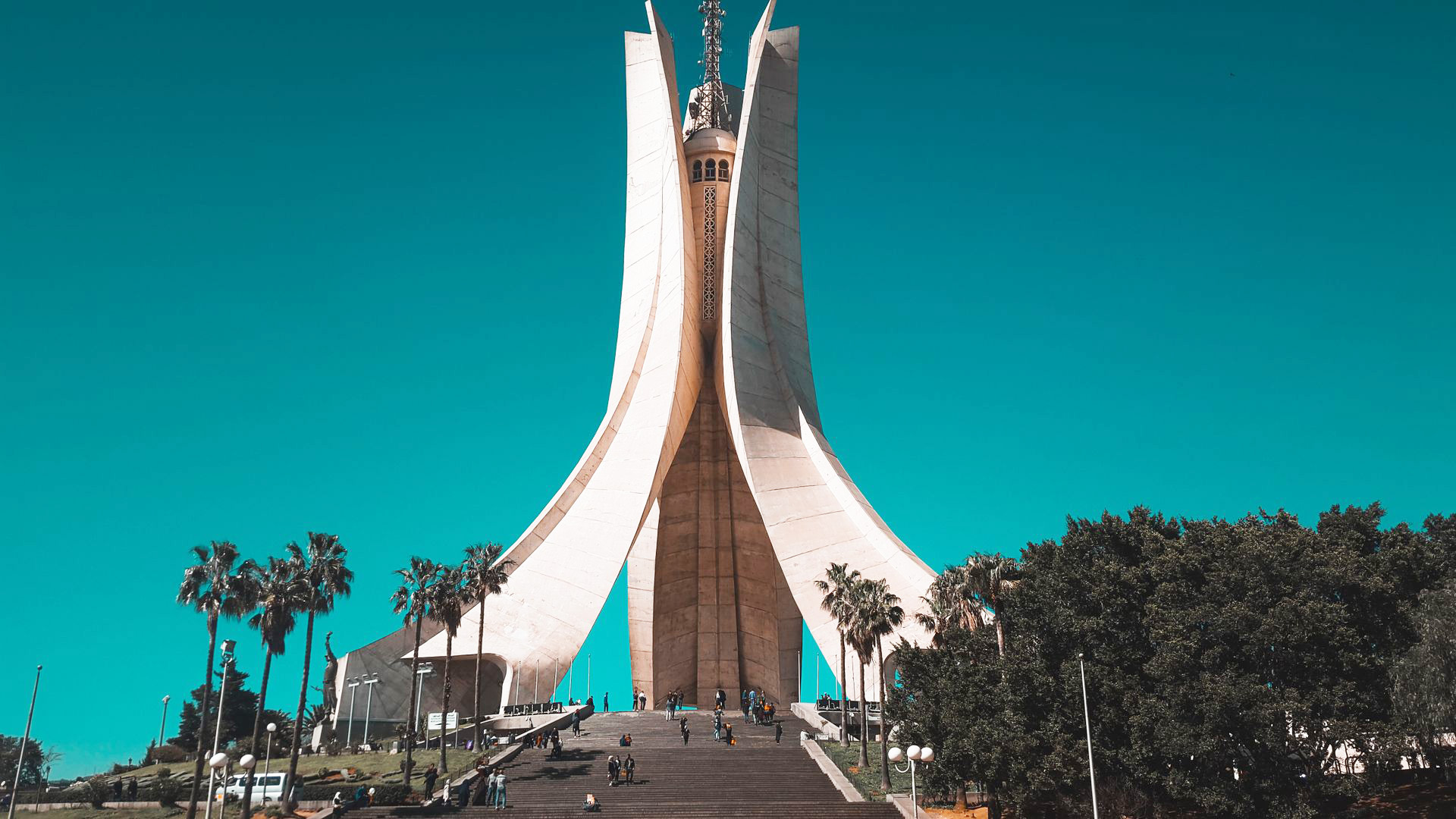
Upon arrival at Algiers airport, we are welcomed and transferred to our hotel. On the way, we stop on the heights above the city at the Makam Echahid, or Martyrs’ Memorial. Raised in the early 1980s to honour the Algerians who fell in the struggle for independence, it stands 92 metres above the city. Hotel check-in before we set out on a city tour that ends at the Basilica of Notre-Dame d’Afrique, a Romanesque-Byzantine church consecrated in 1872 on a hilltop overlooking the bay. This evening, we have dinner at a local restaurant.
Please note: arrival should be noon or earlier.
Overnight: Hôtel Ralf (4-star), Algiers (2 nights) (D)
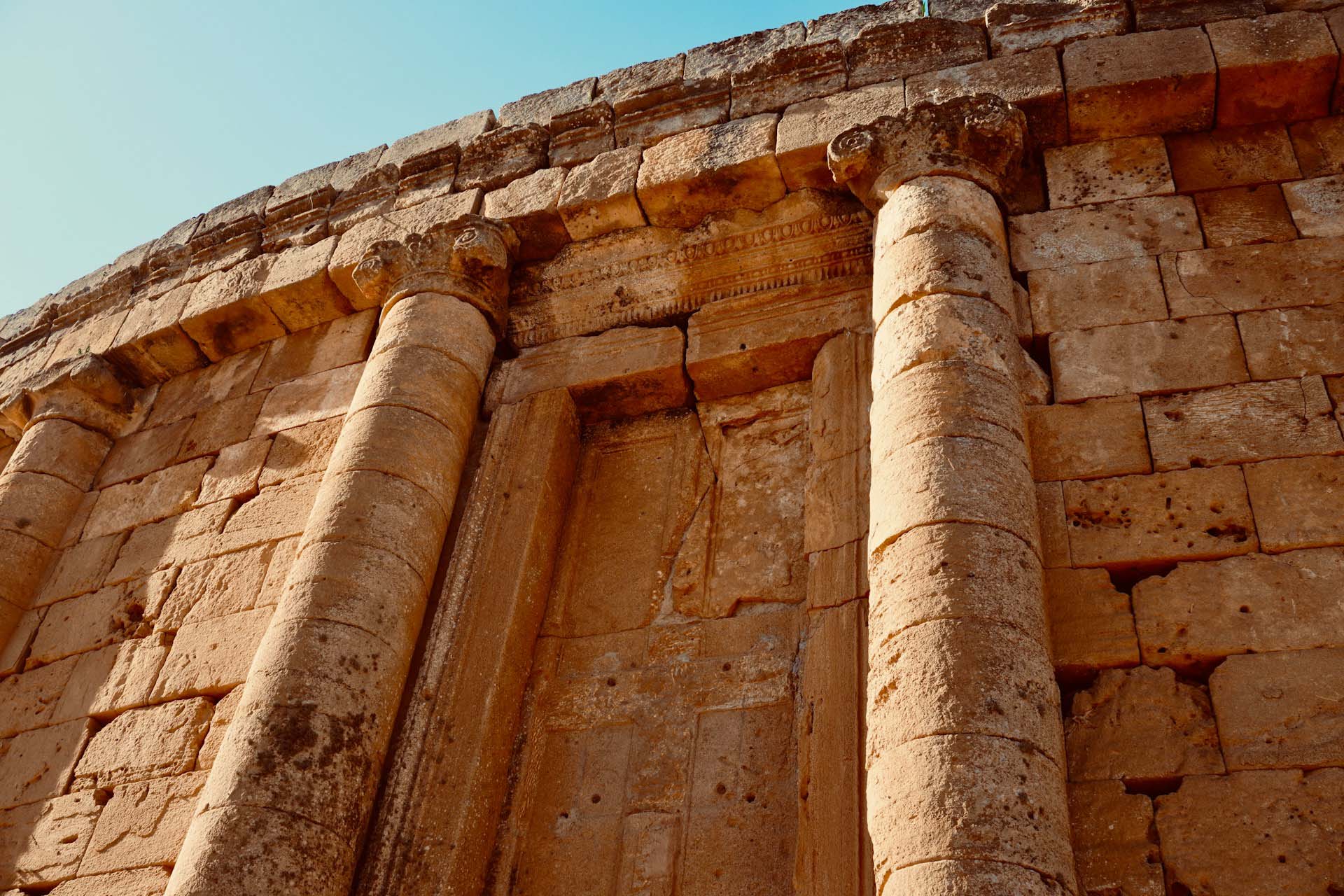
After breakfast, we drive west along the coast to Cherchell. Known in Roman times as Caesarea, it was the capital of the province of Mauretania Caesariensis, and its history goes back to the Phoenicians. We explore the archaeological remains and the Cherchell National Public Museum, whose mosaics, statues, inscriptions, and stelae form one of the finest collections in the Maghreb. After a seafood lunch, we continue to Tipasa*, a UNESCO World Heritage Site. Founded as a Punic trading post, it grew under Rome into a city of varied public buildings, and in the 3rd and 4th centuries AD, many Christian buildings rose here, some paved with fine mosaics. The city survived the Vandal invasion of the 430s and was later retaken by the Byzantines, but it declined steadily from the 6th century onward.
Our last stop is the Royal Mausoleum of Mauretania, often called the Tomb of the Christian Woman. This great circular tomb dates to the Numidian era, and some historians believe it was built for King Juba II and his wife, Queen Cleopatra Selene. We return to Algiers for dinner at a local restaurant. (B, L, D)
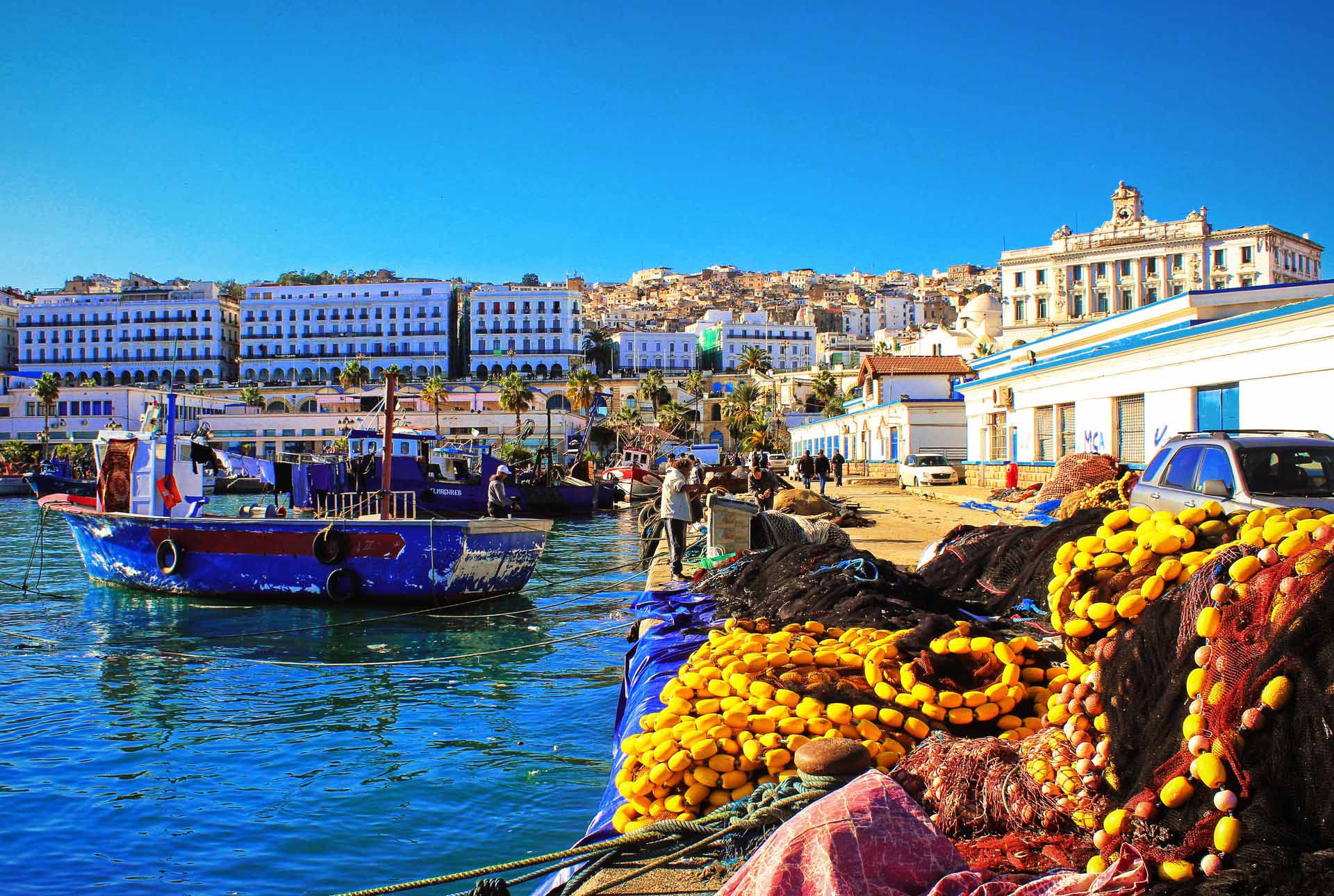
Today, we explore the Kasbah*, a UNESCO World Heritage Site since 1992 and the historic heart of Algiers. We visit the Citadel, the seat of power during the 18th-century Regency of Algiers, and the Centenary House. Walking the Kasbah’s narrow, winding lanes, we pause on terraces overlooking the Bay of Algiers and step inside traditional houses for tea and pastries. We visit Sidi Ramdane Mosque, the oldest in Algiers, dating to the 10th or 11th century, and pass the Aïn Bir Chebana fountain, which still supplies water to the Kasbah, the 17th-century Sidi Abderrahmane Mausoleum, and the late 18th-century Mustapha Pacha Palace, now a museum of Arabic calligraphy. Lunch is with a Kasbah family in their traditional home.
This afternoon, we tour the seafront boulevard, a 1,500-metre arcaded promenade designed by Frédéric Chassériau and opened by Napoleon III in 1865. Along it, we see the Grande Poste, the Neo-Baroque National Theatre of 1853, the Wilaya (Algiers prefecture), and the former Galeries de France, now a Museum of Modern Art. At 4:00 PM, we transfer to the airport for our 5:45 PM flight to Tlemcen, arriving at 6:45 PM. We drive up to our hotel on the Lalla Setti plateau for dinner.
Overnight: Renaissance Tlemcen Hotel (5-star), Tlemcen (1 night) (B, L, D)
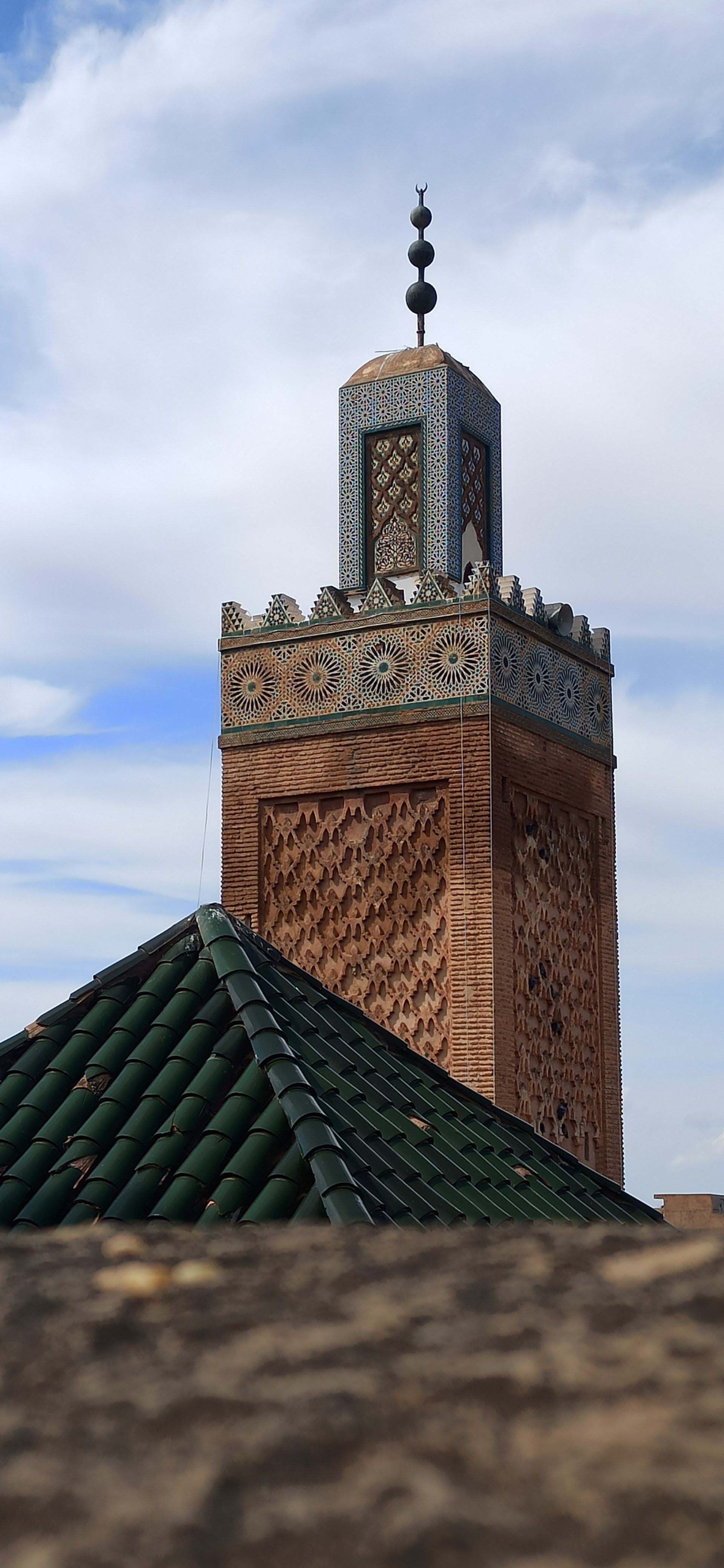
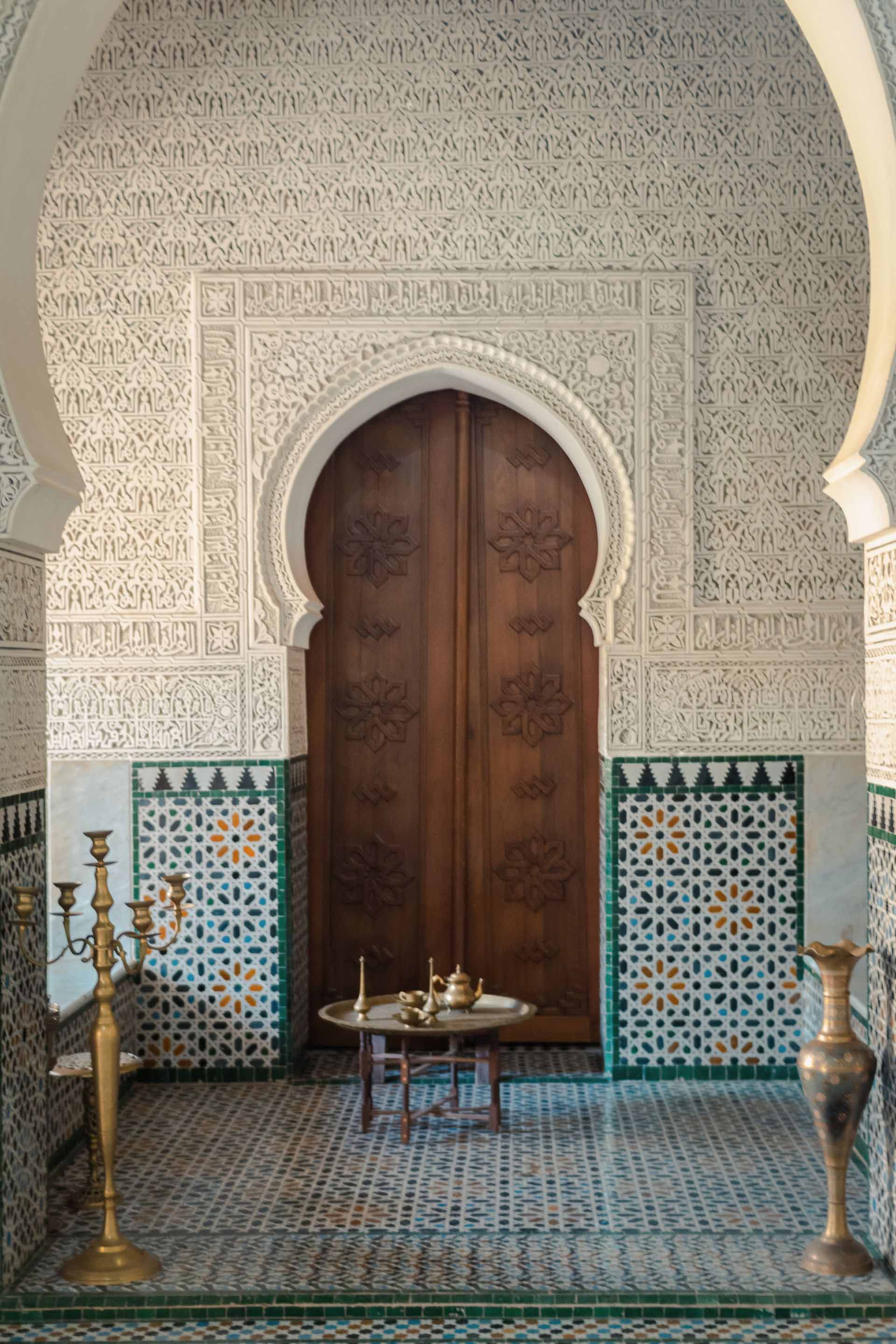
This morning, we explore Tlemcen, long the capital of the Zayyanid kingdom. We begin at the ramparts of Mansourah, built by Sultan Abu Yaqub, then visit the El Eubbad complex, with its madrasa and the mausoleum of Sidi Boumediene, the Sufi master who is the city’s patron saint. At the El Mechouar Citadel, built in 1317 and 1318 as the residence of the Zayyanid princes, we see the Royal Palace and its remains. We continue to the crafts centre and the Sidi Belahcen Museum, and end at the Great Mosque, built in 1136 by the Almoravid prince Ali ben Youssef.
After lunch in the city, we head to the El Ourit waterfalls and the railway bridge designed by Gustave Eiffel, then to Aïn Fezza to see Beni Add Cave, where several chambers in the limestone are filled with stalactites and stalagmites. We then drive to Oran by way of Rio Salado and Misserghin, check in at our hotel, and have dinner in the city.
Overnight: Royal Hotel Oran, MGallery (5-star), Oran (2 nights) (B, L, D)
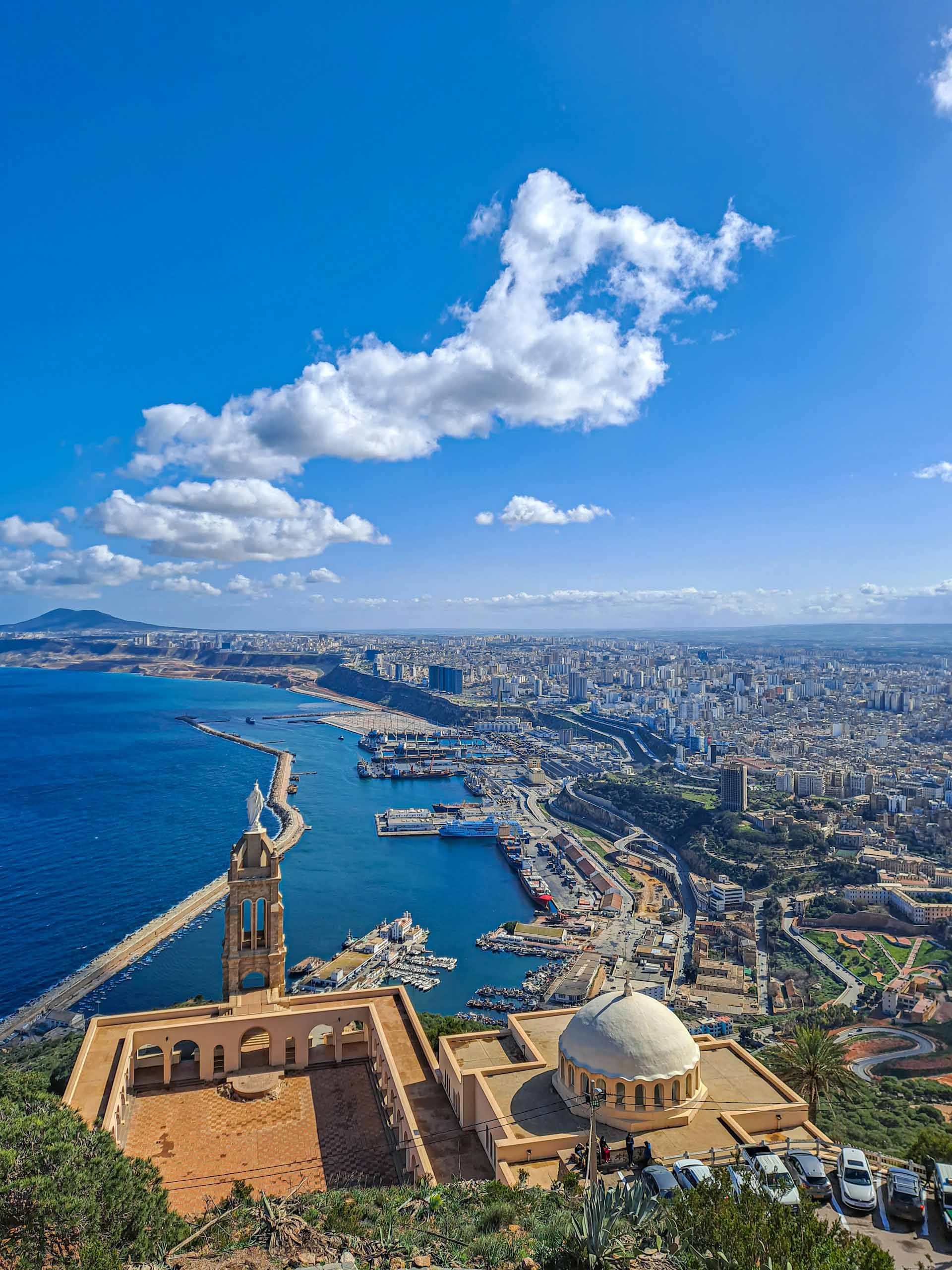
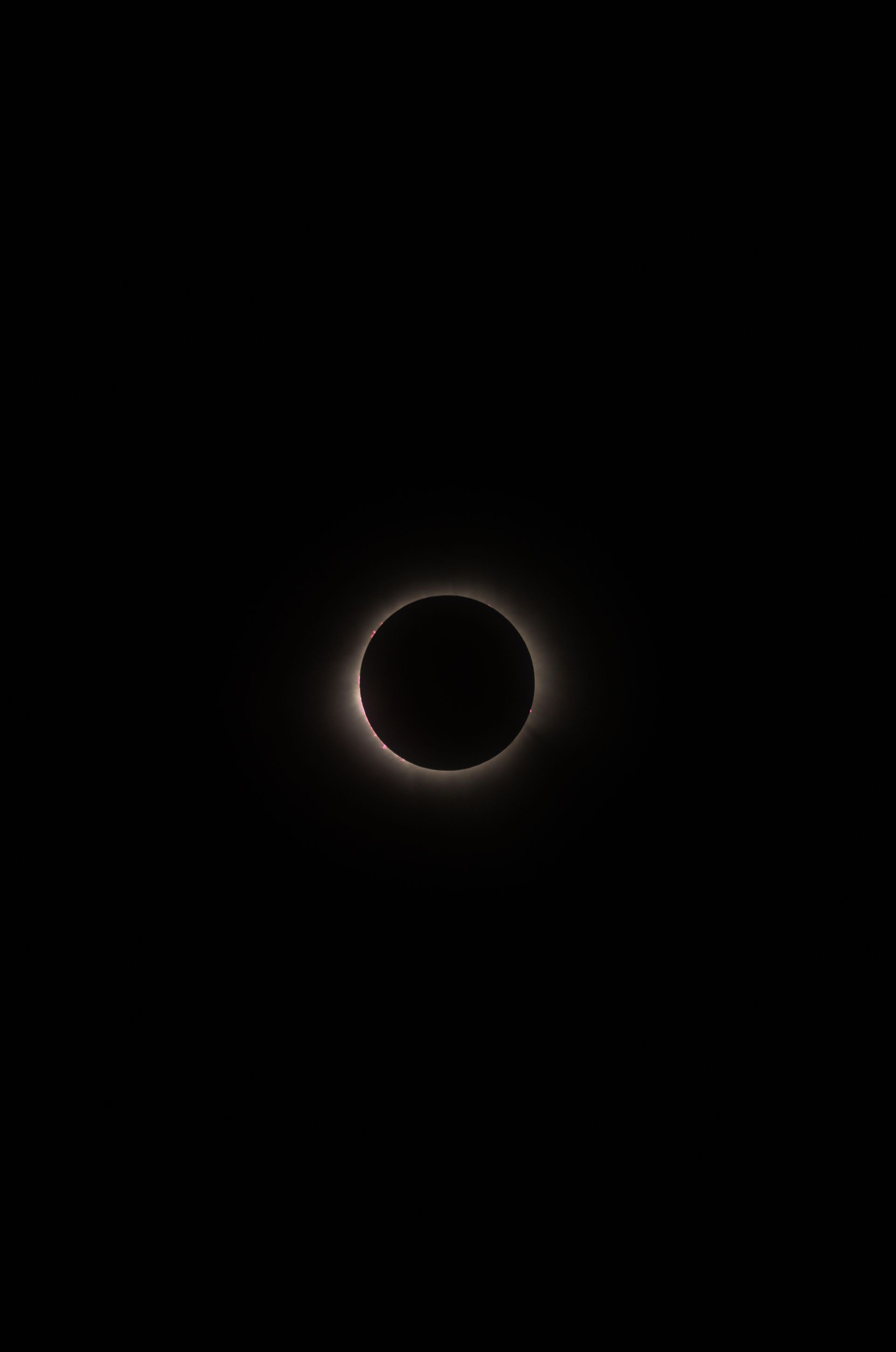
We rise early and travel to our viewing site, with time to settle in before the eclipse begins. In Oran, the partial phase starts at about 8:44 AM. At about 9:51 AM, the moon covers the sun completely and the sky darkens for a little over five minutes. Totality is the most dramatic part of the eclipse and also the shortest. The partial phase then continues until about 11:09 AM.
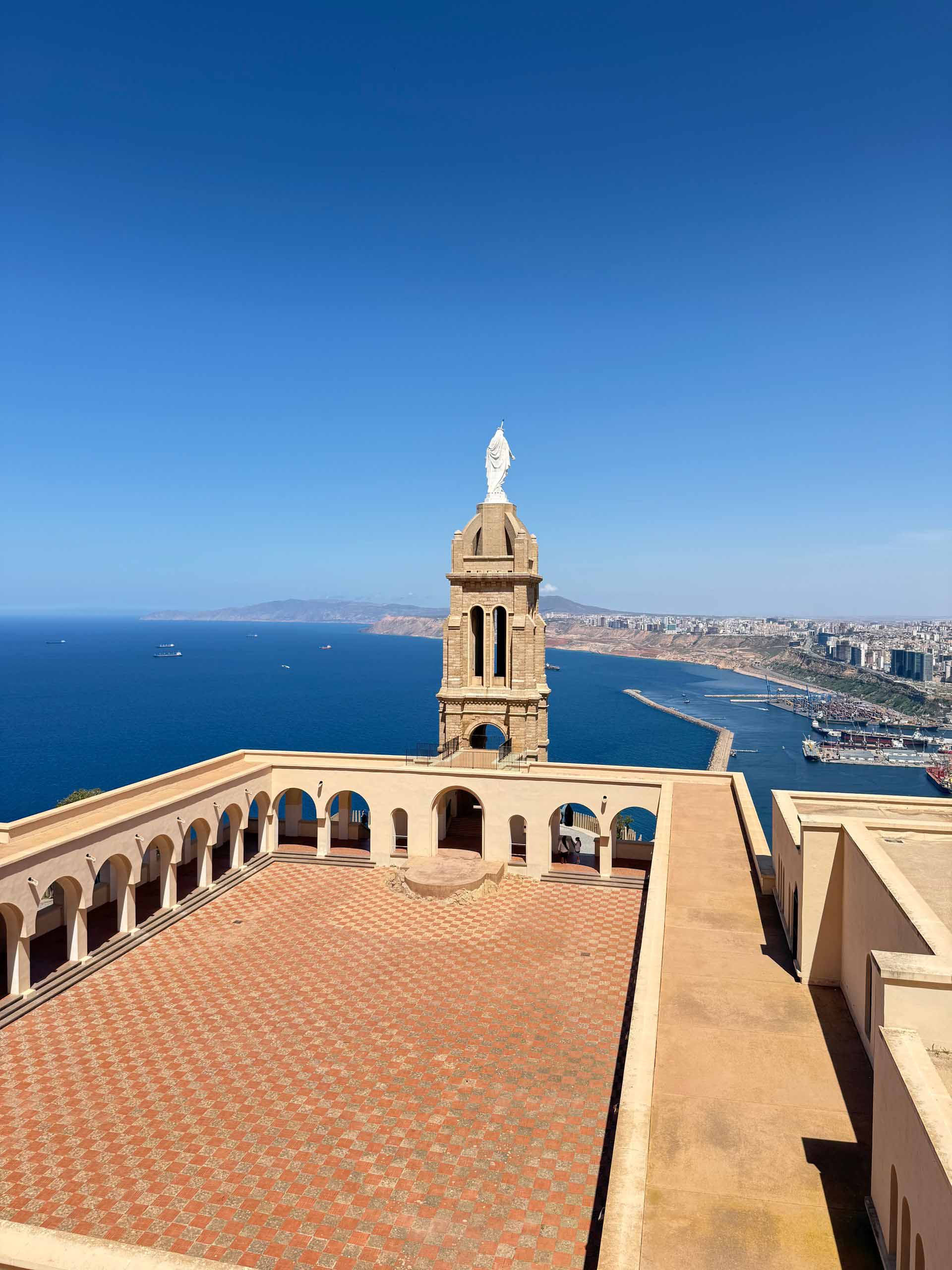
After the eclipse, we explore Oran, starting at Santa Cruz Fort, high above the city and the bay, then walking down to the Chapel of Santa Cruz. Lunch is seafood at La Pêcherie, the old fishing harbour. This afternoon, we walk past the Town Hall with its two lions, the Theatre, and the seafront to Karguentah Railway Station. Designed by Albert Ballu in Neo-Moorish style, the station looks like a mosque, with a clock tower shaped like a minaret, yet the Star of David appears in its grilles and dome and Christian crosses in its ceiling paintings. In the historic centre, we see Place du 1er Novembre and the old neighbourhoods, then finish with a stroll along the seafront, lined with cafés and squares that reflect Oran’s Mediterranean character. Dinner is in the city. (B, L, D)
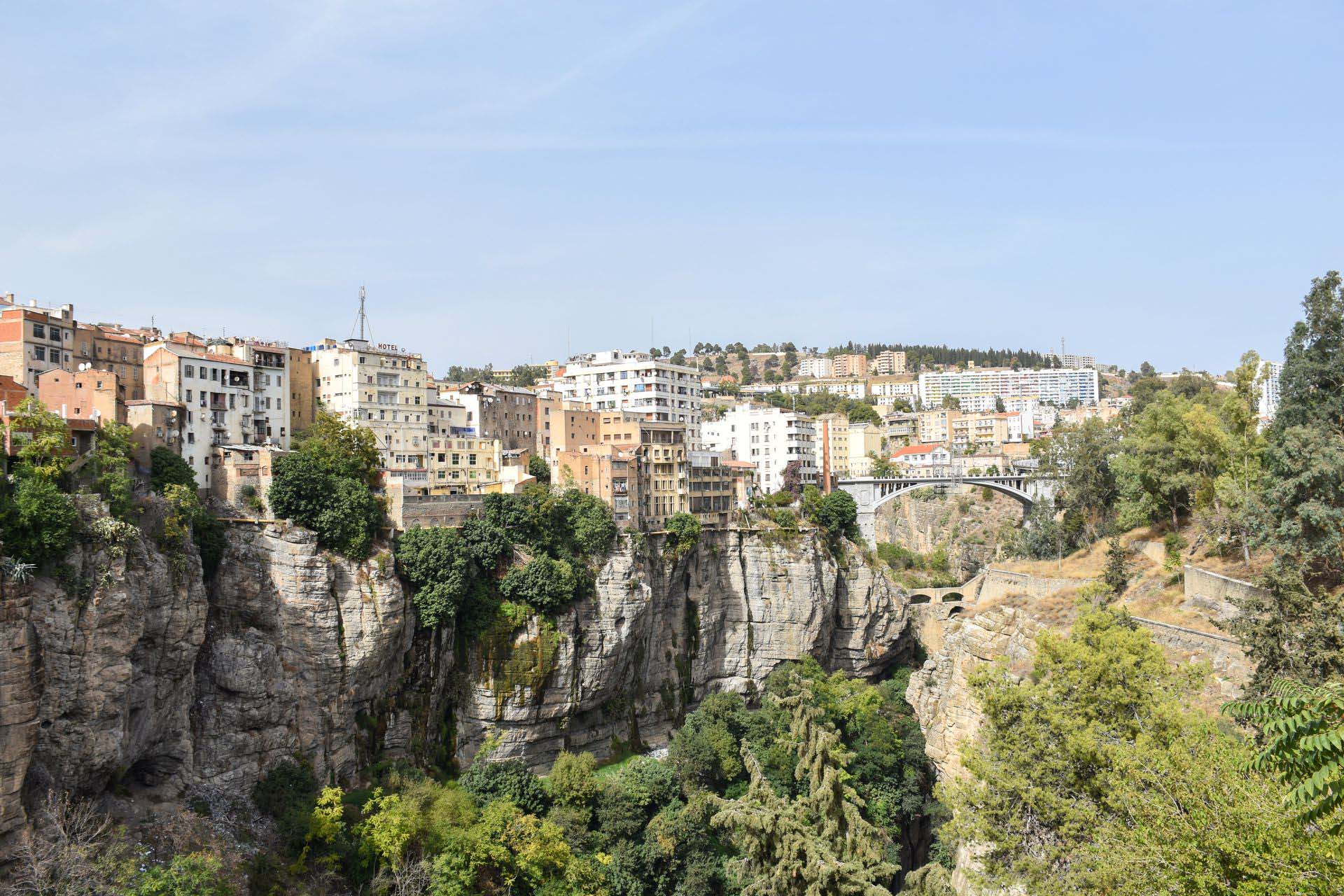
After an early breakfast, we fly from Oran to Constantine, departing at 9:15 AM and arriving at 10:55 AM. From the airport, we drive to Tiddis, also known as Castellum Tidditanorum, a Numidian and later Roman town that depended on ancient Cirta. Listed as a heritage site in 1992, it is well preserved, with a monumental gate, a baptistery, and the mausoleum of Quintus Lollius Urbicus. Tiddis was also known for its pottery, whose style resembles the Kabyle ceramics made today.
Back in Constantine, we check in at our hotel and have lunch at a local restaurant. Algeria’s third-largest city sits 649 metres above sea level, almost encircled by the deep gorges of the Rhumel River. As Cirta, it was the capital of Numidia, and it later took its name from the Roman emperor Constantine the Great. This afternoon, we visit the Cirta National Museum, founded in 1931, whose archaeology collection traces the Numidian, Carthaginian, Greco-Egyptian, Roman, Christian, and Muslim civilizations of the region. We continue to the Palace of Ahmed Bey, built between 1825 and 1835, the 11th-century Great Mosque, and the Regional Theatre, a former opera house. We end with a walk through the old town, with views of the suspension bridges over the Rhumel Gorge and a panorama from the War Memorial. Dinner is at a local restaurant.
Overnight: Protea Hotel Constantine (4-star), Constantine (1 night) (B, L, D)
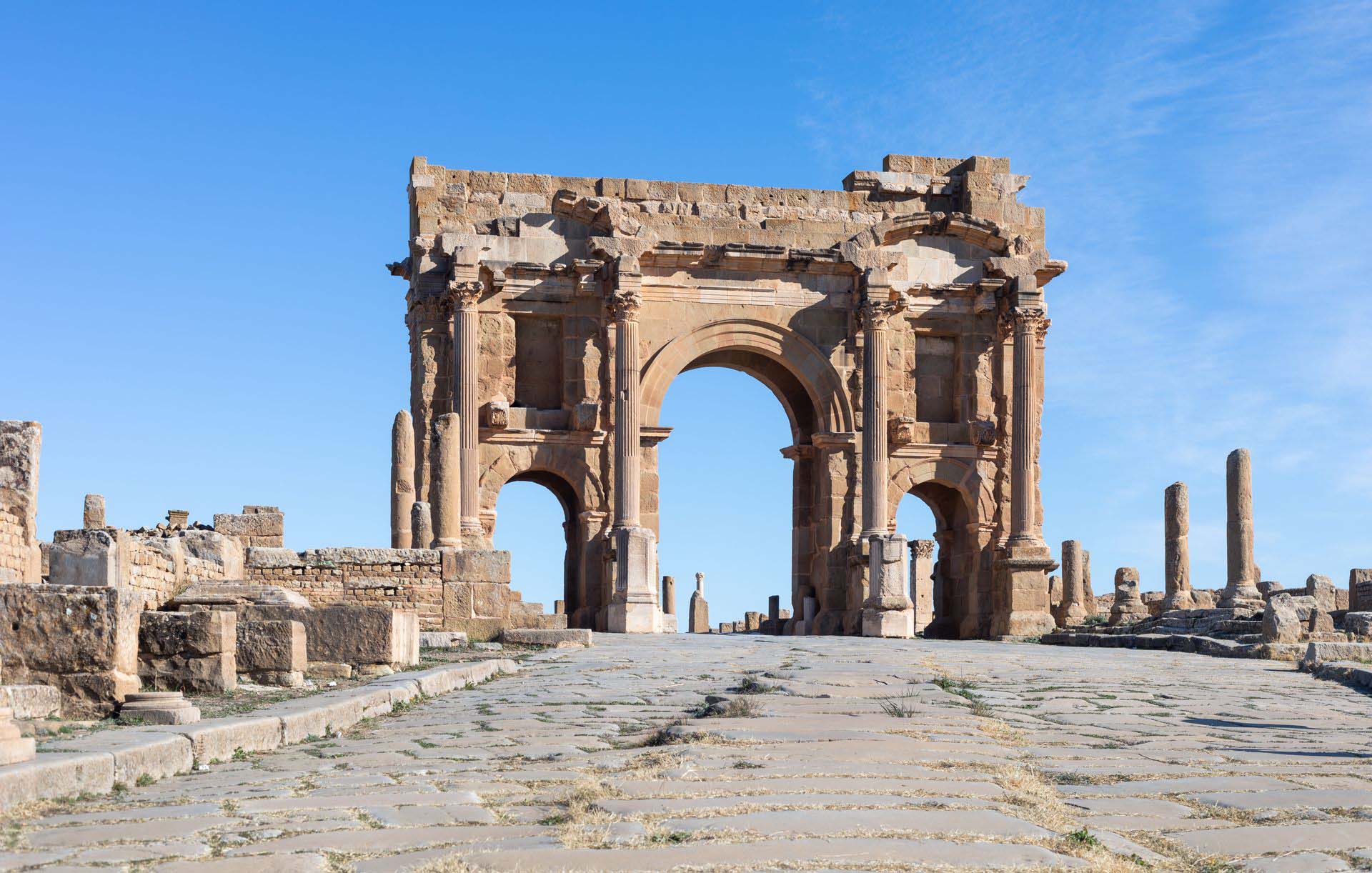
After breakfast, we leave the City of Bridges and head south. Our first stop is the Chott Tinsilt salt flats, followed by Medracen, a Numidian mausoleum dating to the 3rd century BC. We arrive in Timgad* for lunch. A UNESCO World Heritage Site, the city was founded under Emperor Trajan as a stronghold at the gateway to the Sahara, in the heart of the Aurès Mountains. Known in Roman times as Thamugadi, it controlled key routes across North Africa and was later taken by the Vandals, the Moors, the Byzantines, and the Arabs. Its remarkable state of preservation has earned it the name Pompeii of Africa. This afternoon, we see the Arch of Trajan, walk the Cardo Maximus and the Decumanus, cross the Forum, and pass temples, markets, houses, and libraries. In the late afternoon, we drive to Batna for dinner.
Overnight: Hotel Messaoudi (4-star), Batna (1 night) (B, L, D)
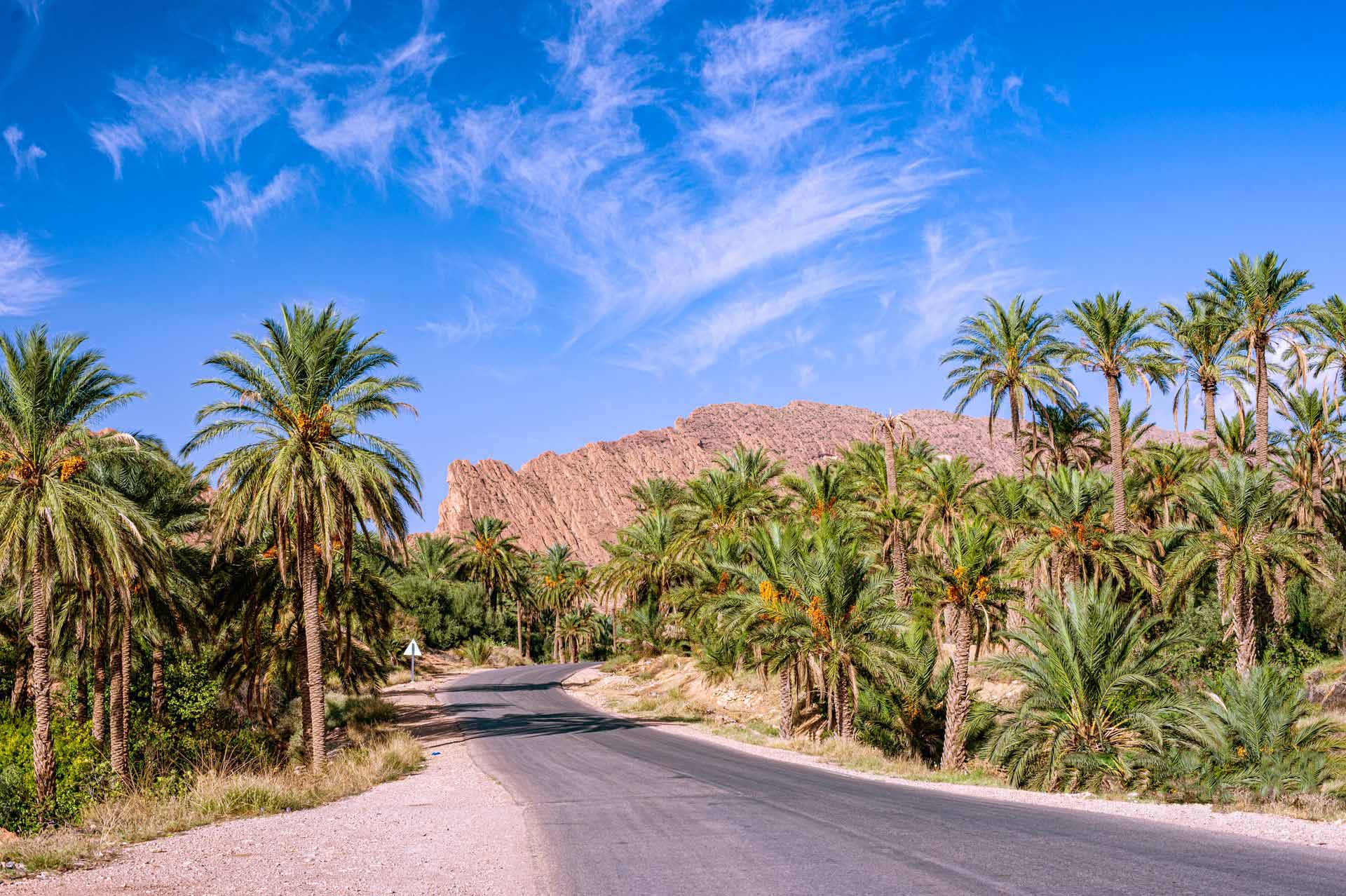
After breakfast, we drive into the Aurès Mountains to the Ghoufi Balconies, a dramatic canyon where the ruins of an abandoned Berber village cling to the cliffs. Continuing south through the wild Aurès range, we watch the landscape change as oases and palm groves appear. We arrive in Biskra, the Gateway to the Desert and a trading centre since ancient times. We check in at our hotel, and dinner tonight is in town, a chance to try the local cooking. In the afternoon, we visit the oasis and the traditional market, then the Tolga palm grove, known for its Deglet Nour dates and its traditional irrigation system. Here, we meet a local date producer.
Overnight: Hotel Nail (4-star), Biskra (1 night) (B, L, D)
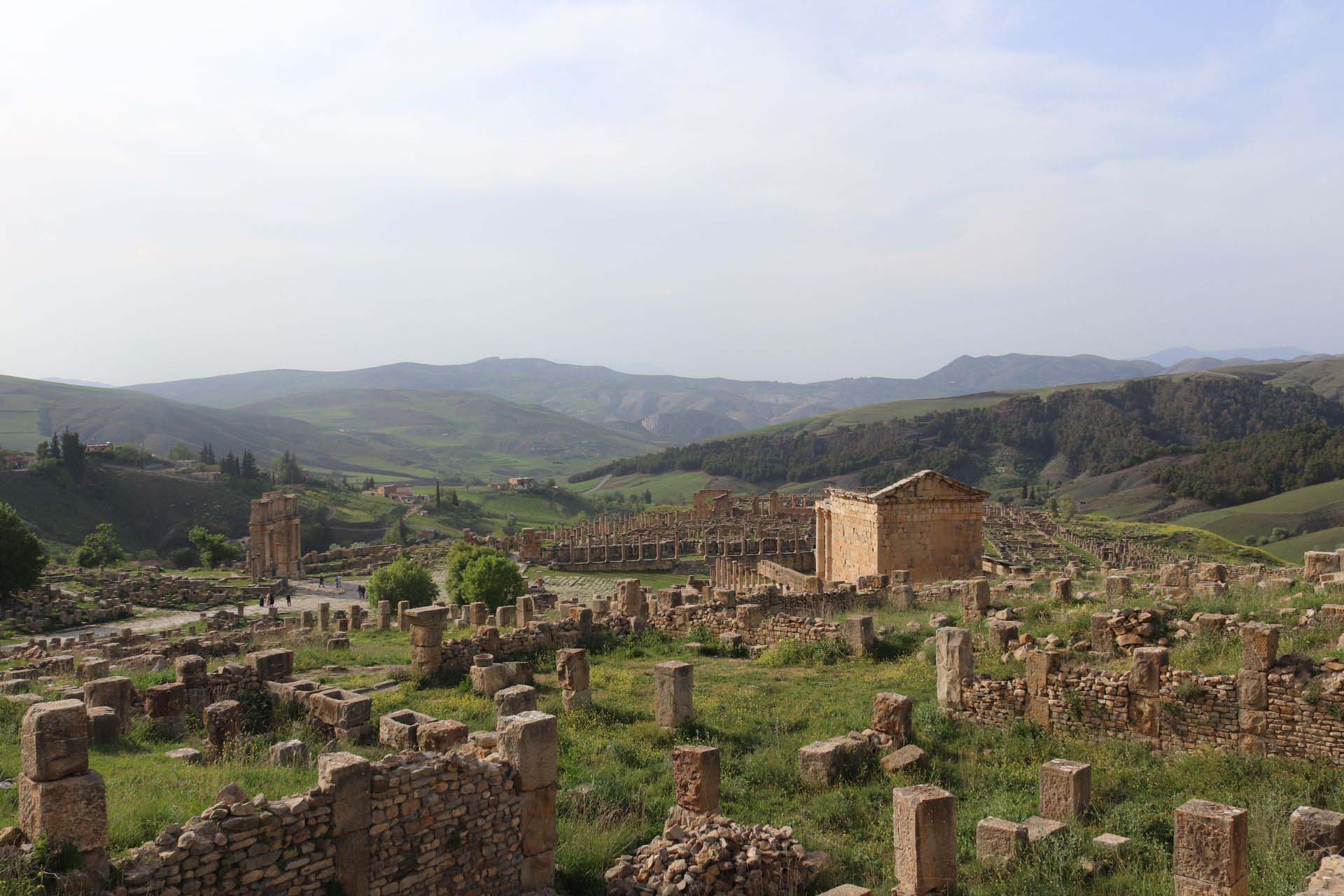
We leave Biskra early after breakfast. On the way, we stop at the El Kantara Bridge, known as the Roman Bridge, at the foot of the El Kantara Gorges. El Kantara means “the bridge” in Arabic, and this natural pass has long been the gateway between the High Plateaus and the Sahara. We reach Djémila* around 1:00 PM and have lunch at a small local restaurant. A UNESCO World Heritage Site set 900 metres above sea level, ancient Cuicul is one of the finest groups of Roman ruins anywhere, and a remarkable example of Roman town planning adapted to the mountains. Founded by army veterans under Emperor Nerva in the late 1st century, it grew under the Antonine and Severan emperors, and in late antiquity, a Christian quarter with a basilica and baptistery was added. We see the Arch of Caracalla, the Great Baths of Commodus, the Forum, the macellum, or market hall, and the Temple of Venus Genetrix. Before leaving, we visit the site museum, known for mosaics with remarkably fresh colours.
We continue to Sétif, check in at our hotel, and walk along the city’s broad shopping avenues, past the Aïn El Fouara fountain, the city’s best-known symbol. Dinner is at a local restaurant.
Overnight: Park Mall Hotel (4-star), Sétif (1 night) (B, L, D)
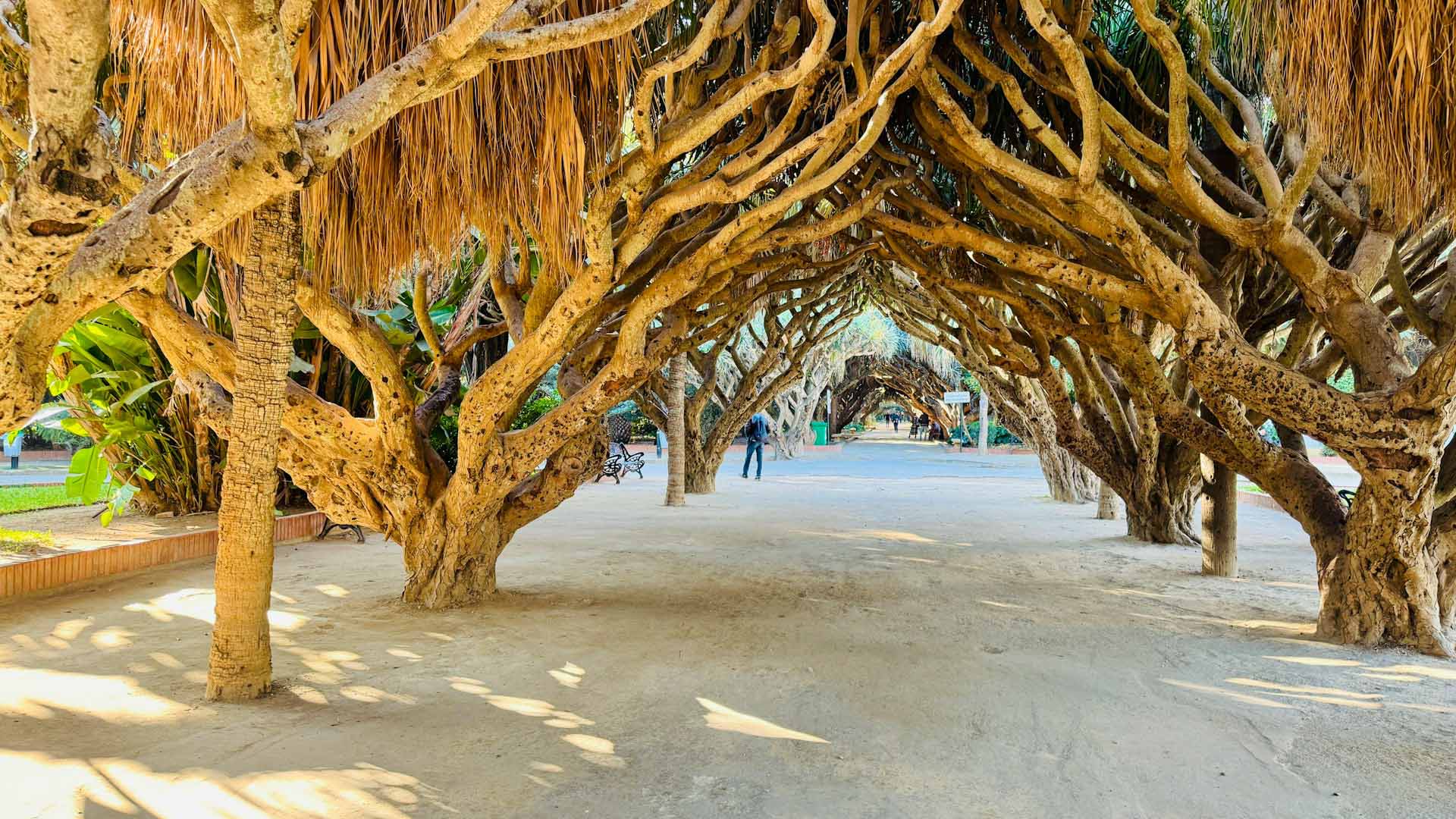
This morning, we visit the Sétif National Public Museum, whose archaeological finds, sculptures, inscriptions, coins, and fine mosaics trace the long history of the Sétif region. We then drive to Algiers on the highway, with lunch along the way. We arrive around 3:00 PM and stop at the Jardin d’Essai, a botanical garden with English and French sections, for a relaxing walk. This evening, we close the tour with dinner in the city.
Overnight: Lamaraz Arts Hotel (4-star), Algiers (1 night) (B, L, D)
The morning is free to rest or shop. Hotel check-out is at 10:00 AM. At the appointed time, we transfer to the airport for our onward flight. (B)
Departure Dates & Prices
| 2027 | Per Person on Twin Sharing |
Single Room Supplement |
|---|---|---|
| Departure(s) | ||
| July 29–August 8 | US$ 5430 | US$ 842 |
| 2027 | Per Person on Twin Sharing |
Single Room Supplement |
|---|---|---|
| Departure(s) | ||
| July 29–August 8 | CA$ 7814 | CA$ 1212 |
Notes
Inclusions
Participants
This tour operates on a minimum of 2 and a maximum of 16 participants.
Customised Itinerary
If you would like to have a tour on dates other than the above ones or with a customised itinerary, please contact Bestway Tours & Safaris and we will be happy to work out an exclusive program for you.
Recommended Trips



Sign up for our Bestway Club newsletter and be the first to know about special discounts, new tours and travel updates!