
Be immersed in the less-explored west African destinations of Togo, Benin and Ghana on this once-in-a-lifetime cultural odyssey. Our journey provides a unique and interactive window into the ancient cultures found here—meet a great Ashanti chief, hear the story of a settlement of “witches”, discover villages of fetish priests that have existed almost unchanged for centuries, and much more. The highlight of our trip is participating in Benin’s mysterious Voodoo Festival, complete with traditional costumes, dancing, masks and processions. Travel to this off-the-beaten-track journey – a one of its kind with all details taken care of by us, including all meals, carefully selected hotels, through guided tours and an incredibly cultural immersion program.
| Tour Information | ||
|---|---|---|
| Duration | : | 15 days |
| Minimum | : | 2 persons |
| Maximum | : | 16 persons |
| Price (From) | : | |
| International air not included | ||
Welcome to Lomé, Togo’s vibrant capital! Founded by the Ewe people in the 18th century, Lomé became the capital of the German colony of Togoland in 1897. Unique in its history, Lomé is the only African city to have been governed by the Germans, British, and French, and is one of the few capitals in the world that borders another nation. This distinctive heritage is reflected in the city's architecture and the lifestyle of its people.
Upon arrival at Lomé International Airport, you will be greeted and transferred to your hotel. Check-in begins at 3:00 PM, and the rest of the day is free for you to relax and unwind.
Overnight: Hotel Sarakawa, Lome (1 night)
(Ensuite rooms with air conditioning)

We start with exploring the central market, renowned for its influential "Nana Benz" traders for the luxurious "pagne" fabric imported from Europe and distributed across West Africa (unfortunately, the market has been partially destroyed by fire). We continue on to the administrative quarter, where the ambiance of the colonial era still lingers, then the fetish market, which offers an eclectic assortment of ingredients for love potions and magical concoctions. Moving to a remote village, we'll participate in the Voodoo ceremony. Listen to the frenetic rhythm of drums and the chants of the adepts as they summon the voodoo spirits.
These spirits take possession of some dancers, plunging them into a deep trance. They exhibit signs of being possessed with eyes rolling back, grimaces, convulsions - yet remaining impervious to fire or pain. Among the voodoo divinities that may manifest are Sakpata, Heviesso, and Mami Water. In this intimate setting, surrounded by the enchanting atmosphere of the ceremony, we'll come to grasp the significance of the saying: "In your churches, you pray to God; in our voodoo shrines, we become Gods!". Cross into Benin.
Overnight: Hotel Casa del Papa, Ouidah (2 nights) (B, L, D)
(Swimming pool, oceanfront bungalows with ensuite and air conditioning)
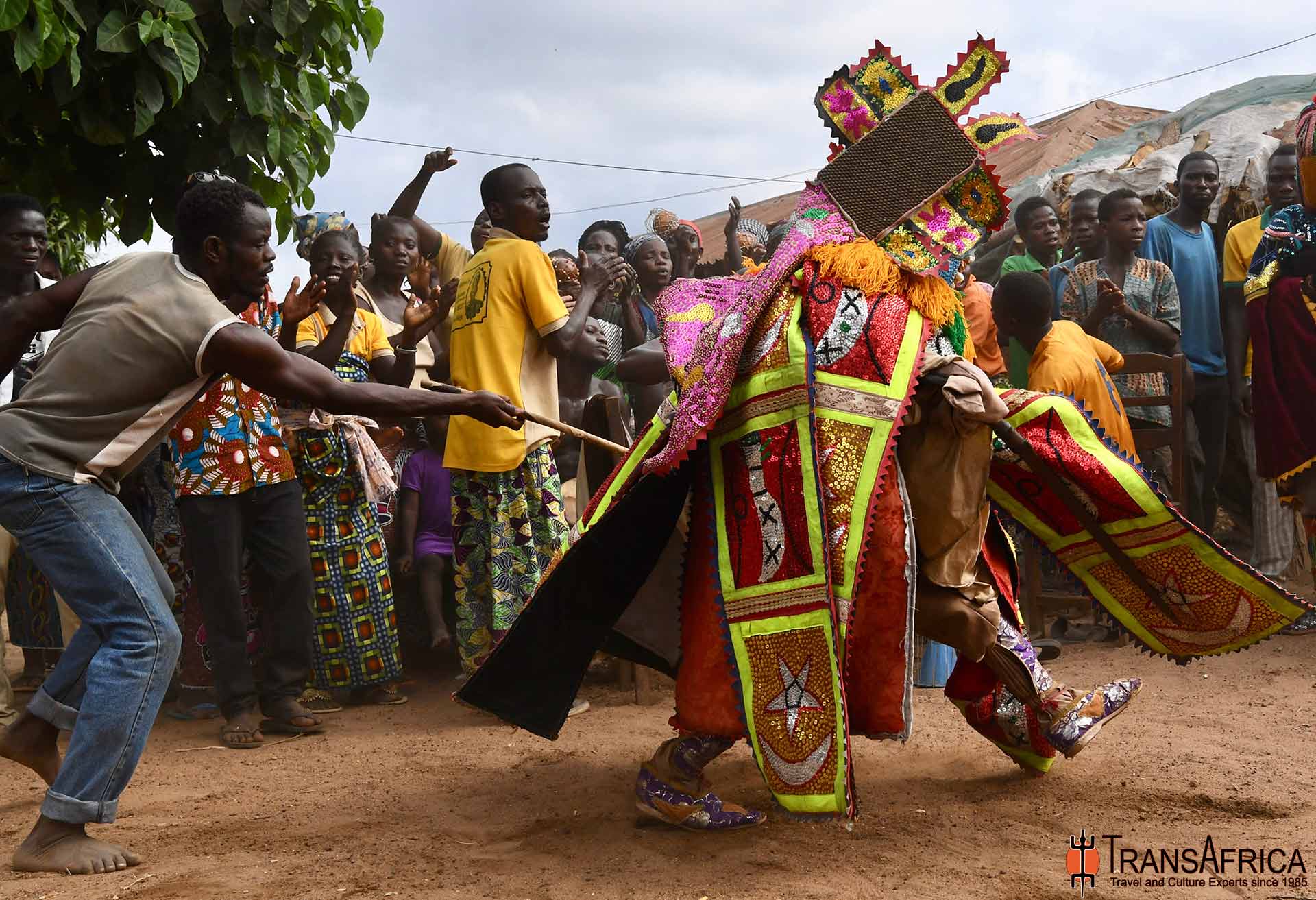
Every second Friday of January, Benin observes a national holiday honoring its ancestral traditional religion. We drive to Ouidah to experience the country's most significant festival, where dozens of voodoo ceremonies draw thousands of adepts, traditional chiefs, and fetish priests. These days offers a rare opportunity to see diverse sacred masks and interact with high-ranking voodoo leaders in full ceremonial regalia.
Since 2024, the official festival has been managed by a dedicated committee, with the final schedule of events typically confirmed closer to the celebration date. (B, L, D)

Morning, we explore the historical significance of Ouidah, a key town in the transatlantic slave trade. Ouidah is home to rare Afro-Brazilian architecture, and its spiritual atmosphere is marked by the juxtaposition of the Voodoo Python Temple and the Catholic Cathedral.
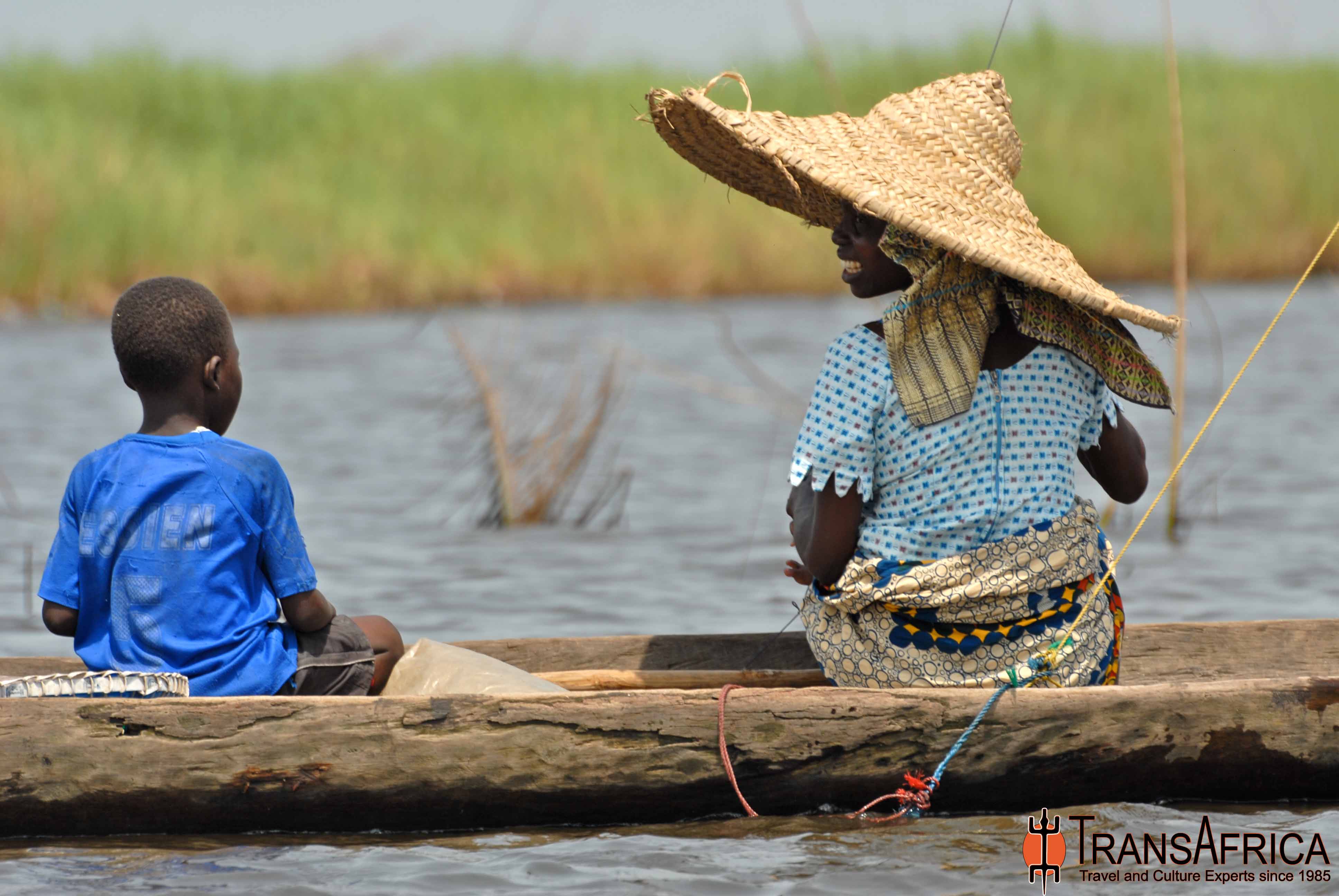
We will then head to Lake Nokwe, where we embark on a motorized boat to reach Ganvié, the largest and most picturesque stilt village in Africa. Ganvié, home to around 25,000 people of the Tofinou ethnic group, is a unique settlement of wooden huts built on teak stilts. Despite its long history, the village has preserved its traditions and natural beauty.
Daily life in Ganvié revolves around dugout canoes, with men fishing, women trading at the floating market, and children navigating to school or playing. The serene beauty of the village provides a rare glimpse into a way of life that remains connected to the water. Continue on to Abomey.
Overnight: Hotel Tennessee/Hotel Bis, Abomey (1 night) (B, L, D)
(Basic ensuite rooms with air conditioning)

On Sunday, we attend a service of the Celestial Church of Christ. Dozens of practitioners, dressed in uniform white robes, gather for a syncretic prayer where Christian symbols and animist sensibilities merge into a lively celebration of song and spiritual possession.
In Abomey, we visit the community of forgerons (blacksmiths), who for centuries forged the weapons and tools that sustained the Dahomey kings. While the Royal Palace is currently closed for refurbishment, the craftsmanship of this guild remains a testament to the kingdom's military past.
The day concludes with the spectacular Gelede mask dances. Dedicated to Mother Earth, this Yoruba ritual promotes the fertility of the people and the soil. The brightly painted masks, each representing a unique character known only to initiates, move with puppet-like precision. Using mime and humor to relate myths and moral tales, the performance is a captivating blend of street theater and sacred ritual. We then drive to Dassa for the evening.
Overnight: Hotel Jeko, Dassa (2 nights) (B, L, D)
(Basic ensuite rooms with air conditioning)
After breakfast, we depart across a landscape of rocky hills to reach a Fulani encampment. The Fulani (also known as Peul) are primarily semi-nomadic shepherds found across the Sahel, from the Atlantic to the Red Sea. In these camps, we observe their traditional division of labor: men manage the herds while women oversee the domestic space, producing milk and cheese for trade. The Fulani are noted for their distinct aesthetic traditions, including facial tattoos that communicate status and identity through a complex visual language.
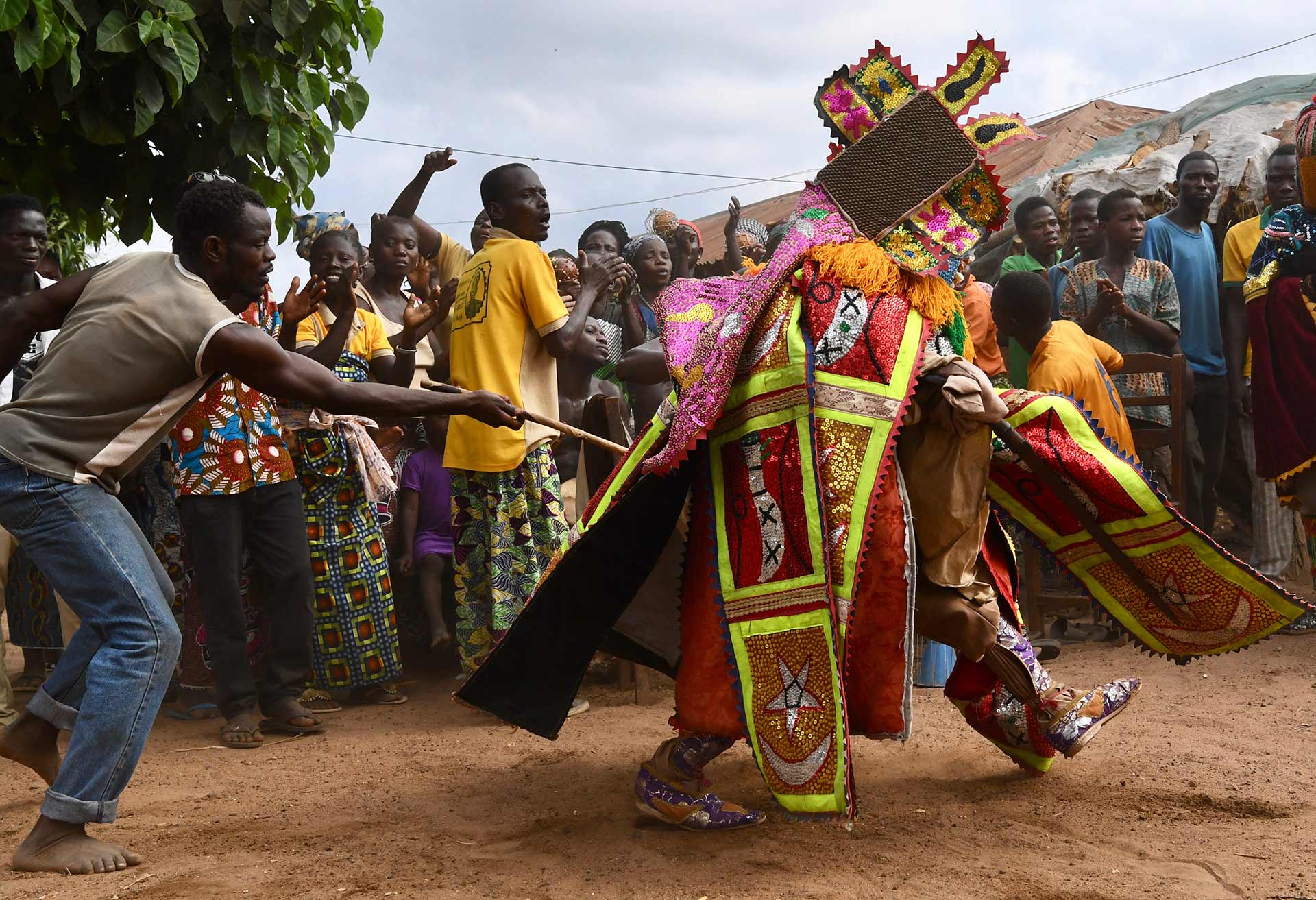
In the late afternoon, we attend an Egun mask ceremony. According to local belief, these masks do not just represent the deceased; they are the spirits of the ancestors. Initiates of the Egun cult, dressed in vibrant, multi-colored garments, emerge from the forest to process through the village alleys.
The masks perform with aggressive, sudden movements to command respect from the crowd. Spectators keep a safe distance, as physical contact with an Egun—an entity from the "other world"—is believed to cause immediate collapse. Those who are touched are traditionally taken to a fetish convent to recover. (B, L, D)
Today we drive north, stopping briefly at the Dankoli Shrine in Savalou. This site is considered one of the most important voodoo shrines in Benin, where devotees drive wooden pegs into the ground as a way to petition the gods. After our visit, we cross the border into Togo and continue to Sokode, a city inhabited by the Kotokoli and Tem ethnic groups.
After dinner, we head to a Tem village to witness the traditional fire dance. In the center of the village, a large bonfire illuminates the dancers as they move to a hypnotic drum beat. During the ritual, participants leap into the glowing embers and pick up burning coals, passing them over their bodies and even placing them in their mouths. The dancers perform these feats without showing signs of pain or sustaining burns, a display that remains a mystery to outsiders—whether attributed to self-suggestion, courage, or the protective power of local fetishes.
Overnight: Hotel Solim/Hotel Lamireille, Sokode (1 night) (B, L, D)
(Ensuite rooms with air conditioning)
*Please note no Twins are available at this accommodation.

This morning, we experience the equestrian traditions of the Kotokoli, an Islamic tribe that migrated from the north. Historically, the Kotokoli established their power through their cavalry, and they continue to maintain the art of the "Fantasia," a tradition introduced by North African Arabs centuries ago. We witness a display of horsemanship where knights in traditional costumes mount horses adorned with colorful harnesses. In a scene reminiscent of the Middle Ages, the riders coordinate their mounts to the rhythm of drums before launching into high-speed gallops.
Later, we drive into the mountains to encounter the Kabye ethnic group. We visit their traditional dwellings, known as soukala, which consist of several adobe huts connected by a perimeter wall, each housing a patriarchal family. In these high-altitude villages, we observe ancestral labor techniques: women craft pottery without the use of a potter's wheel, while blacksmiths continue to forge iron using heavy stones in place of hammers and anvils, a practice dating back to the early Iron Age.
Overnight: Hotel Lumen Valley/Hotel Kara, Kara (2 nights) (B, L, D)
(Air-conditioned ensuite bungalows)

An optional breakfast is served in the African bush, joined by two young female elephants. These elephants were rescued as calves after their mother was lost to poachers and have since formed a voluntary bond with their human caretakers. Though they are free to roam and leave the area at any time, they frequently choose to remain nearby and interact with visitors during the morning meal.
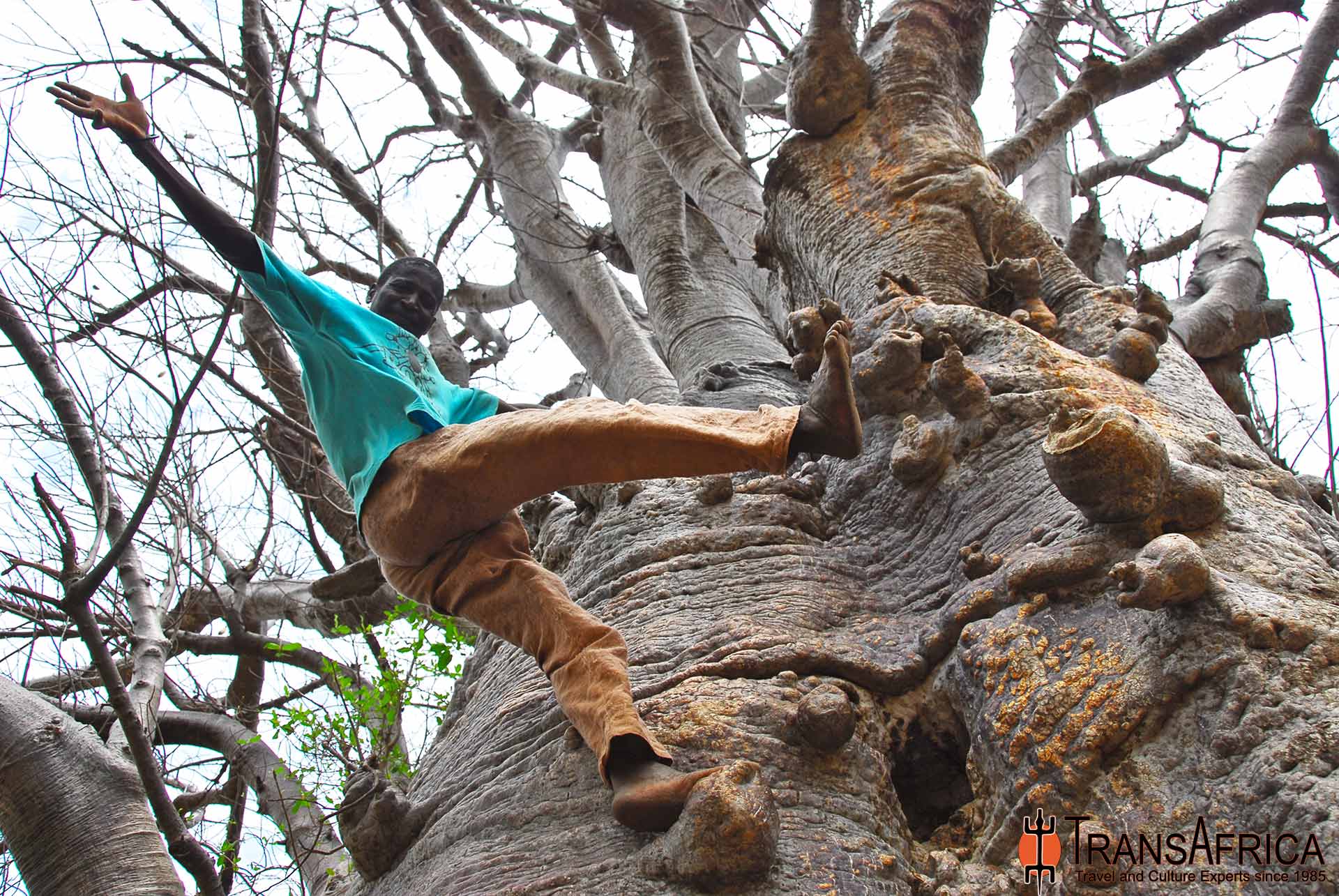
Afterward, a track leads us into the remote Atakora Mountains to explore the valleys of the Tamberma (also known as the Betammaribe or Somba). To defend against historical slave raids from the north, these people sought refuge in this rugged environment, developing unique fortified dwellings. These adobe structures, resembling miniature medieval castles, were famously described by architect Le Corbusier as "sculptural architecture." Each house is handcrafted layer by layer by molding mud balls into complex, functional forms.
The Tamberma share strong animist traditions and anthropological roots with the Dogon of Mali, marked by the presence of large phallic shrines at the entrances of their homes. We focus our visit on the Togo side of the border, where the combination of untouched landscapes, sacred baobabs, and traditional architecture has been recognized as a UNESCO World Heritage Site since 1998. With the permission of the inhabitants, we enter their homes to gain insight into their daily lives before returning to our base in the Kara region. (B, L, D)
The journey continues south, beginning with a stop in Atakpame, a hillside town serving as a central hub for forest products. Here, we observe local weavers operating small traditional looms. These craftsmen produce large, vibrant Kente fabrics, a textile art form for which the region is well-known.
Overnight: Hotel Residence Parc/Jess Hotel, Kpalime (1 night) (B, L, D)
(Ensuite rooms with air conditioning)
We cross the Togo border at Kpadape and enter the Volta Region of Ghana, heading toward the territory of the Krobo tribe. The Krobo are internationally recognized for their glass beads, which play a central role in both local aesthetics and traditional ceremonies.
During our visit to a local artisan community, we observe the traditional bead-making process, which has remained unchanged for centuries. Craftsmen recycle scrap glass by grinding it into a fine powder, which is then meticulously layered into patterns within handmade clay molds coated in kaolin. After being fired in specialized kilns to melt the glass, the beads are decorated, polished, and strung. We will have the opportunity to participate in this process and create a custom bead alongside the artisans.
Overnight: Afrikiko Resort, Akosombo (1 night) (B, L, D)
(Air-conditioned ensuite rooms)
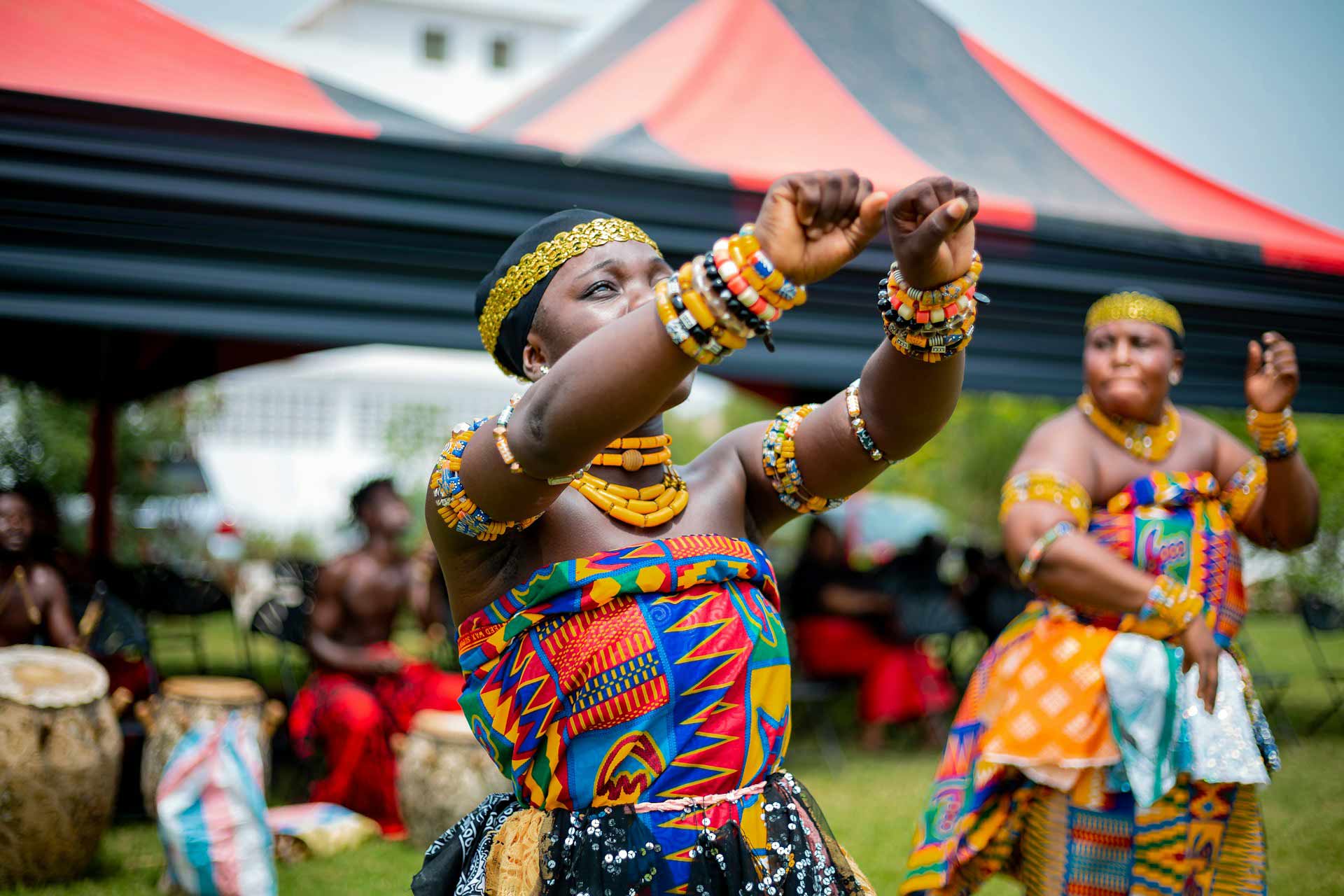
Kumasi, the historical and spiritual heart of the Ashanti Kingdom, was once one of Africa’s most powerful realms. Tribute to the Asantehene (King) reflects the kingdom’s past glory and enduring Ashanti pride. The city, home to nearly four million people, has one of Africa’s largest markets, offering Ashanti crafts like leather goods, pottery, beads, Kente cloth, and a wide variety of tropical fruits and vegetables.
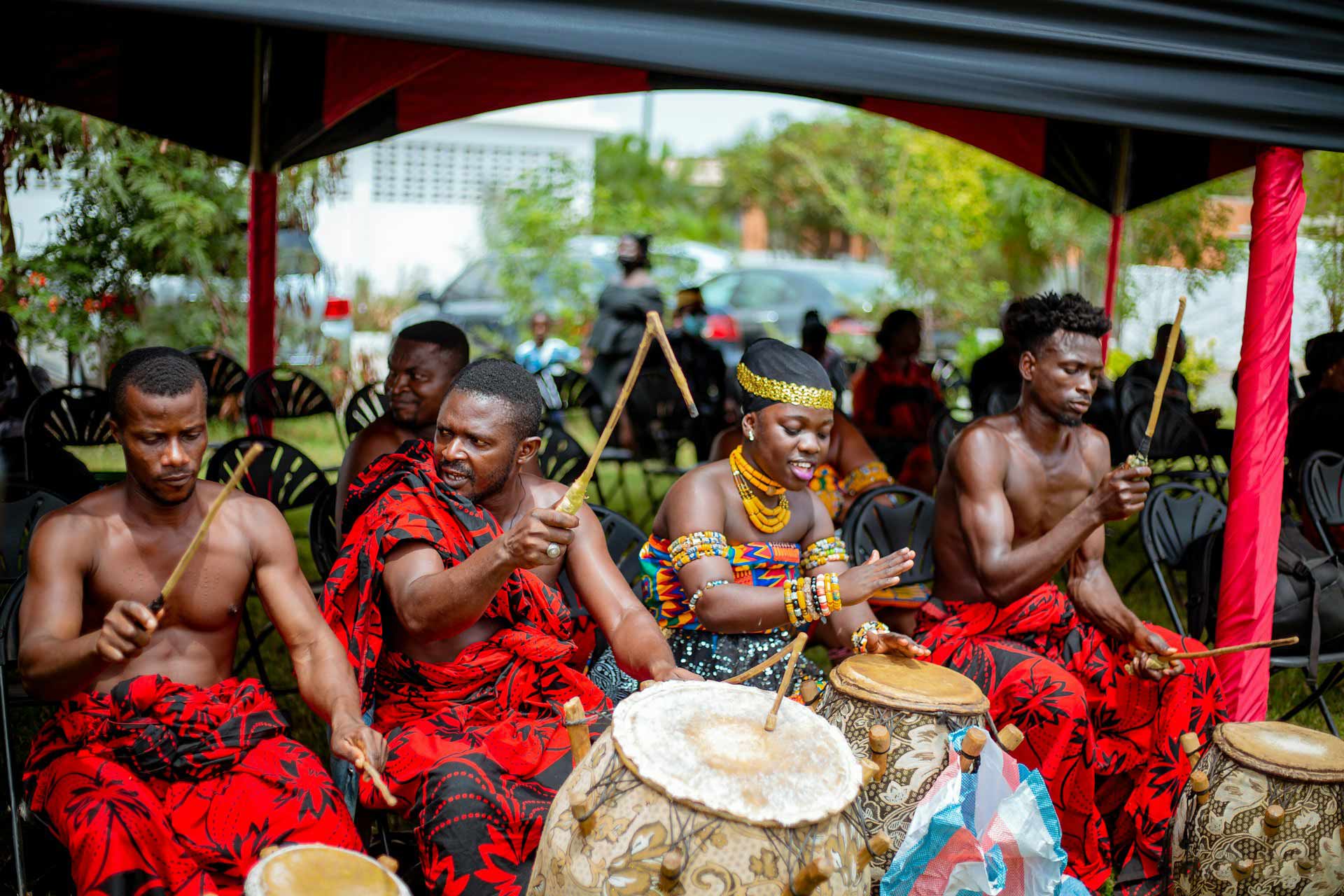
Lunch is at Jofel, a well-known Ghanaian chain offering local and Western cuisine. In the afternoon, we may attend a traditional Ashanti funeral—a festive ceremony where mourners wear red or black togas, honoring the deceased’s return as an ancestor. The chief arrives with his court under umbrellas while drummers guide dancers performing symbolic moves.
We then drive to the hotel to end the day.
Overnight: Hotel Lancaster, Kumasi (1 night) (B, L, D)
(4-star international standard, swimming pool, ensuite rooms with air conditioning)
In the morning, we continue exploring Kumasi with a visit to the Ashanti Cultural Centre, featuring a rich array of Ashanti artifacts displayed in a detailed replica of an Ashanti home. We also tour the Royal Palace Museum, home to a unique collection of Ashanti gold jewelry and ceremonial regalia. In the afternoon, drive south toward Elmina.
Overnight: Coconut Grove, Elmina (2 nights) (B, L, D)
(Ensuite rooms with air conditioning)
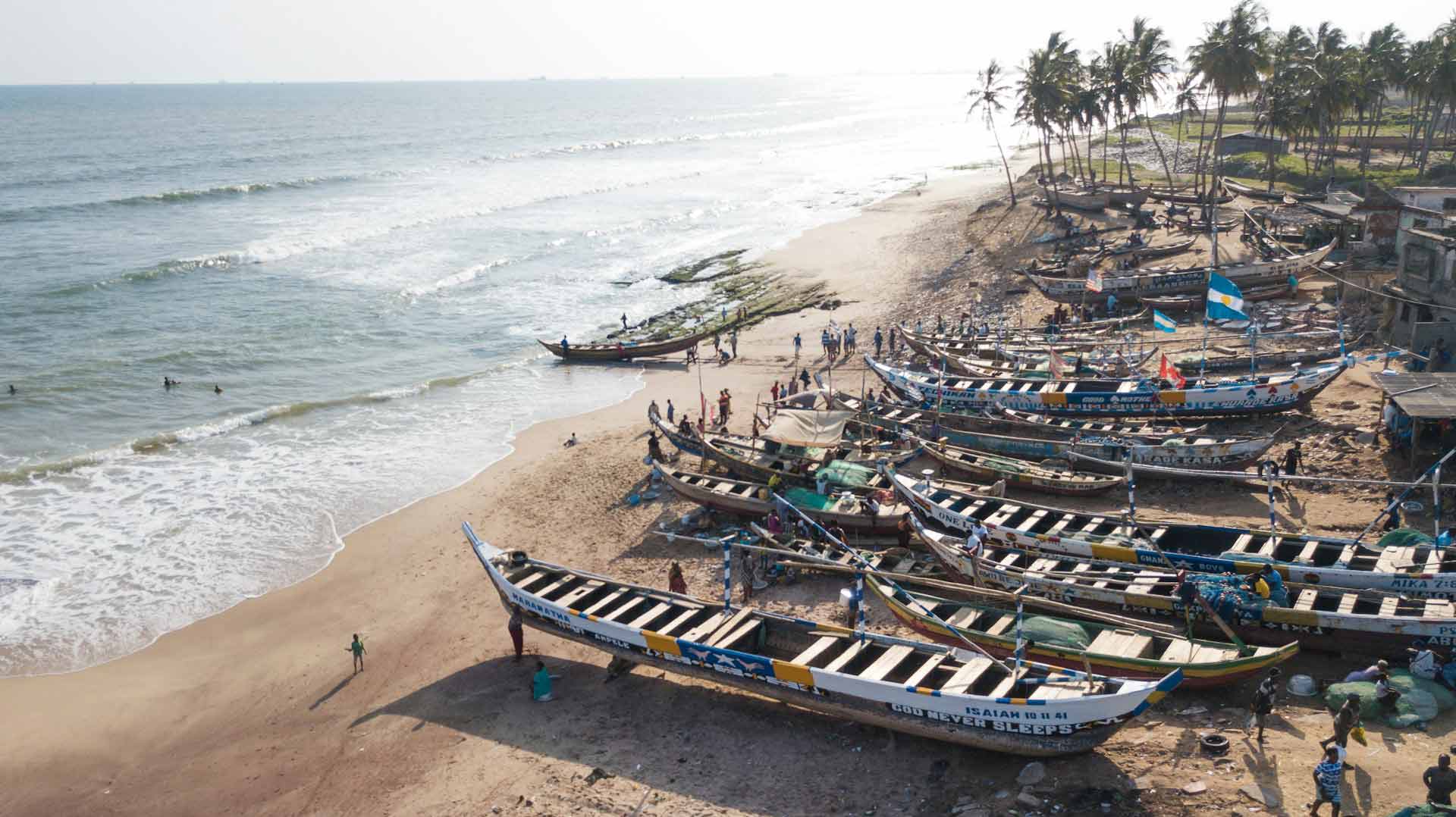
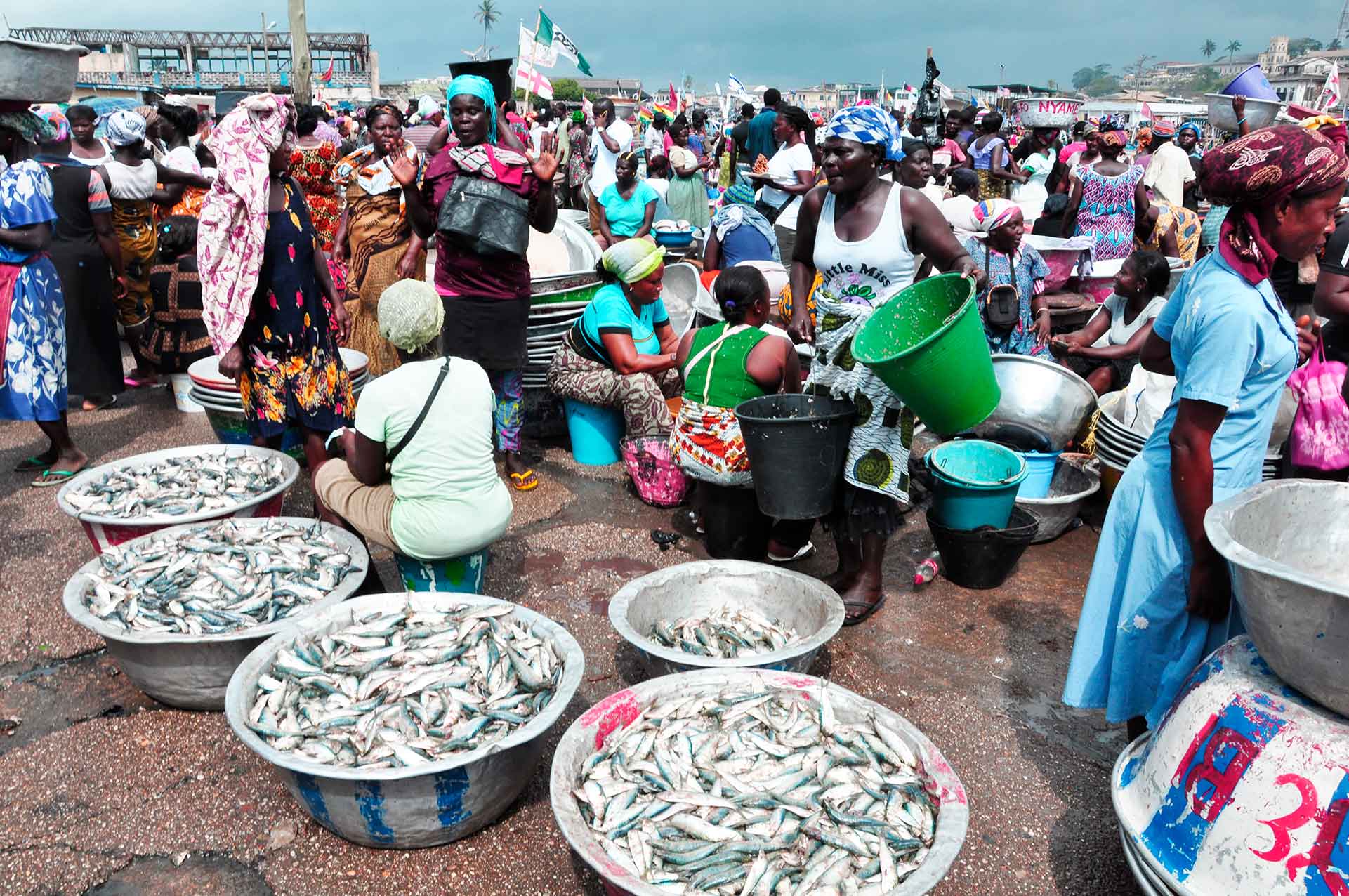
Ghana’s coast, once the Gold Coast, is dotted with over 50 historic forts and castles linked to the gold, ivory, and slave trades. We visit Elmina Castle (Sao Jorge da Mina), the oldest and largest European building in Africa, built by the Portuguese in 1482. The castle, now a UNESCO World Heritage site, has served as a warehouse for gold, ivory, and slaves. Facing it is a bustling traditional fishing harbor, where skilled fishermen navigate large wooden pirogues through strong ocean waves. We’ll explore the harbor by boat for a unique perspective.
A few kilometers inland, we enter Kakum National Park, home to a remarkable canopy walkway. Suspended 120–150 feet above the ground, the walkway offers stunning views of the rainforest canopy, allowing a rare perspective on the forest from above. (B, L, D)
In a nearby town, we visit the Posuban, colorful shrines of the Asafo companies featuring full-size statues, where Asafo warriors still perform libations. These warrior groups of the Fante tribes, active during the slave trade, continue to protect their communities.
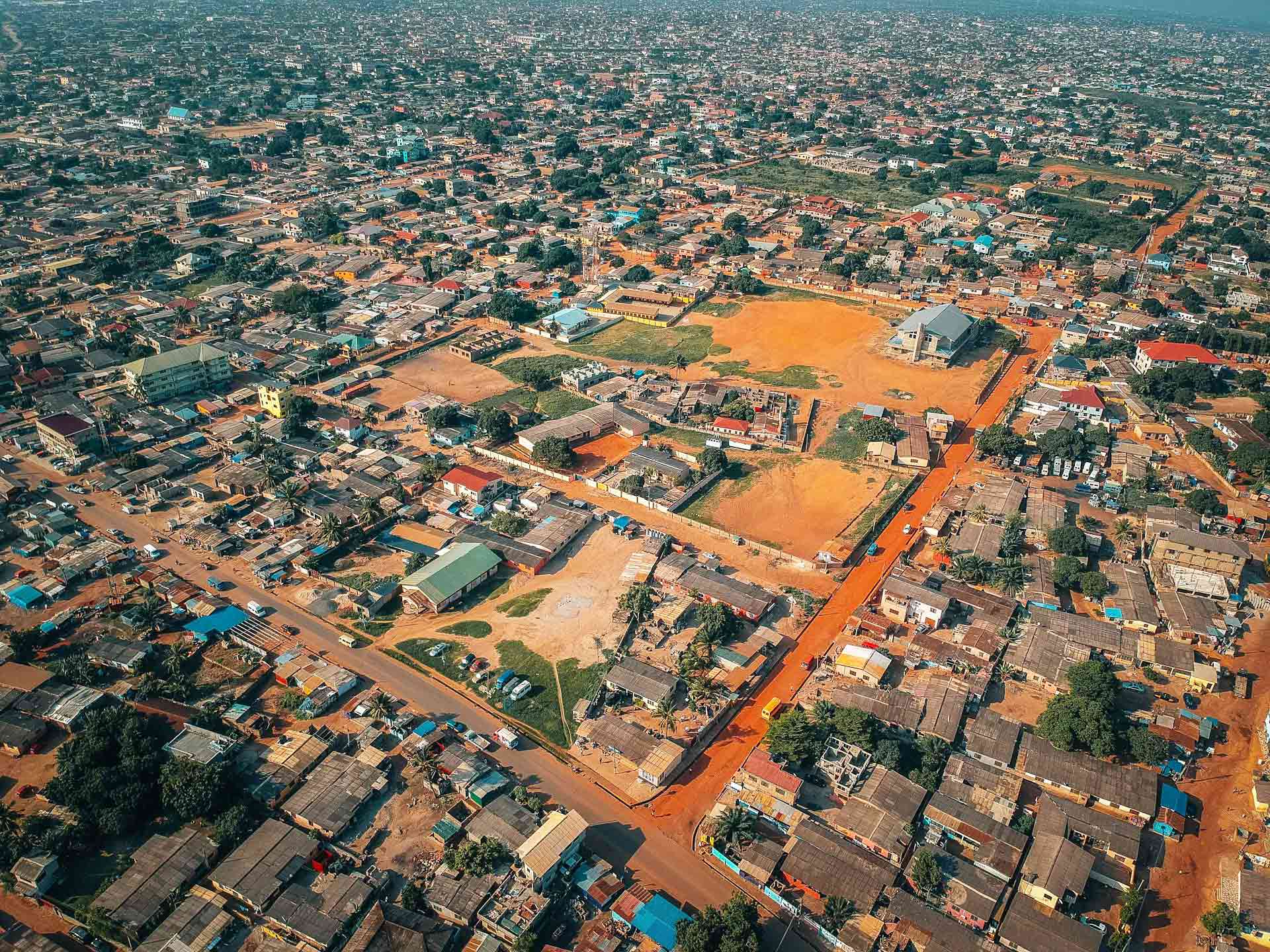
We then drive to Accra, Ghana’s capital, which balances modern development with historic charm. The elegant administrative district, with villas from the 19th century, reflects Ghana’s colonial prosperity. We explore James Town, a historic Ga neighborhood by the ocean, where local life unfolds alongside the city. Highlights include the recently renovated National Museum and a workshop producing “fantasy coffins,” uniquely handcrafted coffins shaped like animals, vehicles, or other imaginative forms—now celebrated worldwide as contemporary African art.
In the evening, transfer to the airport for departure.
Overnight: Airport View Hotel, Accra (Rooms for day-use until 6:00 PM) (B)
(Ensuite rooms with air conditioning)
Departure Dates & Prices
| 2027 | Per Person on Twin Sharing |
Single Room Supplement |
|---|---|---|
| Departure(s) | ||
| January 6 to 20, 2027 | US$ 5765 | US$ 1135 |
| 2027 | Per Person on Twin Sharing |
Single Room Supplement |
|---|---|---|
| Departure(s) | ||
| January 6 to 20, 2027 | CA$ 8296 | CA$ 1634 |
Notes
Inclusions
Participants
This tour operates on a minimum of 2 and a maximum of 16 participants
Customised Itinerary
If you would like to have a tour on dates other than the above ones or with a customised itinerary, please contact Bestway Tours & Safaris and we will be happy to work out an exclusive program for you.
Recommended Trips
Sign up for our Bestway Club newsletter and be the first to know about special discounts, new tours and travel updates!












