The Silk Road stands among the most influential developments in human history, shaping patterns of trade, belief and exchange between the East and the West. The journey from Hunza to Samarkand follows one of its most dramatic corridors, crossing the high passes of Khunjerab and Torugart and tracing the vast mountain systems of the Himalaya, Karakoram and Tien Shan. Remote valleys shelter distinct ethnic communities whose cultures have endured for centuries in the presence of immense peaks.
As the route descends into Central Asia, caravan pathways lead toward the medieval centres of Samarkand, Bukhara and Khiva. These cities anchored a network of scholarship, craftsmanship and commerce that connected continents. This expedition is both geographical and historical, revealing landscapes shaped by altitude and cities shaped by exchange.
| UNESCO World Heritage Sites covered in this tour | |||
|---|---|---|---|
| 1. | Taxila, Pakistan | 2. | Historic Centre of Shakhrisyabz at Kesh, Uzbekistan |
| 3. | Western Tien Shan, Kyrgyzstan | 4. | Historic Centre of Bukhara, Uzbekistan |
| 5. | Silk Roads: the Routes Network of Chang'an-Tianshan Corridor | 6. | Ichan Kala at Khiva, Uzbekistan |
| 7. | Samarkand, Uzbekistan | ||
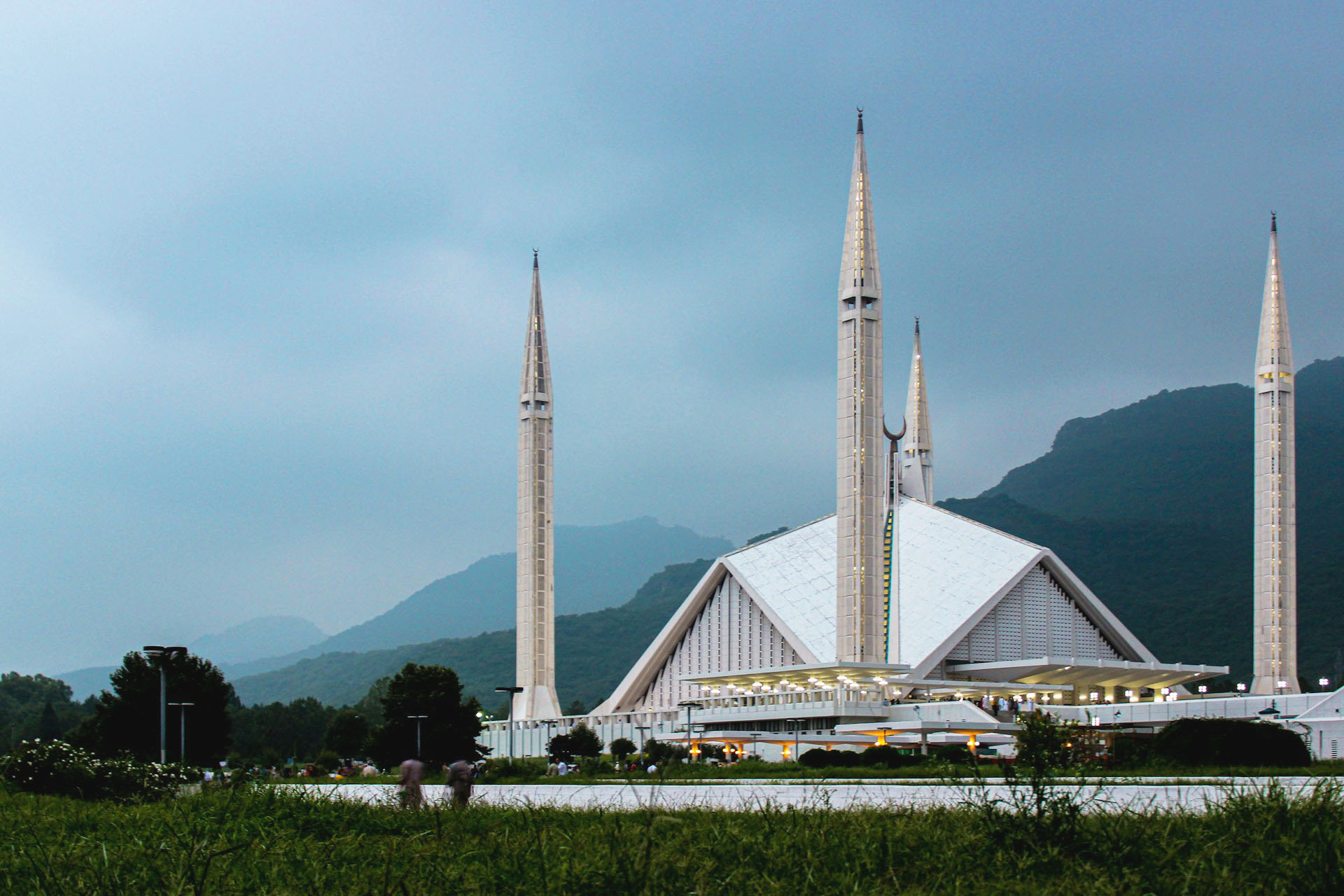
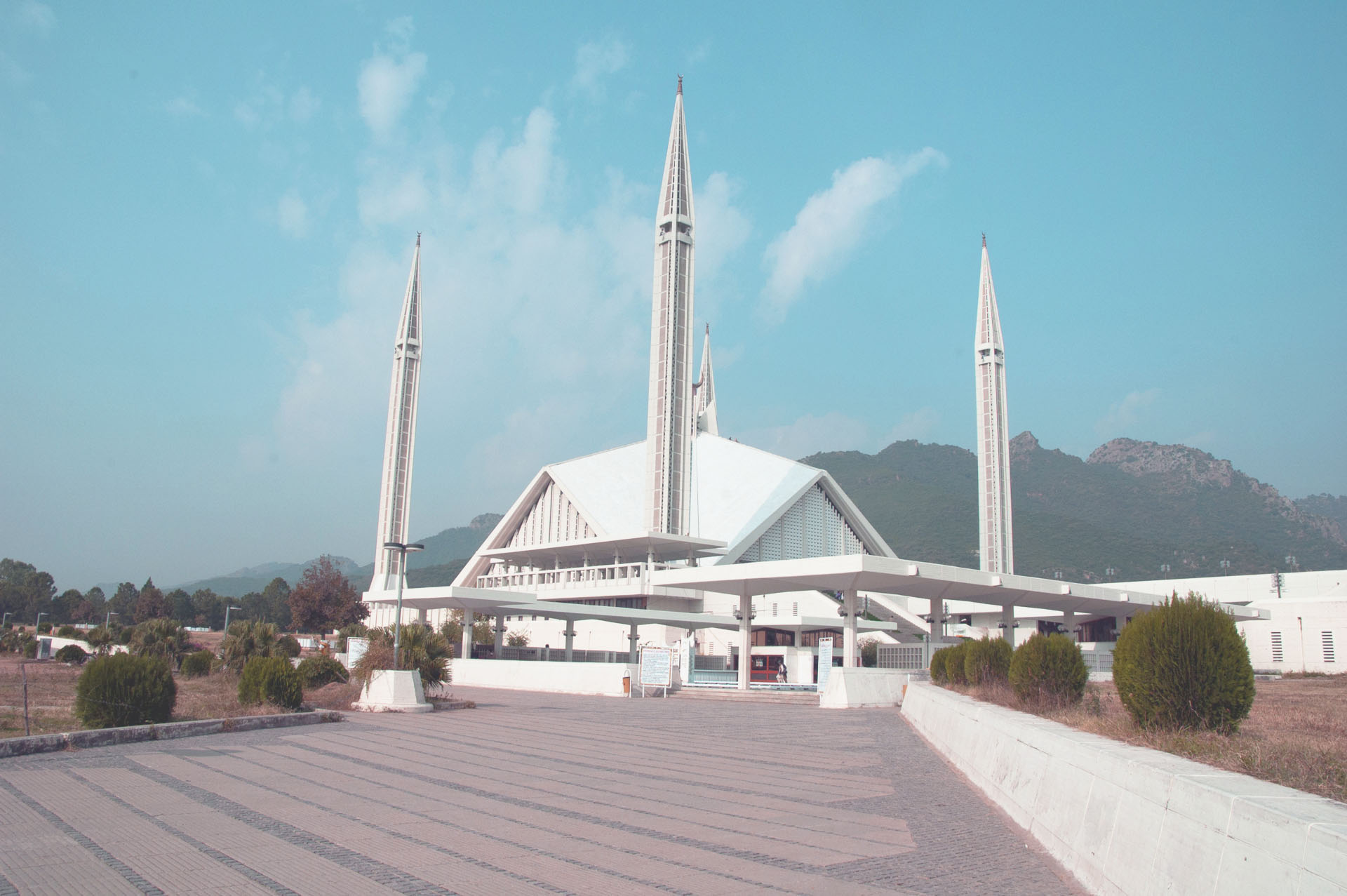
Arrival in Islamabad, Pakistan’s purpose-built capital set against the foothills of the Margalla range. Designed in the 1960s as a modern administrative centre, the city feels open and orderly, framed by mountain light. After airport formalities, transfer to the hotel and time to settle in. Hotel check in time is 2 PM. The afternoon remains at leisure. In the evening, the capital reveals its cultural depth. Time permitting, evening we take a drive through the capital city and visit the Shakar Parian Hills (sweet Hills) and get an overview of the city by night. Drive through includes the white marble silhouette of Faisal Mosque rises against the darkening hills, serene and luminous.
Overnight: Serena Islamabad Hotel (2 nights) (D)
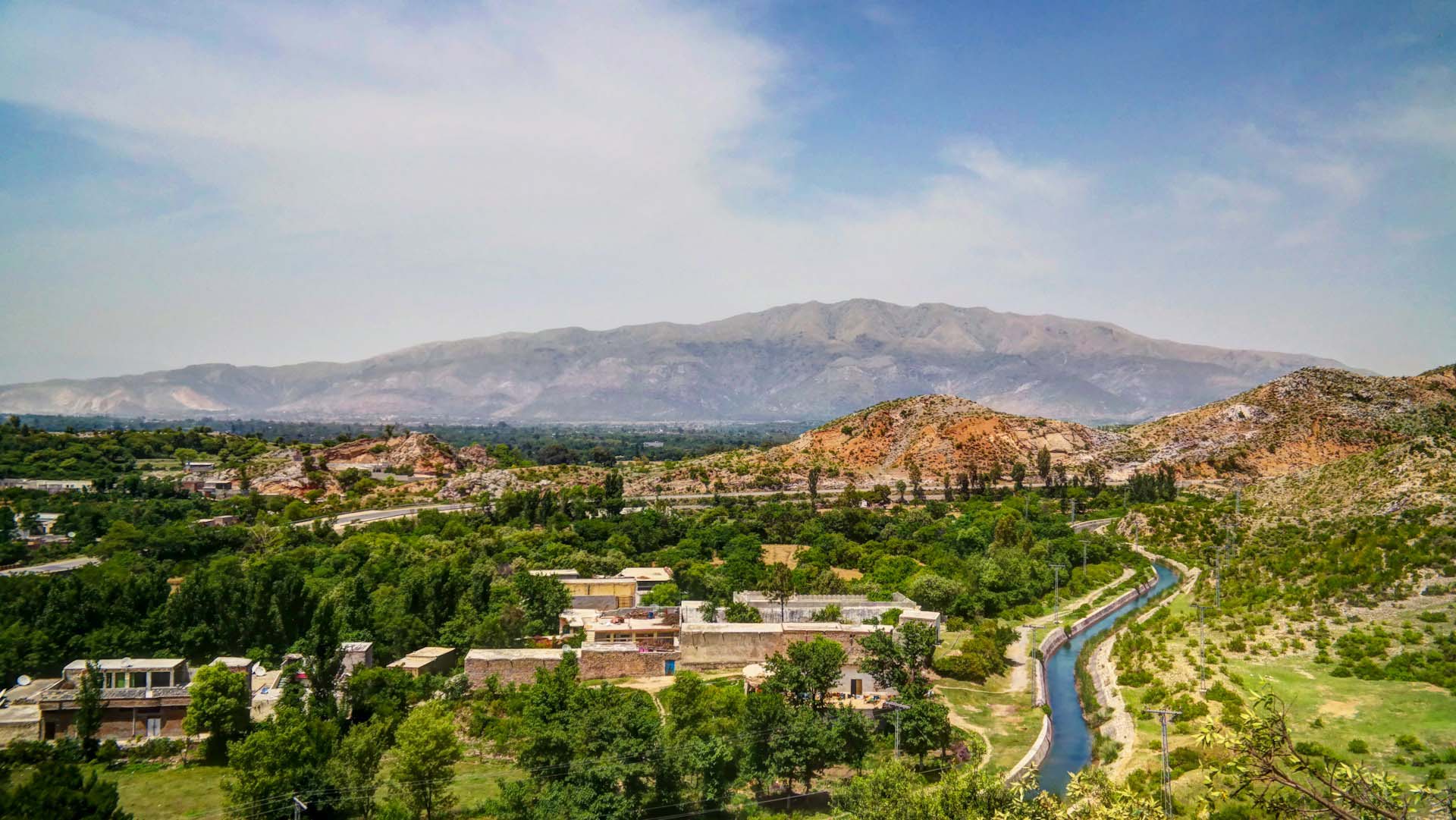
This morning we journey to Taxila, a UNESCO World Heritage Site and one of the ancient world’s great crossroads. Conquered by Alexander the Great in 326 BCE and later shaped by Buddhist devotion, the city stood at the meeting point of Greek, Persian and Indian worlds. Sculpted Buddhas and weathered stupas speak quietly of scholarship and exchange that travelled far beyond these hills. By afternoon, Rawalpindi’s Raja Bazaar hums with colour and movement - copper, spice and conversation - a living reminder that trade has long defined this region. Evening, we enjoy a typical Pakistan Mughal styled dinner. (B, D)
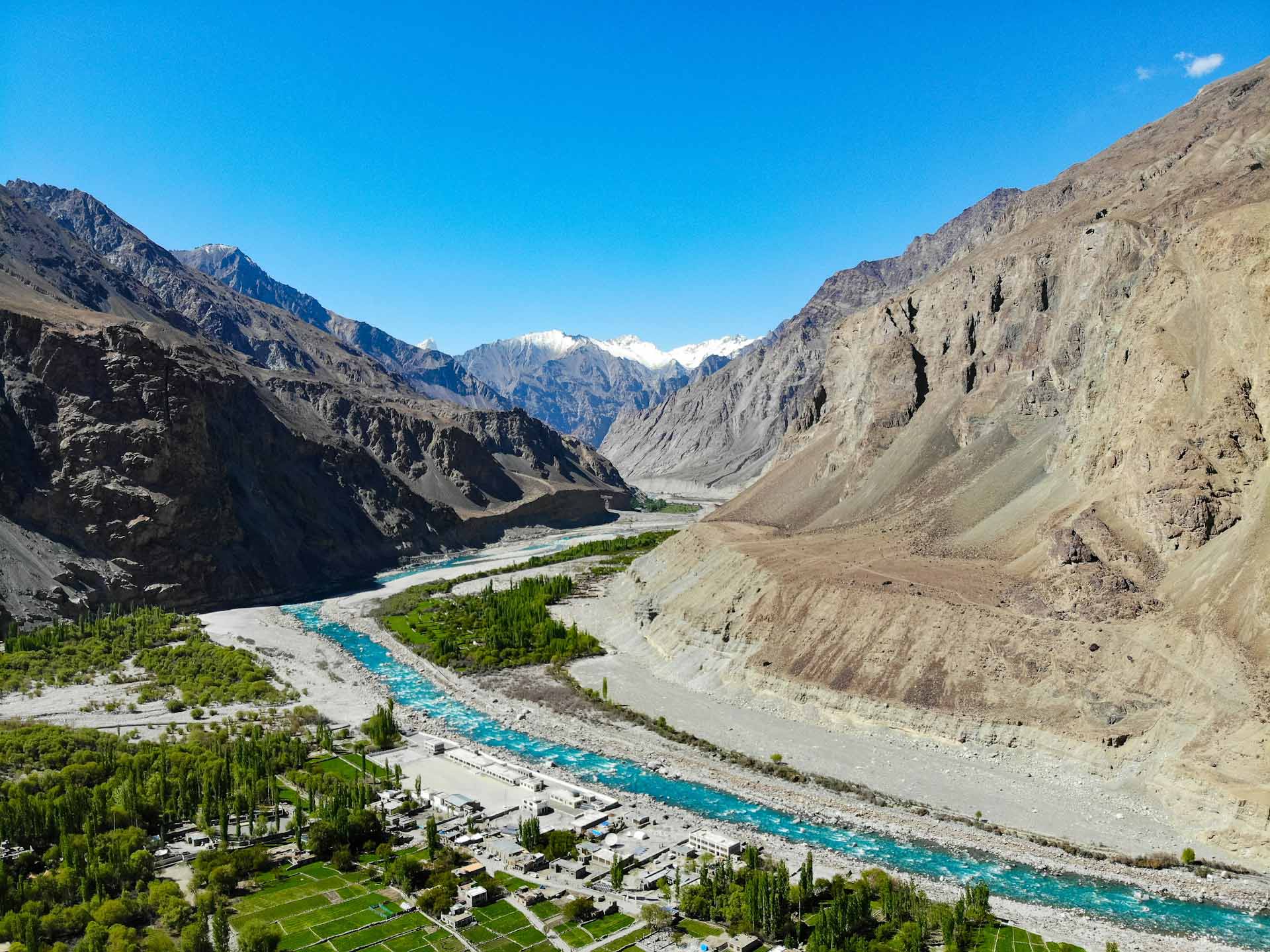
An early morning flight carries us northward above braided rivers with towering peaks. On clear days we can see Nanga Parbat (Naked Peak) - the world’s ninth-highest mountain in the Himalayan range commands the horizon, its vast face catching first light. Skardu is gateway to the Karakoram where the world’s 2nd highest peak, the K-2 (shorter by only 237m than the Everest) stands as one of the most difficult peaks to climb. As we drive, we stop at villages and meet local villagers for whom the mountains have been their support walls. The drive to Gilgit follows the Indus River through a narrowing gorge where cliffs rise sheer from the river and light shifts across stone. Near Jaglot we see the three great mountain systems of the Karakoram, Himalaya and Hindu Kush converge with the scale of the landscape feels almost mythic. Before checking into our hotel, we visit the local polo field and possibly see a horse polo match in action.
Overnight: Serena Gilgit Hotel (1 night) (B, D)
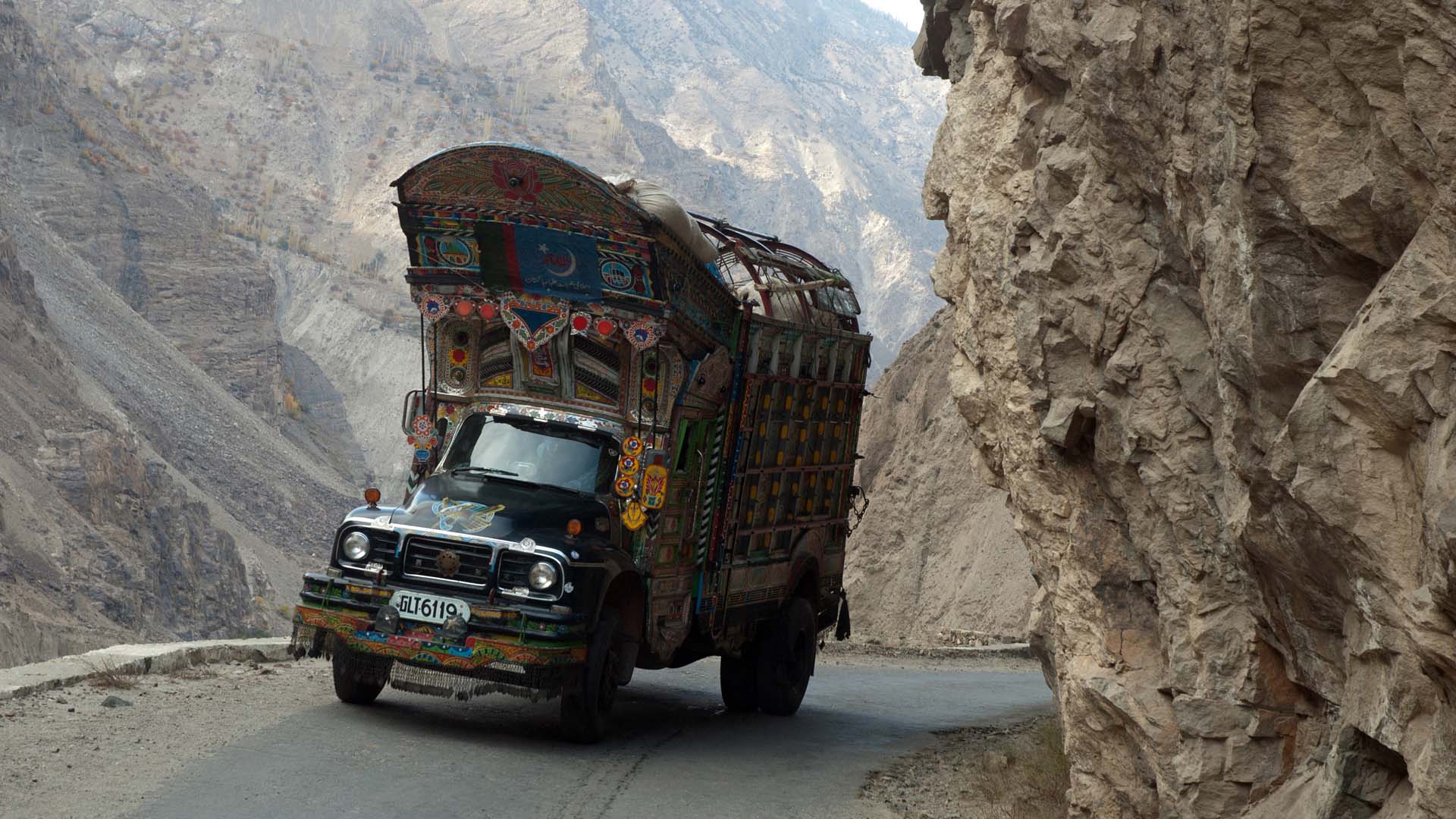
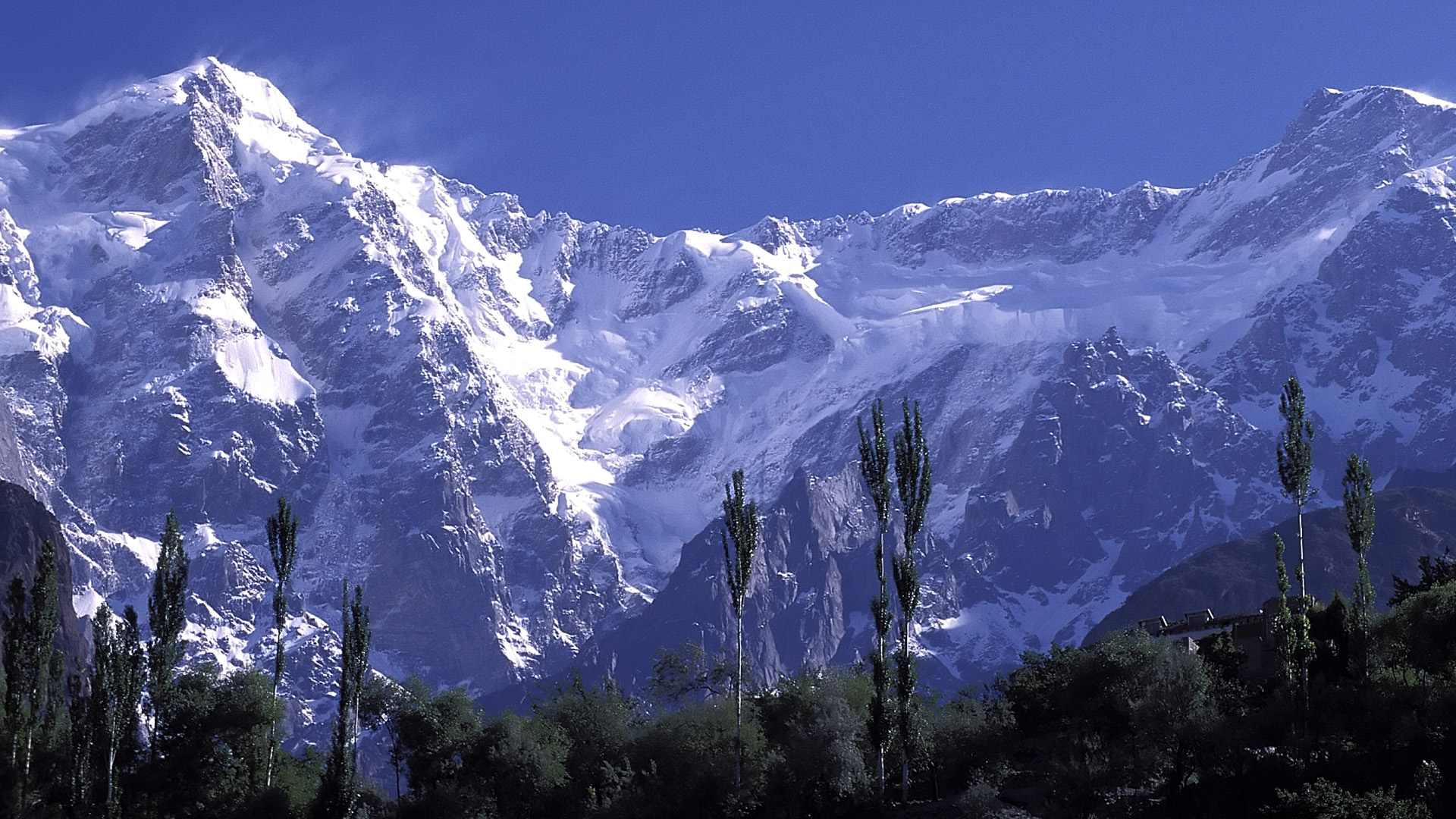
Pakistan is home to 37 of the world’s 100 highest mountains, and it is from Gilgit and going into the Hunza Valley, that one feels their immediate and immense presence. We walk through Gilgit Bazaar, cross the suspension bridge above the river, and pause at the historic polo ground, where mountain-style polo is played with fierce pride. Following the Karakoram Highway along the Hunza River, we stop at small villages rooted in Ismaili tradition before getting a stunning view of the Rakaposhi (7,788 m) rising in luminous grandeur above the valley. At Karimabad, we enter the Shangri-la of Hunza. This valley is dominated by followers of the Aga Khan and follow the Ismaili Muslim traditions. Hunzakuts are known for their hospitality and easy to converse as many do speak English.
Overnight: Serena Hunza Hotel (2 nights) (B, D)
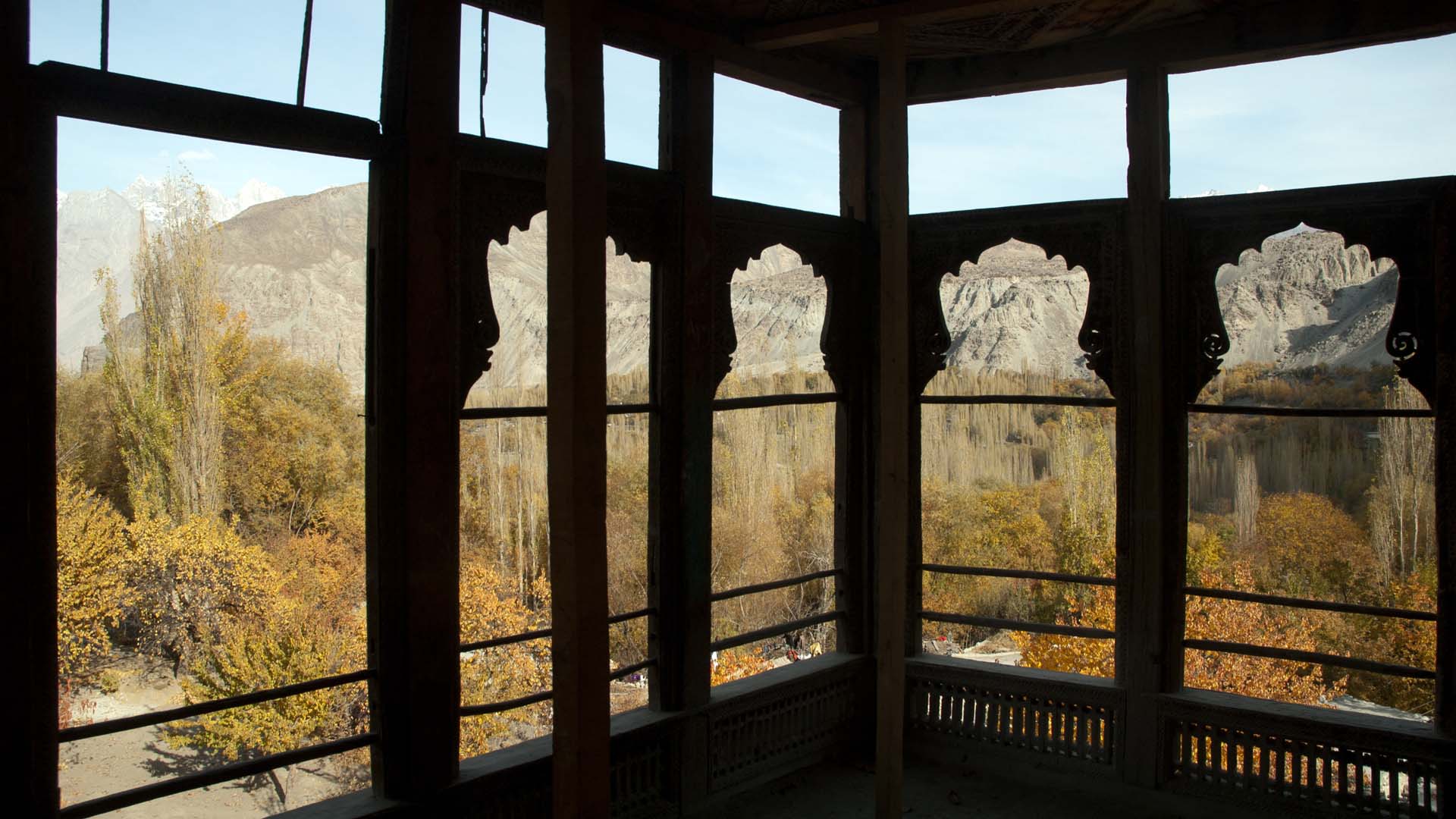
The morning begins at Altit Fort, its timber balconies and stone walls overlooking terraced fields fed by centuries-old irrigation channels. We walk through Altit village, where daily life continues much as it has for generations. Above Karimabad, Baltit Fort rises what was once the seat of Hunza’s rulers, commanding wide mountain views. An optional lunch with a local family offers a glimpse into Hunzakut hospitality. In the afternoon, we drive into the Hoper Valley, where the glacier spills downward in pale blue folds, framed by stark and magnificent peaks. (B, D)
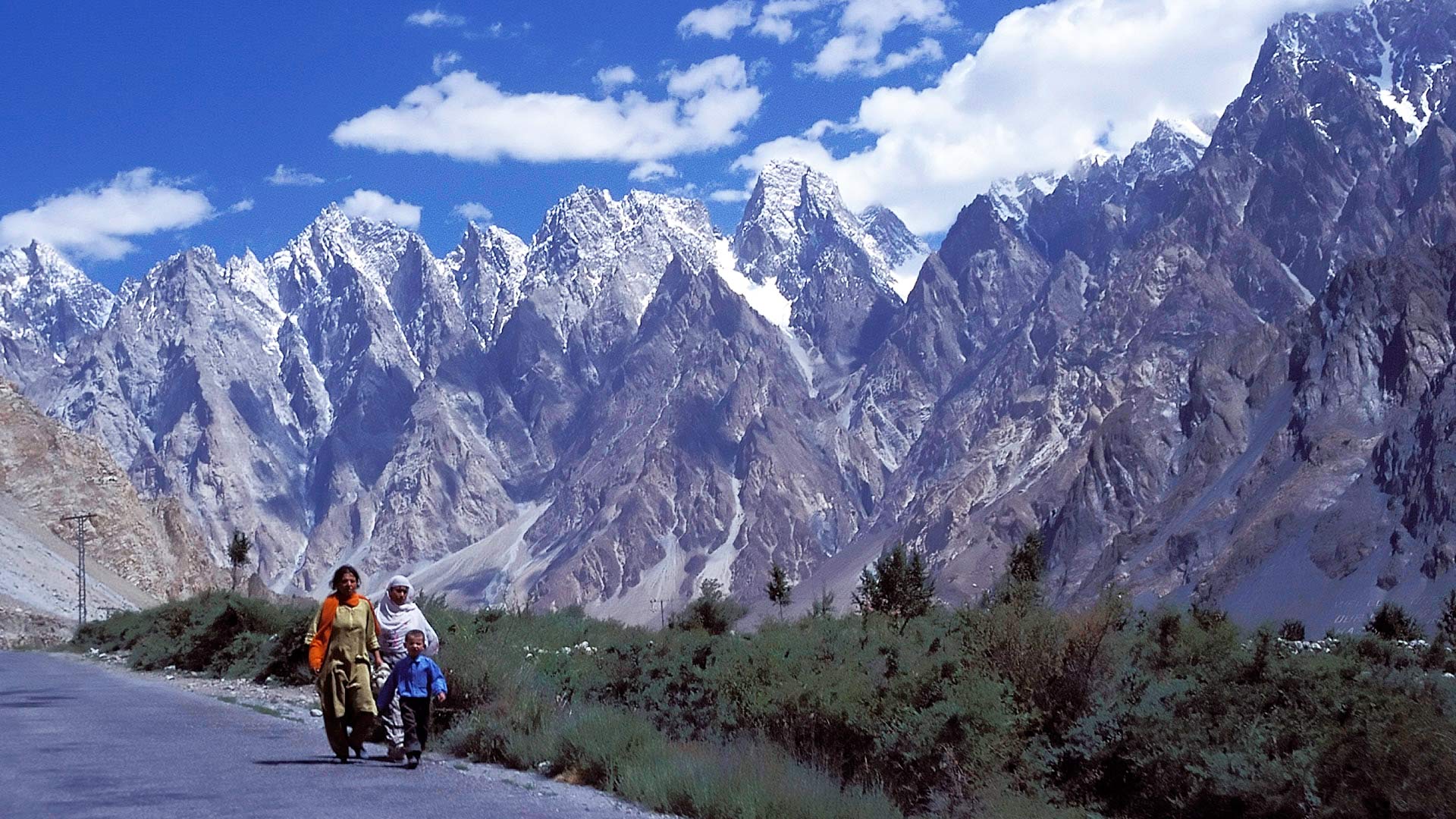
Leaving Karimabad behind, we follow the Karakoram Highway north into the Gojal region. Attabad Lake stretches for 21 kilometres, its luminous turquoise waters formed by the 2010 landslide that reshaped the Hunza River. In Passu, the dramatic Passu Cones with jagged cathedral-like peaks rise sharply above the valley, while the Hussaini Suspension Bridge sways lightly over glacial waters below.
By afternoon, we arrive in Gulmit, a traditional Wakhi village shaped by high-altitude farming and centuries of mountain resilience. We walk through the settlement and, time permitting, we visit the local museum to better understand life in this remarkable corridor. Evening, we enjoy conversations meeting the Wakhi people.
Overnight: Ambassador Hotel, Gulmit (1 night) (B, D)
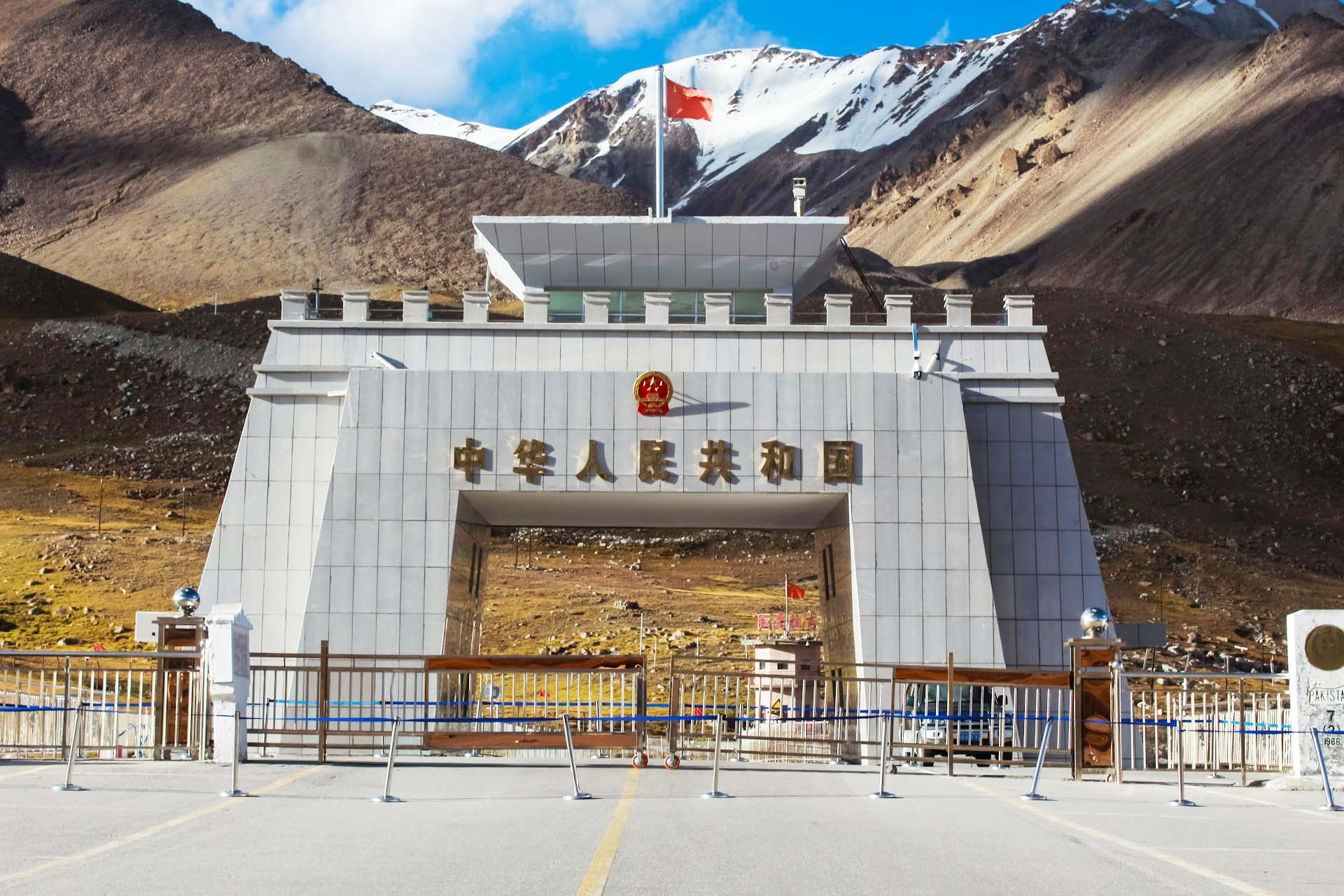
We depart early for Sost, the final town along Pakistan’s Karakoram Highway. After completing exit formalities, the road climbs toward Khunjerab Pass (4,693 m), the world’s highest paved international border crossing. The landscape widens into vast, wind-swept plateaus where borders feel abstract against the immensity of stone and sky. Crossing into China, we descend toward Tashkurgan in Xinjiang, part of the broader cultural region historically known as Turkestan. Formalities complete, we settle into this remote highland frontier.
Overnight: Panorama Starry Hotel, Tashkurgan (1 night) (B, D)
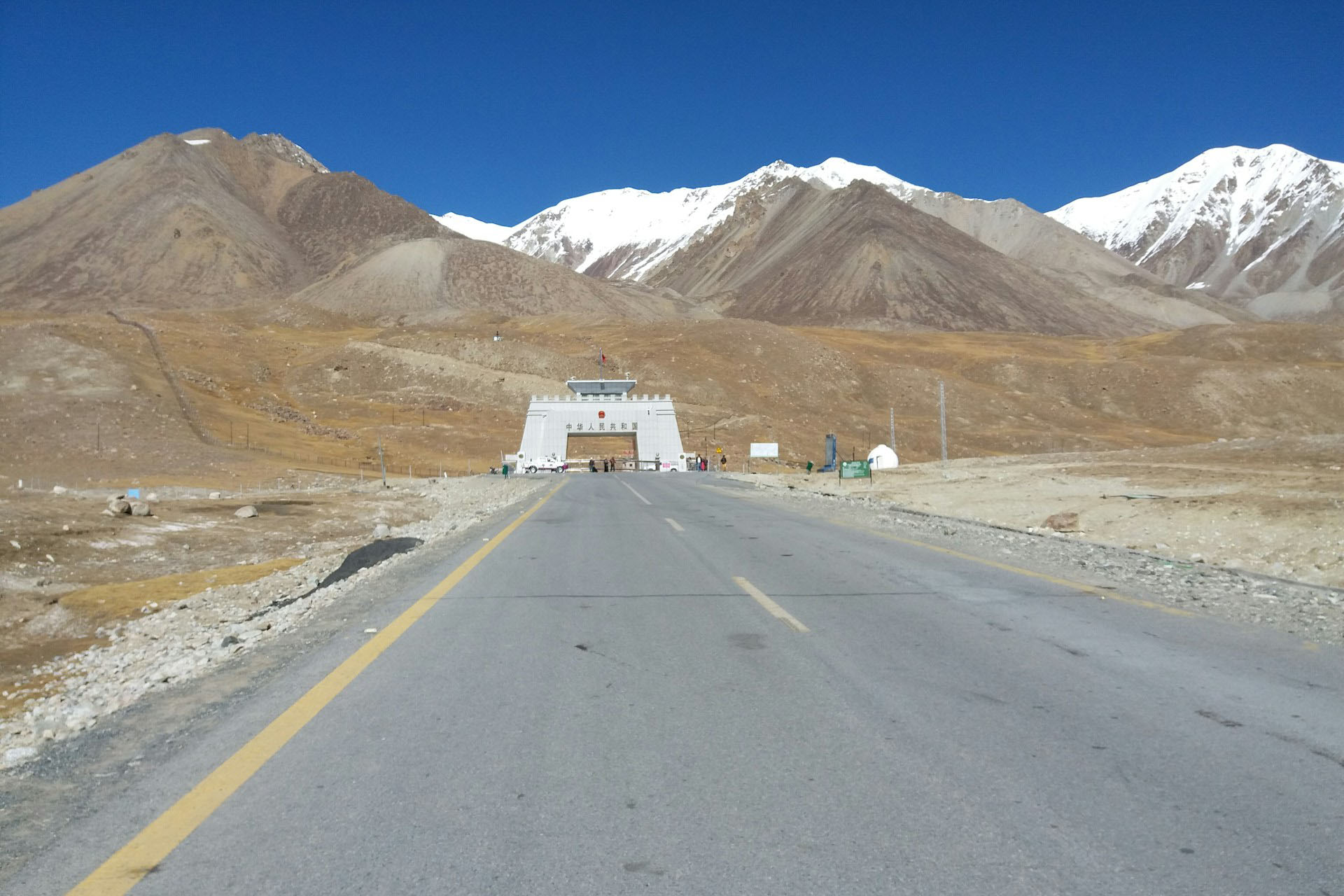
The road from Tashkurgan descends through high plateau landscapes toward Karakul Lake, where the still water mirrors the snow-covered summit of Muztagh Ata (7,509 m). We pause here, and enjoy the mountain walk surrounded by vast sky and open terrain, before continuing westward along the historic corridor to Kashgar.
For centuries, Kashgar stood as one of the great Silk Road oasis cities. Today, its western frontier character endures, shaped by Uyghur culture, Islamic tradition and the rhythms of trade that once linked China with Central Asia.
Overnight: Kashgar Global harbor International Hotel(2 nights) (B, D)
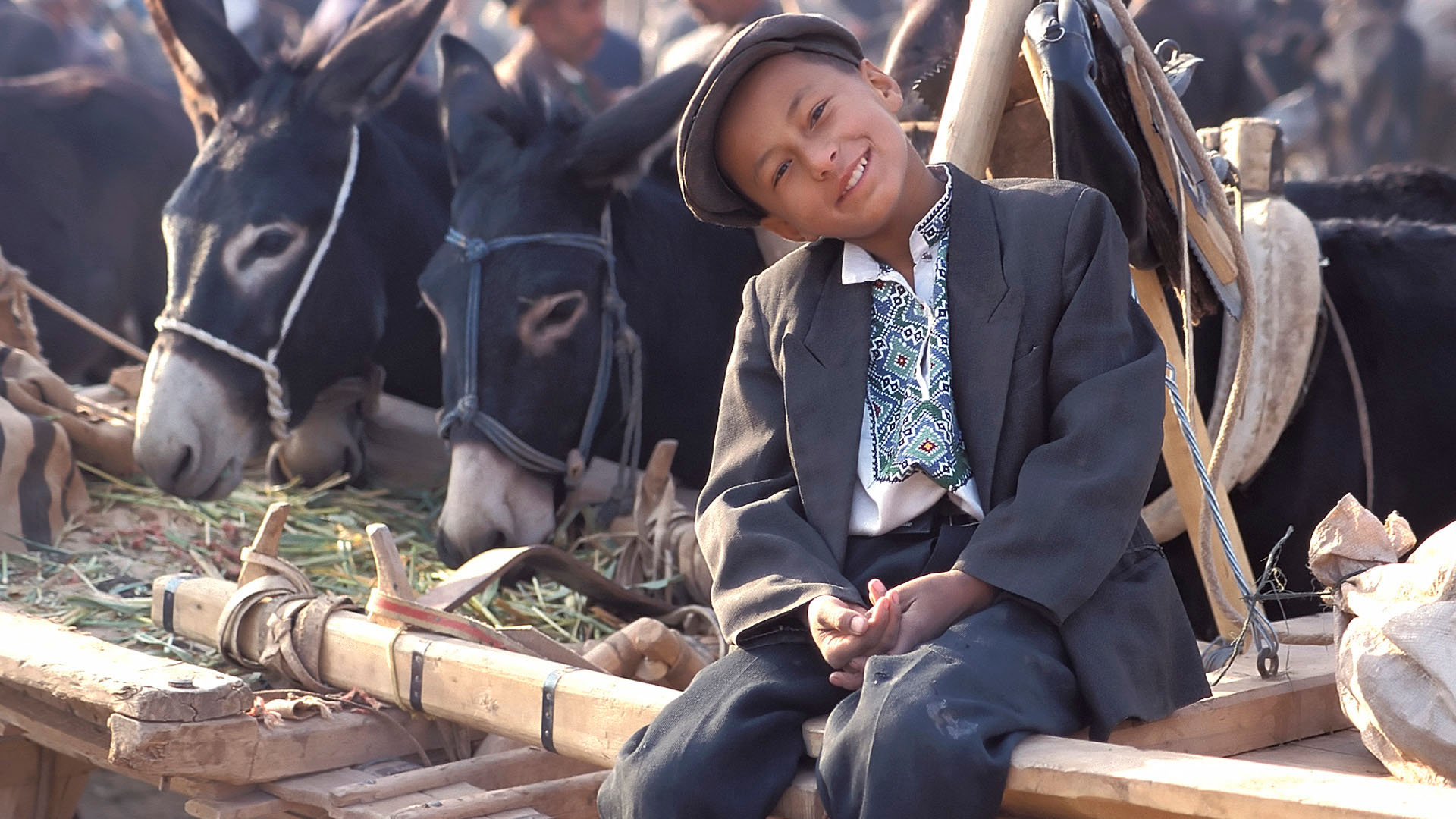
Located on the outskirts, this is an authentic experience where local farmers and traders barter for livestock, including yaks, horses, camels, donkeys, and sheep. The market is a center of Uyghur culture, with traditional music, food, and clothing on display, providing a glimpse into the historic Silk Road trading traditions. Unfortunately, as time goes on the originality of this Sunday Bazaar is being impacted.
Today we explore Kashgar more deeply, walking through the old quarters where traditional crafts still shape daily life. Metalworkers hammer copper into form, carpenters shave wood by hand, and cobblers stitch leather in workshops that open directly onto the street. We visit the 17th-century Abakh Khoja Tomb and the historic Id Kah Mosque, first built in the 15th Century, before returning to the old town as evening light softens its earthen walls. (B, D)
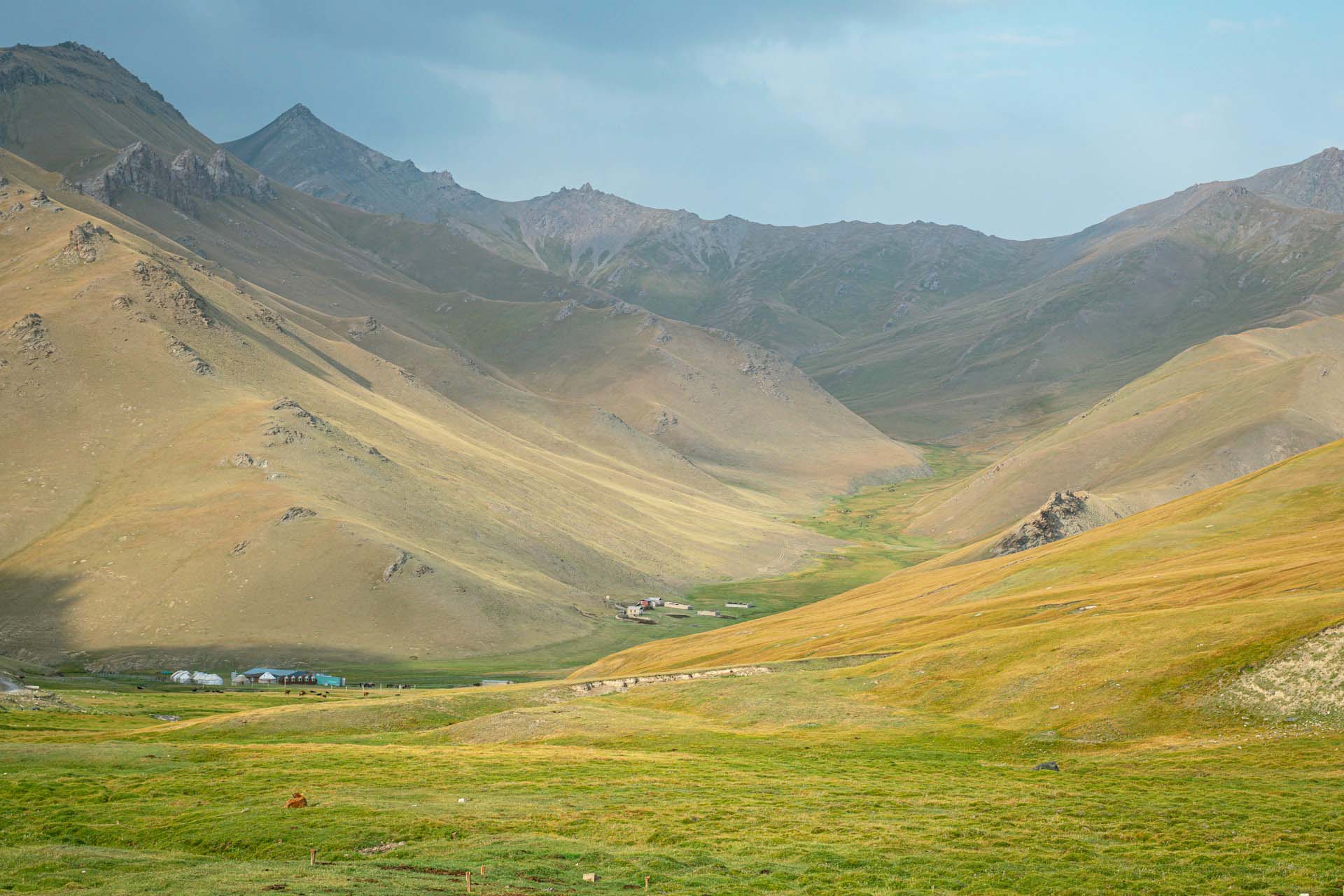
We leave Kashgar and ascend towards the Torugart Pass (3,752 m) crossing into Kyrgyzstan following the historic caravan routes once travelled by merchants and explorers, including Marco Polo. The border is usually a very busy road as cargo from Central Asia and China make their entry/exit formalities with special speed zones for tourist and non-merchant traffic.
Beyond the pass, the landscape opens into the sweeping valleys of the Tian Shan. The shift is subtle but unmistakable — from oasis culture to nomadic horizon. By late afternoon we reach Naryn, home to the Mountain University of Central Asia, established in 2000 through a treaty between Kyrgyzstan, Tajikistan and Kazakhstan — the world’s first university founded by three sovereign states and a private philanthropic, the Aga Khan Development Network.
Overnight: Khan Tengri Hotel, Naryn (1 night) (B, D)
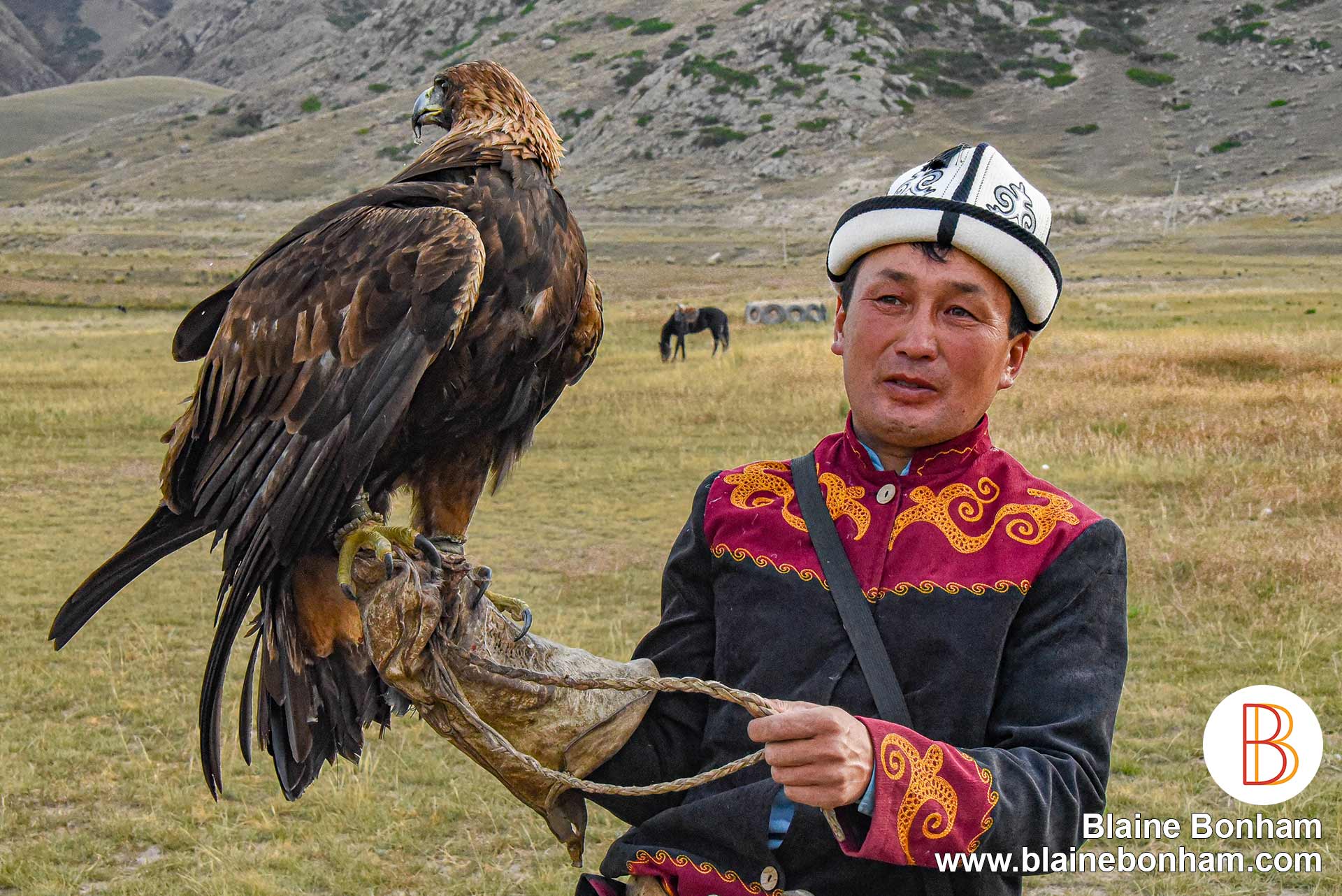
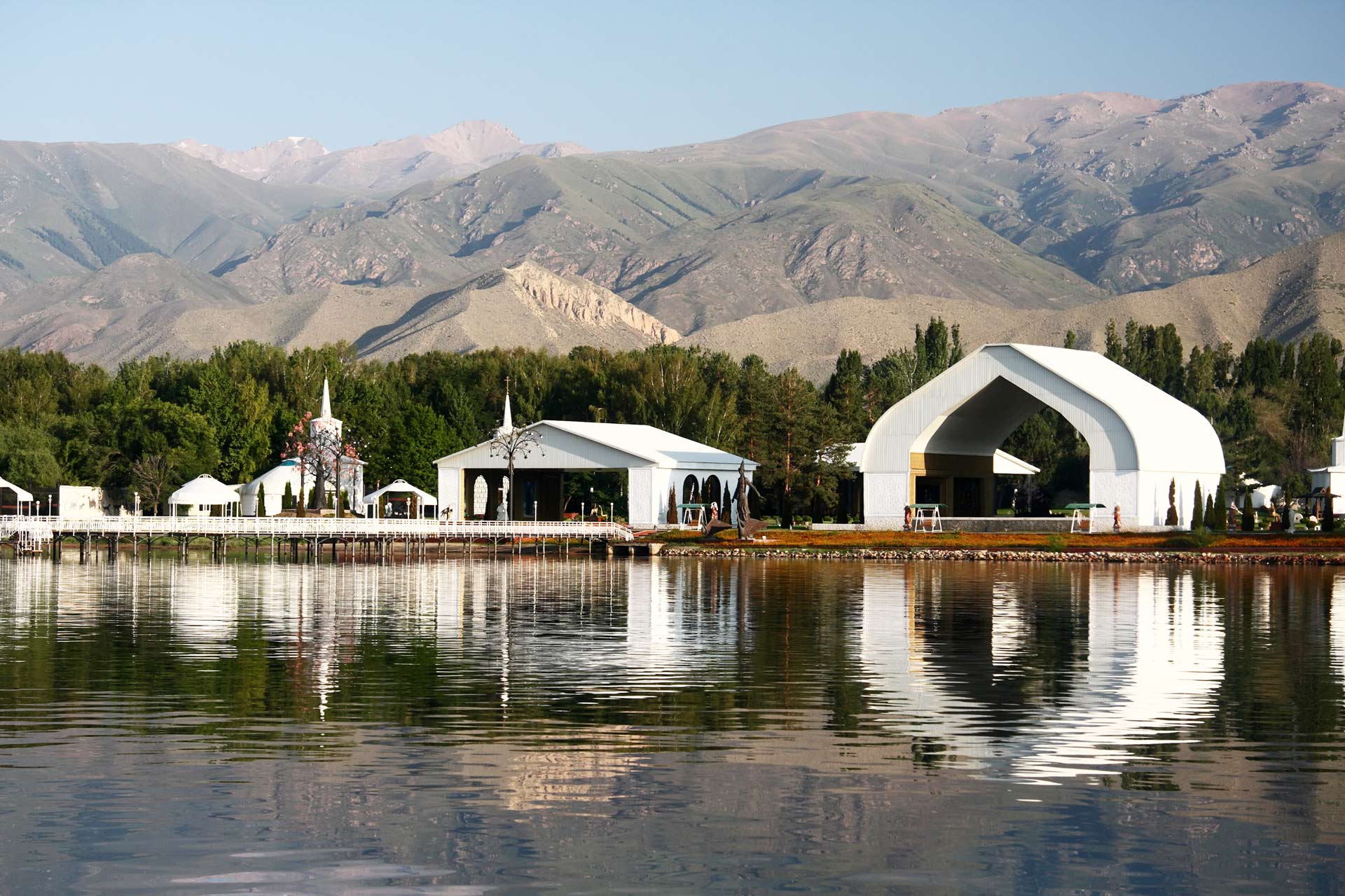
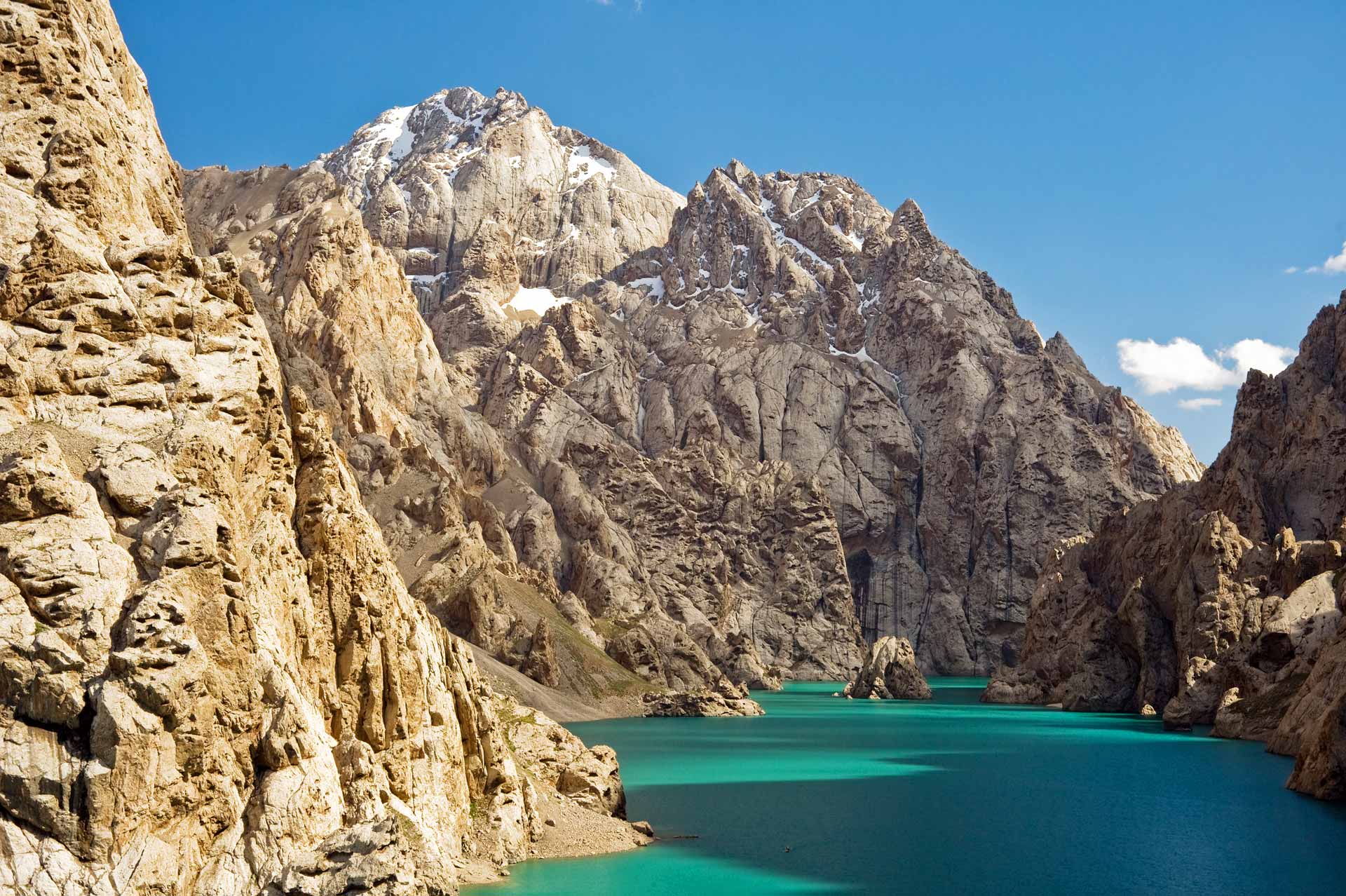
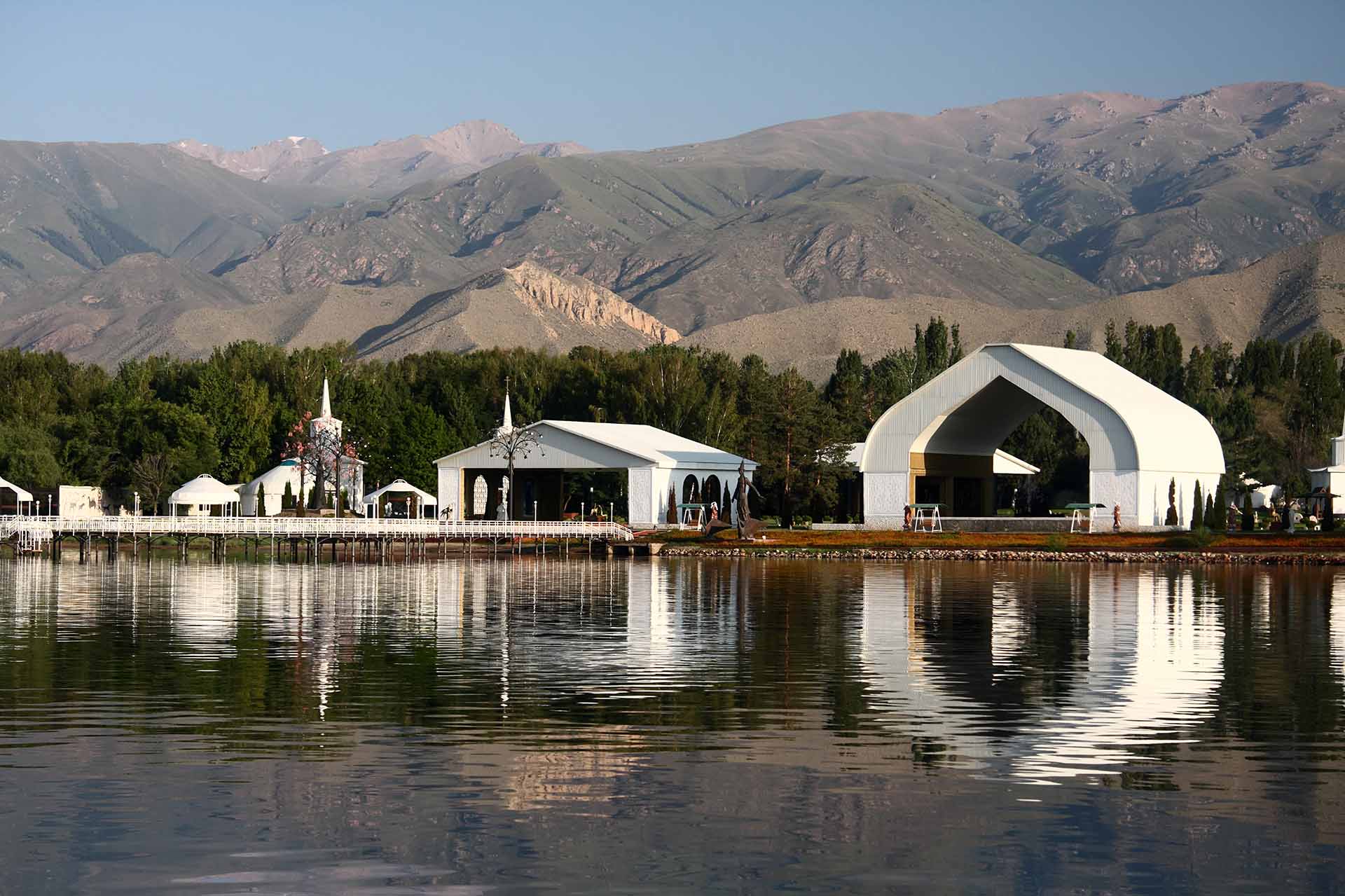
Subject to permission, we visit the University of Central Asia, its modern campus rising unexpectedly from Naryn’s quiet streets, dedicated to strengthening the mountain societies across the region. Leaving town, the road winds through wide valleys toward Kochkor, where we visit the local museum and glimpse rural Kyrgyz life shaped by herding and tradition. By afternoon, Issyk Kul comes into view — the world’s second-largest alpine lake, set at 1,607 meters within the Tian Shan range. Slightly saline and never freezing, it lies within the Issyk Kul UNESCO-designated Biosphere Reserve, its open shoreline framed by distant snow peaks. Evening time free to enjoy the serene lake and optional activities.
Overnight: Oimo Tash Yurt Glamping, Kajy Sai (1 night) (B, D)
We drive along the southern shore of Issyk Kul toward Karakol, stopping at Jeti-Ögüz where deep red sandstone cliffs rise in dramatic formations known as the Seven Bulls and the Broken Heart. We walk through the canyon, its scale and colour striking against alpine sky.
In Karakol, we visit the Dungan Mosque, built between 1904 and 1910 by Chinese Muslim settlers. Constructed entirely without nails, its 42 carved wooden pillars and sweeping, pagoda-style roof reflect traditional Chinese architectural techniques adapted for Islamic worship - a rare and elegant cultural fusion.
Overnight: Green Yard Hotel, Karakol (1 night) (B, D)
As we depart Karakol, we visit the open-air petroglyph site near Issyk Kul, where ancient carvings etched into stone reflect early nomadic life. Continuing west, we stop at the famous Burana Tower, an 11th Century minaret rising from the ruins of Balasagun, once a Silk Road capital and today part of the UNESCO-listed Silk Roads corridor.
Arriving Bishkek, Kyrgyzstan’s capital which is set in the broad Chuy Valley. We take a drive through tour seeing the wide boulevards, Soviet-era architecture and mountain backdrops give the city a distinctly Central Asian character.
Overnight: Green City Hotel, Bishkek (1 night) (B, D)
An early flight brings us to Osh before we cross the Dostuk border into Uzbekistan, entering the fertile Ferghana Valley - a Silk Road corridor active since the 2nd Century BCE. Over centuries, this region was shaped by Sogdian traders, the Kushan Empire and later the Kokand Khanate.
In Andijan, birthplace of Babur the Timurid prince, poet and future founder of the Mughal Empire we visit the Babur Literary Museum, Jami Mosque and the local bazaar. Forced from these lands as a young ruler, Babur would carry memories of this valley with him as he forged a new empire far from home. By evening we arrive in Ferghana.
Overnight: Hotel Asia, Ferghana (2 nights) (B, D)
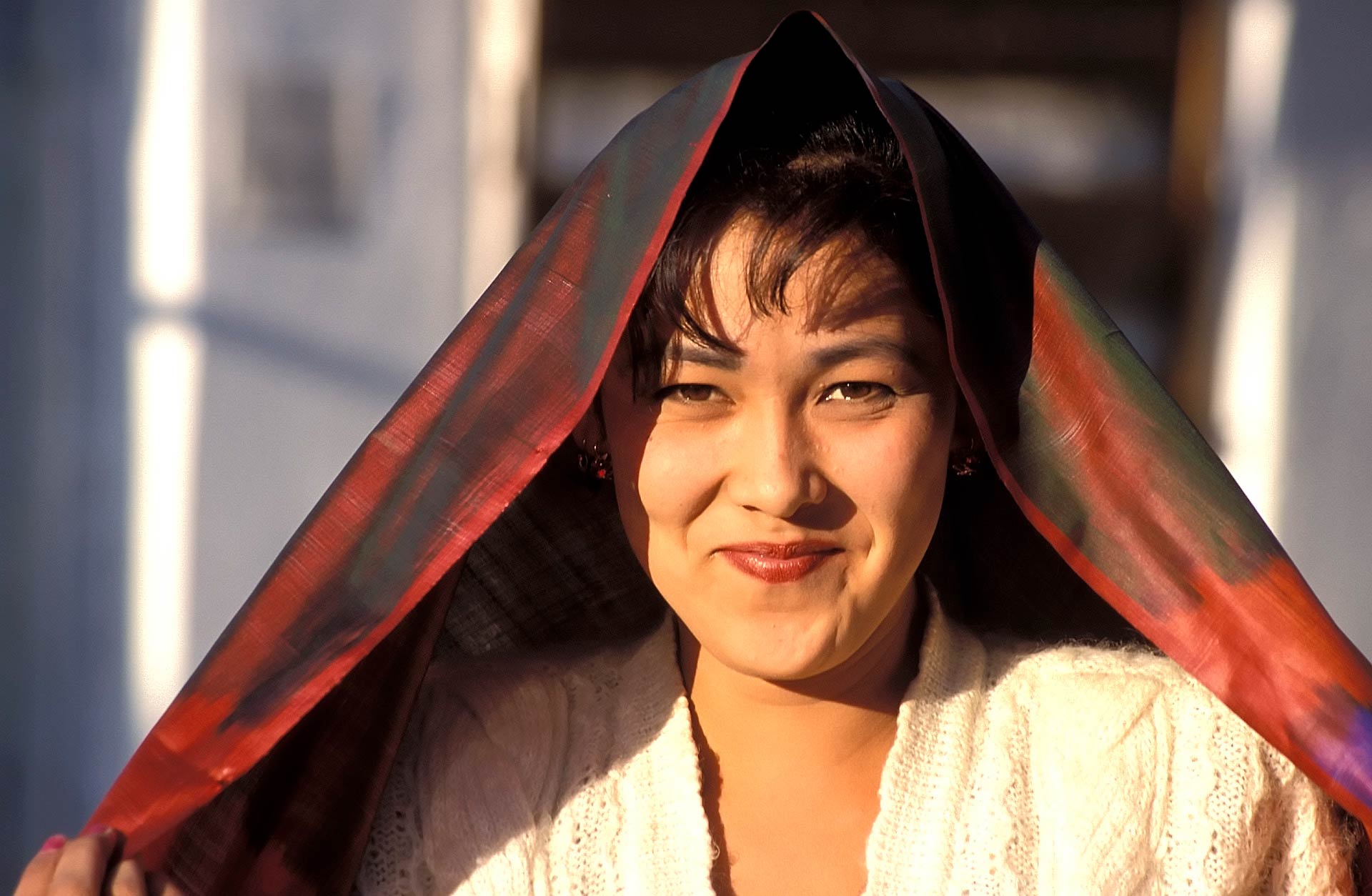
A short drive brings us to Margilan, long associated with Silk Road textile production. Uzbekistan remains renowned for its silk and ikat weaving traditions, and at the Yodgorlik Silk Factory we follow the journey from mulberry cocoon to luminous handwoven fabric, dyed and patterned using techniques preserved for generations. At the House of Fazlettin, richly textured bakhmal velvets reveal another layer of Ferghana’s craft heritage.
In Rishtan, famed for its distinctive blue-glazed ceramics, we observe the full pottery process from clay preparation and wheel shaping to hand-painting and mineral glazing. We will have the opportunity to try our hands and learn the symbolism behind traditional Ferghana motifs. We will also visit the local bazaars and meet the local folks. (B, D)
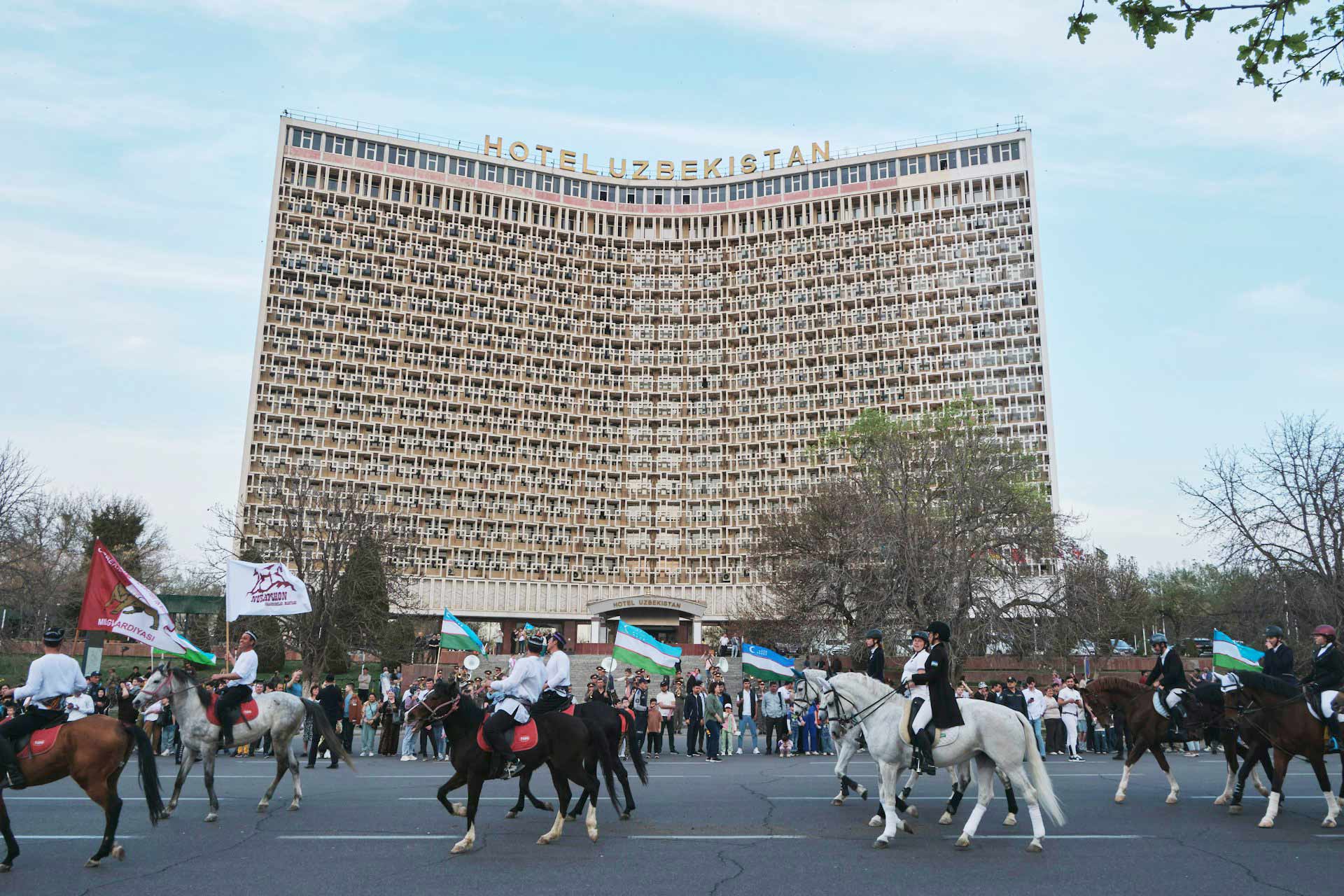
The morning begins with a walk through Ferghana’s central bazaar, where vendors arrange fruit, spices and handmade goods in careful display. Leaving the valley, we drive to Kokand, once capital of the Kokand Khanate. At Khudayar Khan Palace, vivid tilework and ornamented façades speak of 19th-century ambition. Nearby, the Jami Mosque’s carved wooden columns frame a shaded courtyard, offering quiet balance.
By afternoon, the road leads west toward Tashkent. The landscape widens, and with it the sense of scale — from khanate stronghold to modern capital. Time permitting, we visit the local produce market which is a lively meeting places for families.
Overnight: Hotel Wyndham (Ex Dedeman), Tashkent (1 night) (B, D)
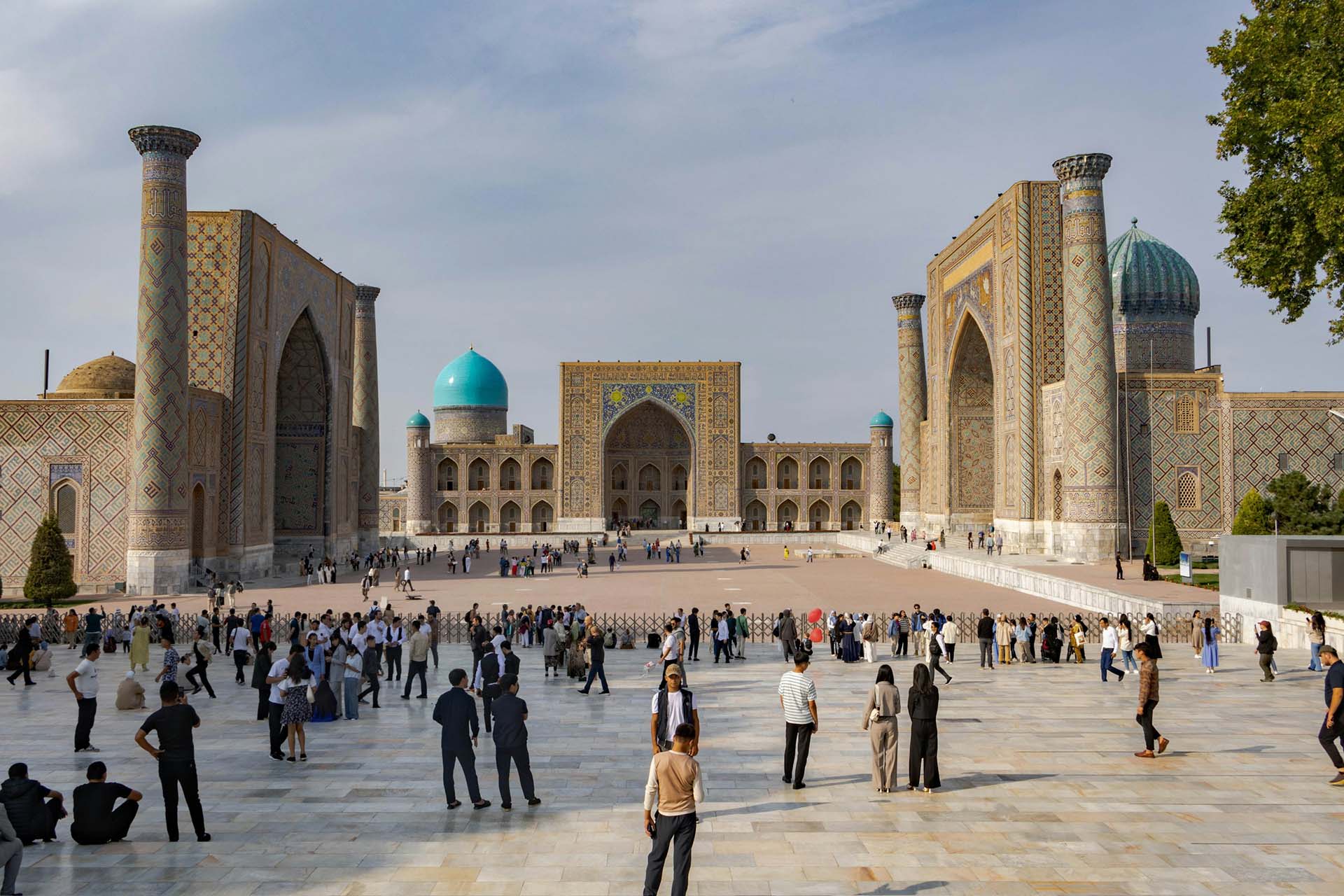
This morning we board the high-speed train to Samarkand - a UNESCO World Heritage Site and one of the great cities of the Silk Road. Known in antiquity as Maracanda, it flourished under the Sogdians before Alexander the Great captured it in 329 BCE. For centuries, merchants, scholars and conquerors were drawn to its wealth and beauty.
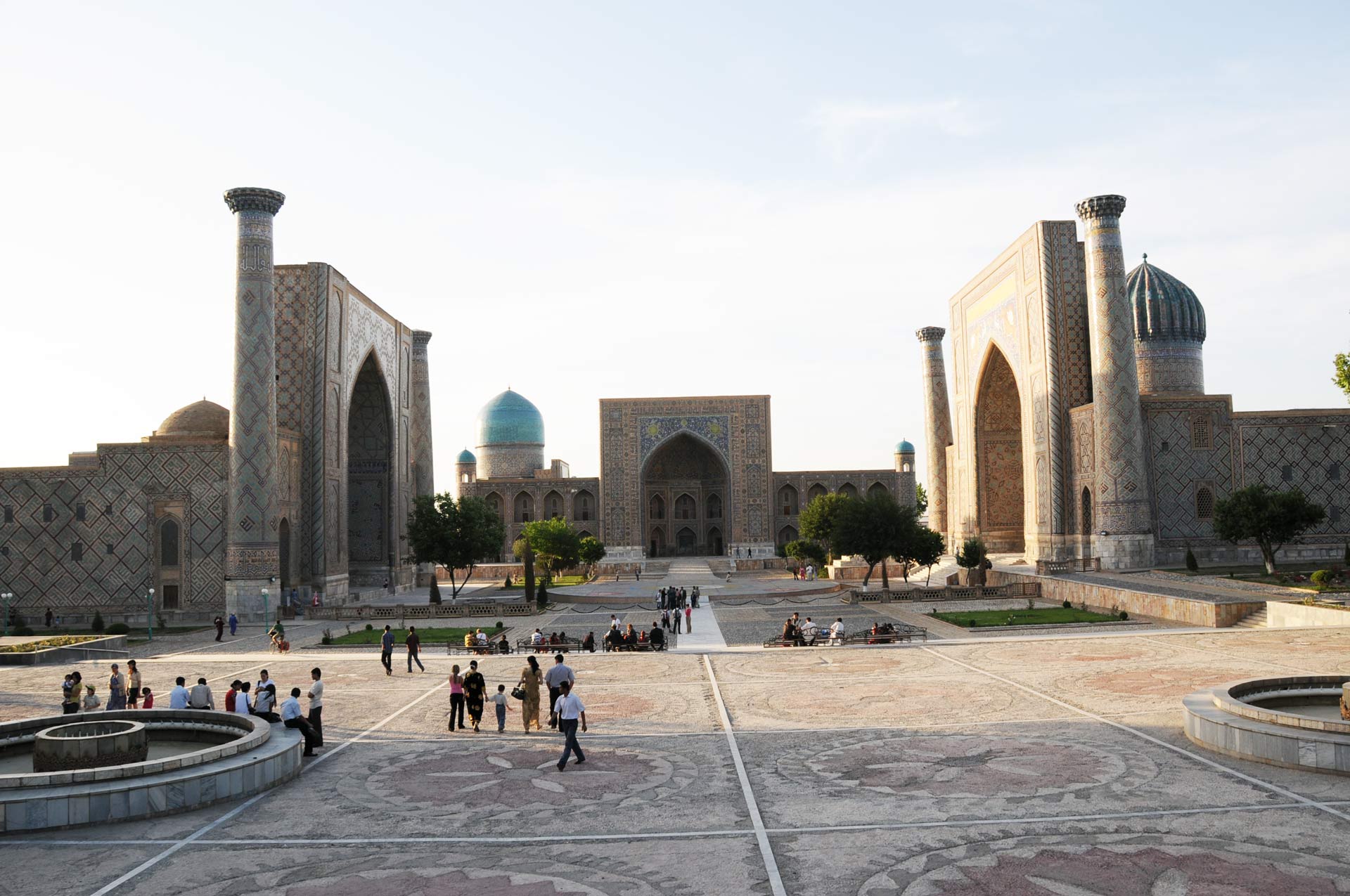
In the 14th Century, Timur (Tamerlane or Timur the lame) transformed Samarkand into the heart of his empire. At Registan Square, three grand madrassahs rise in luminous symmetry, setting the tone for a city built to impress the world. Nearby, Bibi-Khanym Mosque and the ancient site of Afrasiab reveal the layers beneath its legend.
Overnight: Hotel Grand Samarkand (2 nights) (B, D)
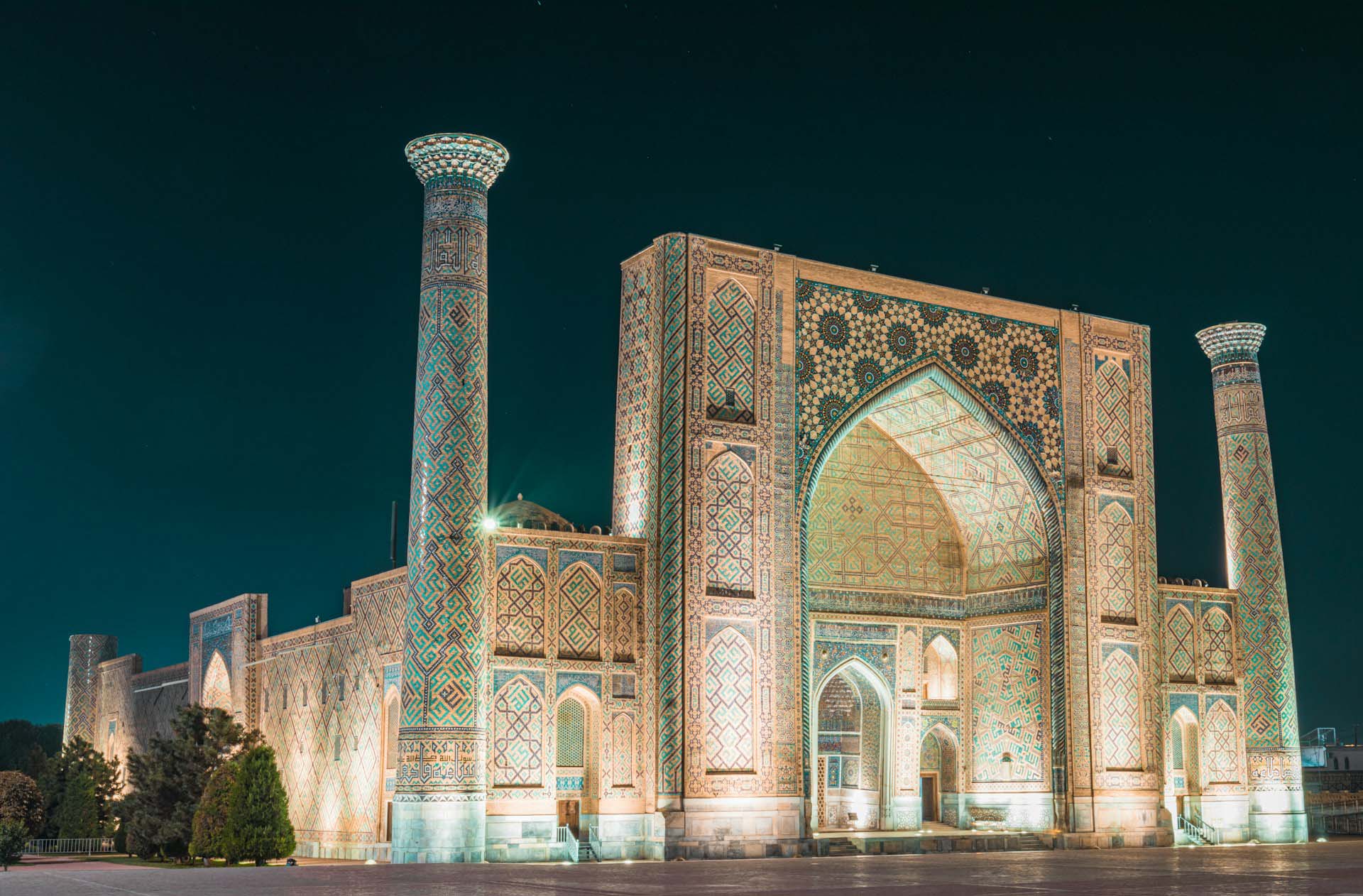
We begin at Gur-e-Amir, the mausoleum of Timur. Beneath its soaring turquoise dome lies the ruler who transformed Samarkand into the centre of an empire. The chamber glows with gold and shadow, a space built to convey permanence and power.
From conquest we turn to contemplation at Ulugh Beg Observatory, where in the 15th Century Timur’s grandson mapped the heavens. The remains of his vast astronomical instrument still curve into the earth, a reminder that this city once measured the stars much earlier than the more well-known European scientists who did so much later.
We then walk through Shah-i-Zinda, an avenue of luminous blue mausoleums whose intricate tilework feels almost otherworldly. Later, at Konigil Meros, we witness the revival of Samarkand’s mulberry-bark paper, a craft once carried west along the Silk Road. We enjoy a typical meal at a local restaurant. Subject to availability an optional visit to see the Sound & Light Show at the artistically lit Registan Square. (B, D)
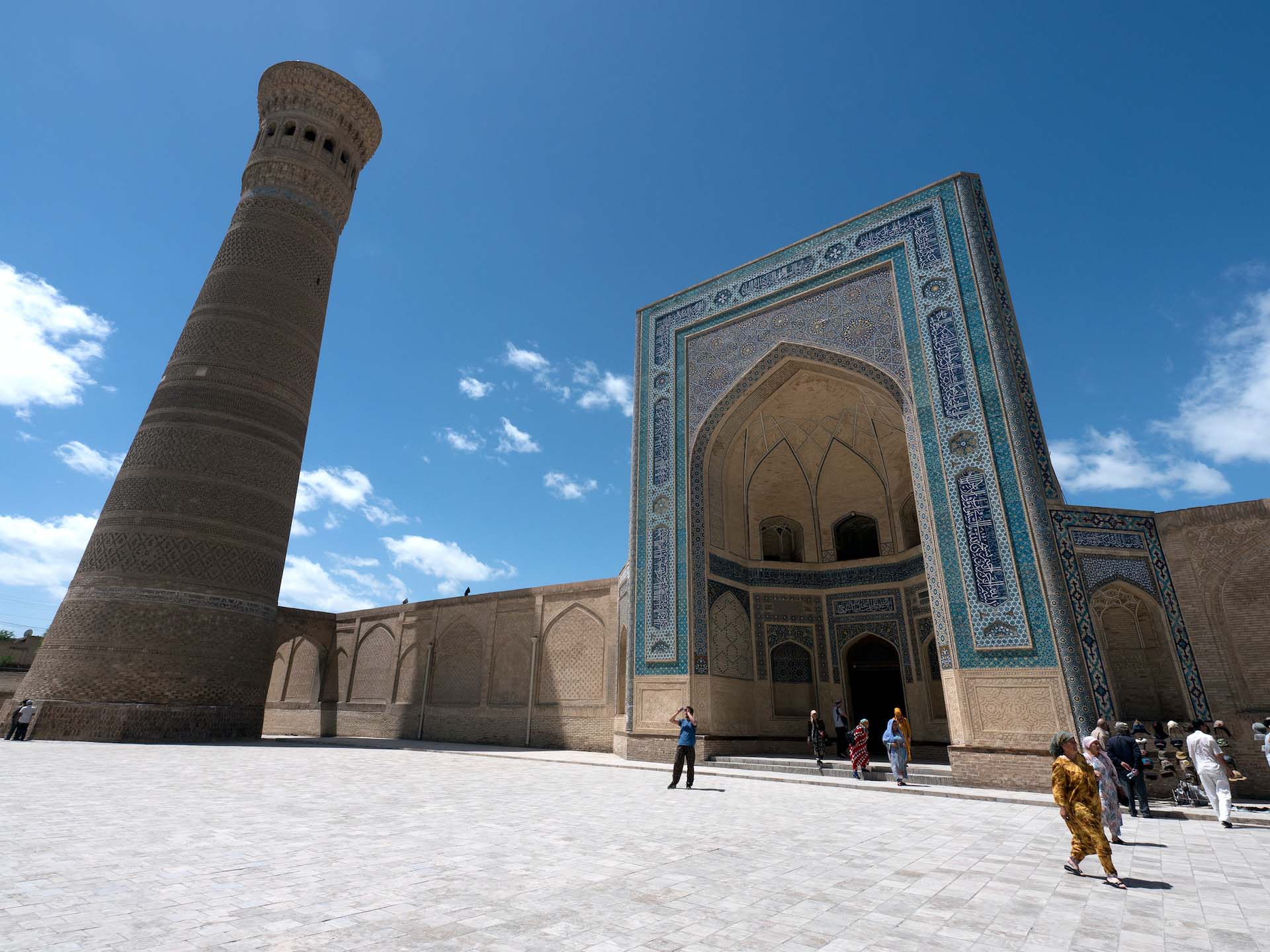
Leaving Samarkand, we pause at Rabat-i-Malik, an 11th Century caravanserai that once sheltered merchants crossing the Silk Road between oasis cities. Its remaining portal hints at the long journeys that shaped this corridor of trade.
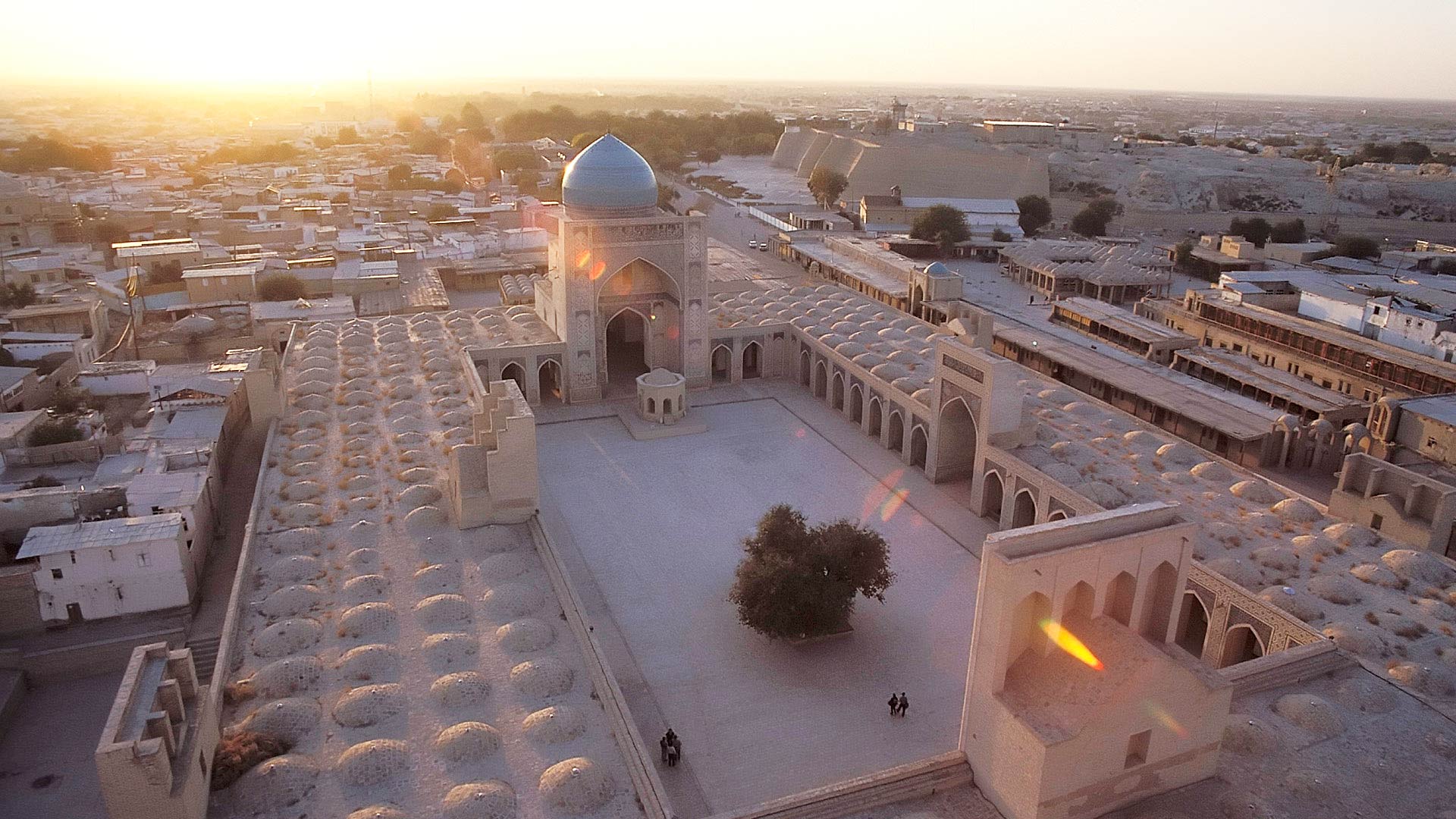
At Bukhara, a UNESCO World Heritage Site and one of Central Asia’s most enduring cities we trace the over 2,500 years of history. Bukhara flourished as an oasis of learning and commerce in the region historically known as Transoxiana. Arab forces brought Islam in the 8th century, and later dynasties — including the Shaybanids — transformed the city into a centre of scholarship and theology.
This afternoon we explore the historic old town: Lyabi-Hauz, a serene pool framed by madrasahs; Nodir Devon Begi Madrasa; the ancient Magoki Attori Mosque; and Toki Tilpak Furushon, the domed market once devoted to cap makers.
Overnight: Hotel Zargaron, Bukhara (2 nights) (B, D)

Today Bukhara reveals its spiritual and architectural core. We begin at the Ismail Samani Mausoleum, built in the 9th Century, where patterned brickwork rises in quiet geometric perfection - one of the oldest surviving masterpieces of Islamic architecture in Central Asia.
At Chashma Ayub, linked by legend to the Prophet Job, faith and folklore intertwine. Nearby, Bolo Hauz Mosque stands with its carved wooden columns reflected in a still pool, a reminder of the city’s enduring devotion.
We continue to the Ark Fortress, long the seat of Bukhara’s emirs, before standing beneath the Kalon Minaret at the Poi Kalon complex - a symbol of the city’s scholarship and power for nearly nine centuries. Enjoy dinner of Bukharan specialties with the evening free to walk around the narrow streets of Bukhara. (B, D)
Today we cross the vast Kyzylkum Desert, its red sands stretching toward a distant horizon. For centuries, caravans and armies moved across these arid corridors linking oasis cities of Central Asia. The landscape feels spare and elemental, shaped by wind and endurance.
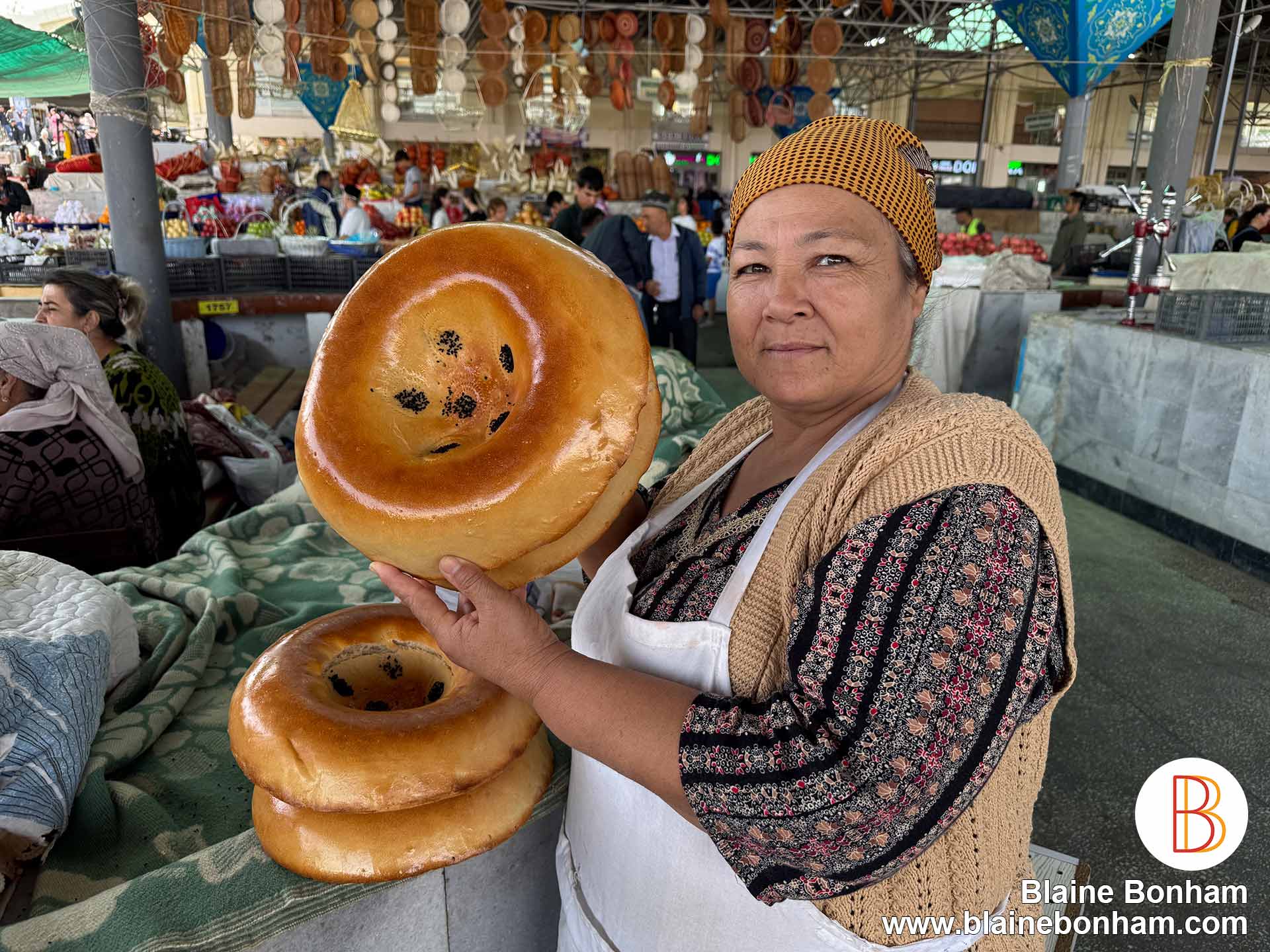
Along the way, the Amu Darya appears — its life-giving waters branching into irrigation canals that have long sustained settlement in this region. We stop at various places enroute and also have an opportunity to taste the renowned Uzbekistani bread freshly baked.
We arrive in Khiva, where the walled inner city of Itchan Kala, a UNESCO World Heritage Site, rises from the desert like a preserved mirage. Evening we take a guided walking tour of Khiva.
Overnight: Hotel Asia, Khiva (1 night) (B, D)
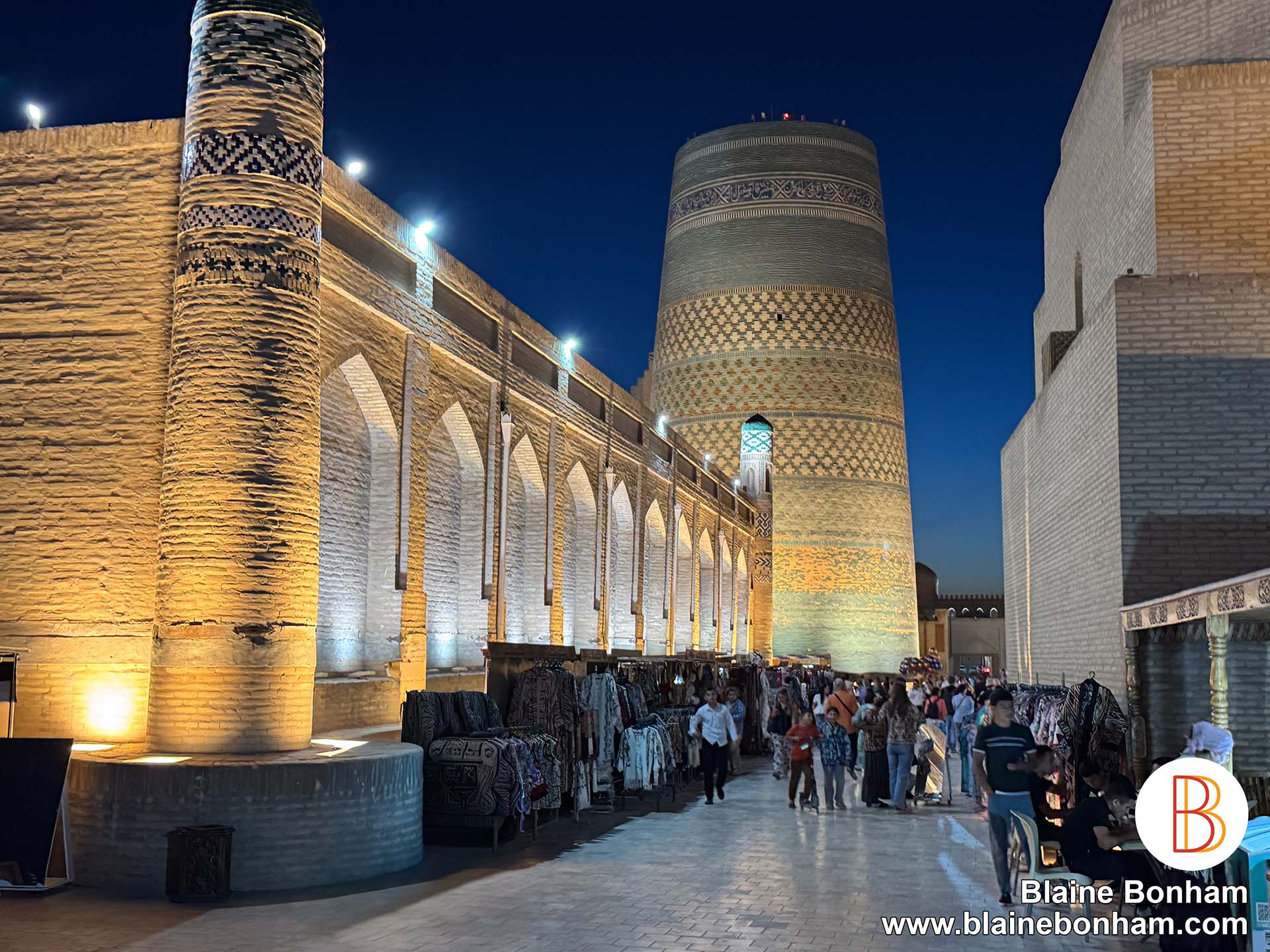
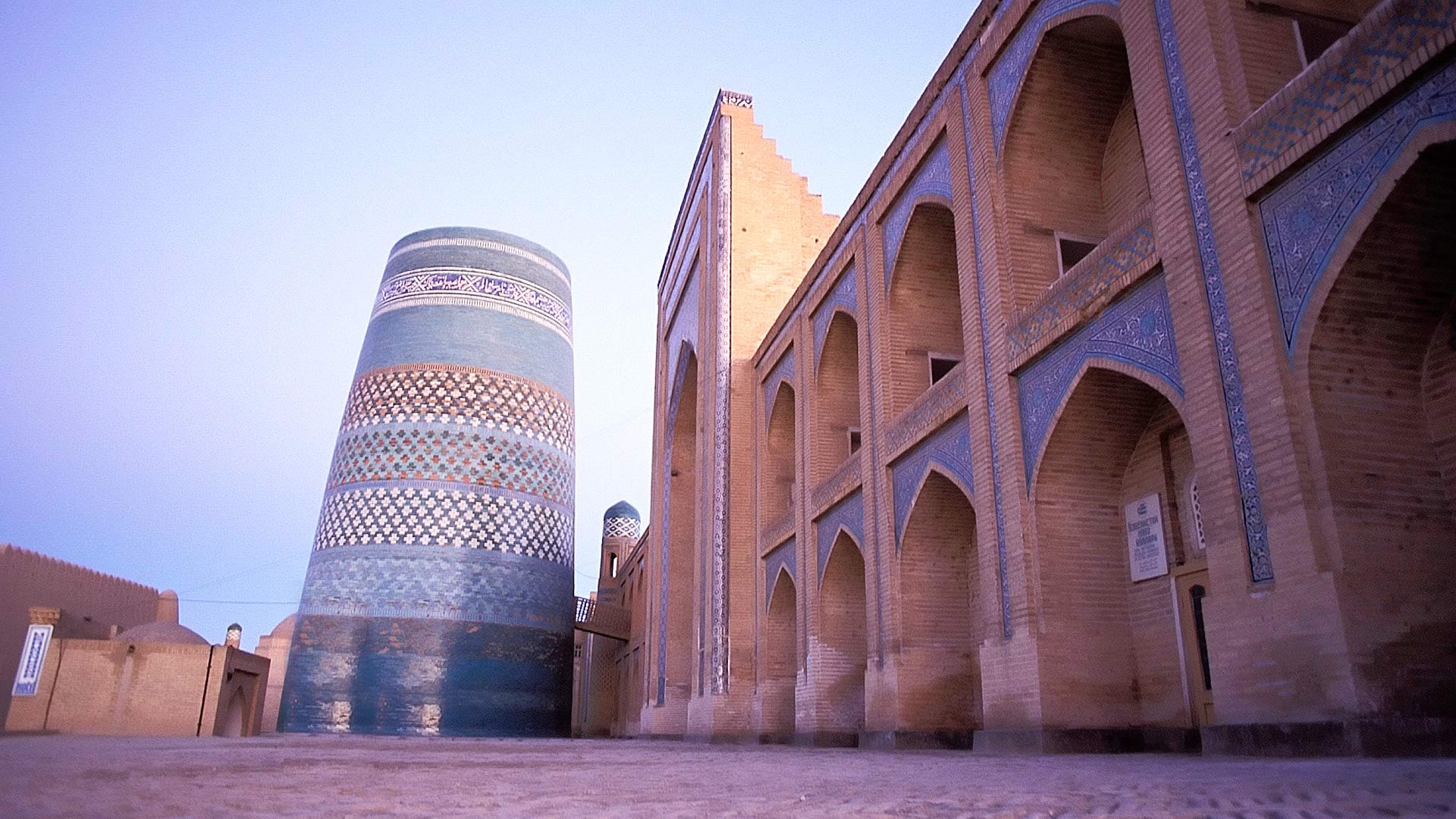
This morning we enter Itchan Kala, the UNESCO-listed inner city of Khiva, enclosed by formidable mud-brick walls that once protected a thriving desert oasis. Within these gates, the skyline is punctuated by minarets, domes and crenellated rooftops, creating one of Central Asia’s most intact historical ensembles.
We visit the unfinished Kalta Minor, its bold turquoise bands frozen mid-ambition, and explore the Kunya Ark citadel, once the political heart of the khanate. At the mausoleum of Pakhlavan Makhmud, intricate tilework glows beneath domed ceilings, while the Friday Mosque reveals a forest of carved wooden columns worn smooth by centuries. The slender Islam Khodja Minaret offers sweeping views across this preserved cityscape before we continue to Tash-Hauli Palace and a historic caravanserai.
Later, we drive to Urgench from where we board our flight to Tashkent where we are met and transferred to our hotel.
Overnight: Hotel Wyndham (Ex Dedeman), Tashkent (1 night) (B, D)
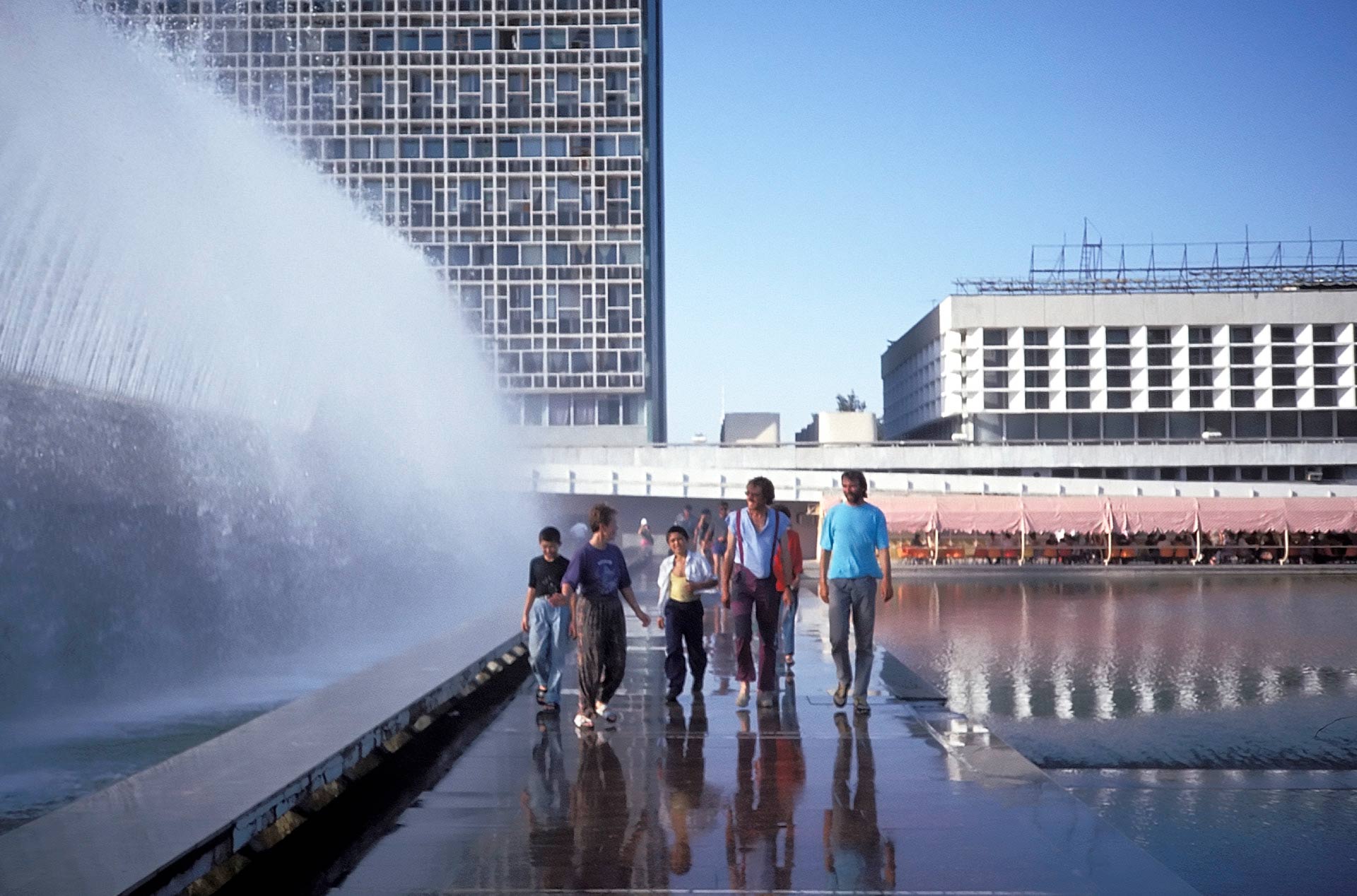
This morning we explore Tashkent’s Old City, beginning at the Hast Imam complex, where restored and historic structures reflect Central Asia’s enduring Islamic scholarship. At Barak Khan Madrasa and Tilla Sheikh Mosque, we see the revered Uthman Qur’an, traditionally dated to the 7th century.
We continue to Chorsu Bazaar, where daily life unfolds in colour and movement, before visiting Kukeldash Madrasa. Later, we descend into the Tashkent Metro, whose ornate Soviet-era stations including Kosmonavtlar and Alisher Navoi resemble underground galleries celebrating Uzbek history and culture.
After dinner, we transfer to the airport for departure. (B, D)
From Hunza’s mountain light to the desert walls of Khiva, this journey reveals how geography and history have long shaped one another. Empires expanded and dissolved, scholars measured the stars, and merchants carried ideas alongside silk and ceramics. The passes remain. The caravan routes endure. The cities continue to speak through their mosques, madrassas, fortresses and markets.
As you depart Tashkent, the thread of the Silk Road lingers. Mountains, deserts and oases, once separated by distance and risk, now feel part of a continuous story that binds East and West across centuries.
Departure Dates & Prices
| 2026 | Per Person on Twin Sharing |
Single Room Supplement |
|---|---|---|
| Departure(s) | ||
| Sep 12, 2026 | US$ 10340 | US$ 1400 |
| 2027 | Per Person on Twin Sharing |
Single Room Supplement |
|---|---|---|
| Departure(s) | ||
| Sep 11, 2027 | US$ 10995 | US$ 1400 |
| 2026 | Per Person on Twin Sharing |
Single Room Supplement |
|---|---|---|
| Departure(s) | ||
| Sep 12, 2026 | CA$ 14880 | CA$ 2015 |
| 2027 | Per Person on Twin Sharing |
Single Room Supplement |
|---|---|---|
| Departure(s) | ||
| Sep 11, 2027 | CA$ 15822 | CA$ 2015 |
Book as a party of 2 or more 6 months in advance and get US$ 450 per person.
Book as a party of 2 or more 6 months in advance and get CA$ 648 per person. |
Notes
Inclusions
Participants
This tour operates on a minimum of 2 and a maximum of 8 participants
Customised Itinerary
If you would like to have a tour on dates other than the above ones or with a customised itinerary, please contact Bestway Tours & Safaris and we will be happy to work out an exclusive program for you.
Recommended Trips



Sign up for our Bestway Club newsletter and be the first to know about special discounts, new tours and travel updates!